
Vulpes
Vulpes·omnivorous·solitary or small family groups, can form hierarchical societies
Vulpes, commonly known as true foxes, is a genus of small to medium-sized canids distinguished by their smaller size compared to wolves or jackals, longer, bushier tails, and flatter skulls. These animals are found across diverse habitats worldwide and are often recognized by distinctive black markings between their eyes and nose, and frequently, a differently colored tail tip. While some species have been domesticated, wild Vulpes are typically omnivorous, solitary, and primarily nocturnal.
Key Facts
- ›True foxes (Vulpes) are characterized by their smaller size, long bushy tails, and flat skulls, differentiating them from larger canids like wolves and jackals.
- ›The genus Vulpes is found in a wide variety of habitats, from deserts to the Arctic, and is also present in suburban and urban areas.
- ›Most true foxes are omnivorous, with their diet consisting of invertebrates, small vertebrates, grasses, and some angiosperms, and they exhibit hoarding behavior.
- ›While many species are solitary, social structures can vary, with some forming small family groups or larger hierarchical societies depending on population density.
- ›The typical lifespan for Vulpes species is between two and four years, though some can live up to a decade.
- ›Domestication has been documented in the silver fox, a melanistic form of the red fox, leading to dog-like traits.
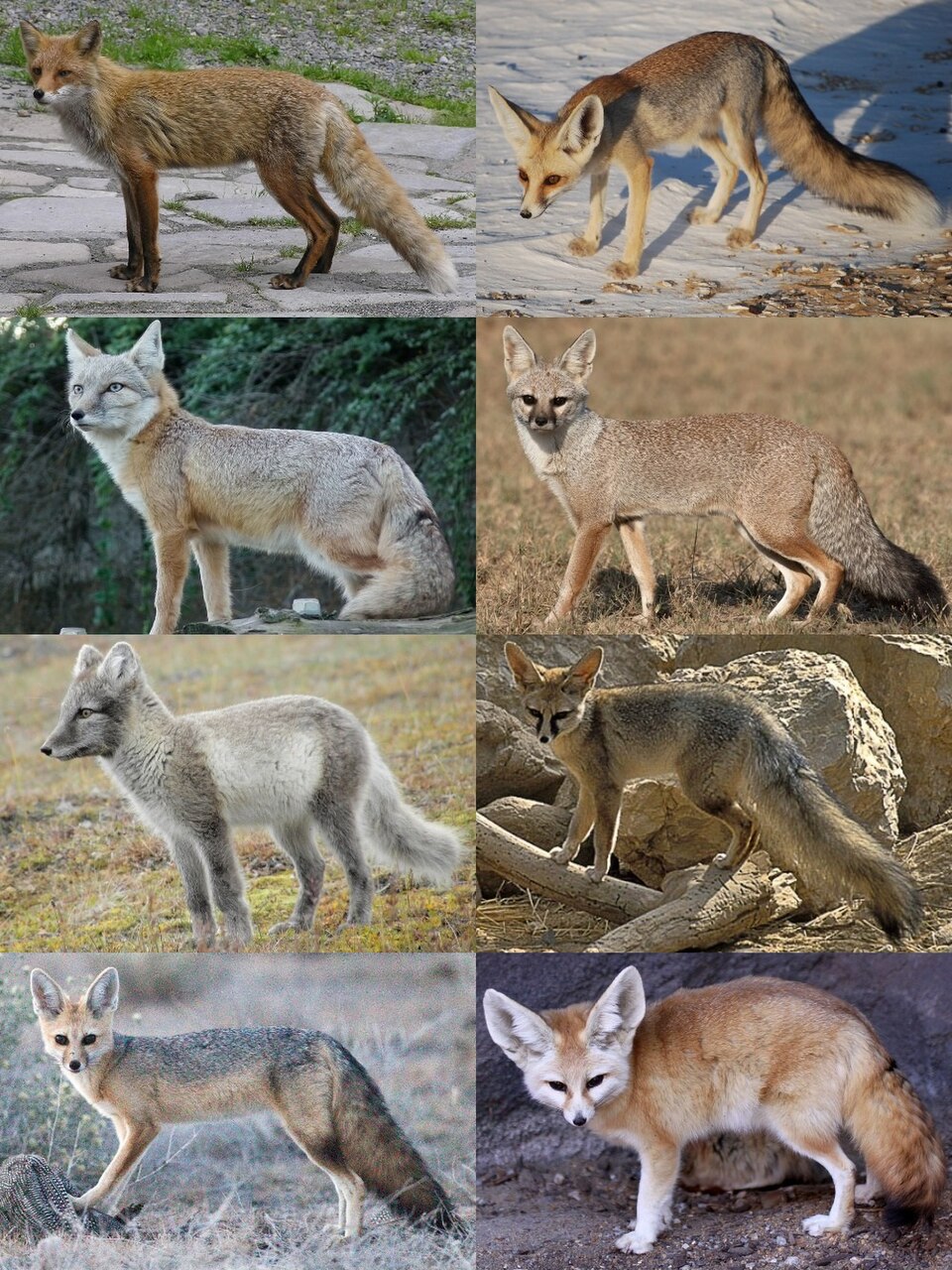
True Foxes
Africa, North America, Europe, Asia
Desert, Arctic, Mountainous Regions, Open Plains, Suburban Areas, Urban Areas, Forests, Woodlands
Solid Color, White-Tipped Tail, Black-Tipped Tail, Dark-Tipped Tail, Blue-Gray Tail
Barking
Coyotes, Bears, Wolves, Small Carnivores, Large Birds of Prey, Eagles
- Long, Bushy Tail
- Flatter Skull
- Black, Triangular Markings Between Eyes and Nose
- Vertically Slit Pupils
- Large Ears
- Thick, Insulating Coat
- Blunt Claws For Gripping
About Vulpes
What is Vulpes?
Vulpes, commonly referred to as "true foxes," is a genus within the subfamily Caninae that comprises a distinct clade of canids. These animals are generally smaller than other canines like wolves and jackals, typically weighing between 5 to 11 kilograms. They are recognizable by their longer, bushier tails, flatter skulls, and often possess black, triangular markings between their eyes and nose. The tip of their tail is frequently a different color from the rest of their pelt.
Distribution and Habitat
The range of the Vulpes genus is extensive, encompassing a wide array of habitats across the globe. True foxes are found from arid deserts to the frigid Arctic, and from high mountain altitudes to open plains. They are adaptable and can thrive in various environments where food and shelter are available. Notably, many species have also successfully adapted to suburban and urban areas, benefiting from human food sources, though they tend to avoid large industrial zones.
Diet and Behavior
True foxes are omnivorous and opportunistic feeders, with a diet that includes invertebrates, small vertebrates, grasses, and some flowering plants. They are known to practice hoarding behavior, caching food for later consumption. Most species within Vulpes are primarily nocturnal, though they may also be active during dawn and dusk, and occasionally hunt or scavenge in daylight, particularly during winter. While many fox species are solitary, their social structures can vary significantly, with some living in small family groups and others forming more complex, hierarchical societies that depend on population density.
Reproduction and Lifespan
Most true foxes are monogamous, though polyandrous and polygynous pairings can occur. Breeding seasons vary by species and habitat, generally falling between late December and late March. Foxes typically dig dens to provide a safe environment for raising their young. Kits are born deaf and blind, requiring maternal care for the first few weeks. The typical lifespan for this genus ranges from two to four years, with some individuals potentially living up to a decade.
Domestication and Human Interaction
The silver fox, a melanistic variant of the wild red fox, is a notable example of domestication within the Vulpes genus. A significant experiment conducted in Russia demonstrated that through selective breeding for friendly traits, these foxes developed characteristics akin to domestic dogs, including spots, tail wagging, and an enjoyment of human interaction. Historically, fox hunting has also been a practice in various cultures, involving the tracking and pursuit of foxes.
Source: Wikipedia ↗
Frequently Asked Questions
What distinguishes true foxes (Vulpes) from other canids like dogs and wolves?
True foxes are generally smaller than wolves and jackals, typically weighing between 5-11 kg. They also possess longer, bushier tails and flatter skulls, and often have black markings between their eyes and nose.
Where are Vulpes species found?
The genus Vulpes has a very wide distribution and can be found in diverse habitats across the globe, including deserts, the Arctic, mountains, open plains, and even suburban and urban environments.
What do true foxes eat?
True foxes are omnivorous and opportunistic feeders. Their diet includes invertebrates, various small vertebrates, grasses, and some flowering plants. They also engage in hoarding behavior to store food for later.
What is the typical social structure of Vulpes species?
Many true foxes are solitary, living most of their lives alone except during the mating season. However, social organization can vary, with some species forming small family groups or larger, hierarchical societies influenced by population density.
Do any Vulpes species exhibit domestication?
Yes, domestication has been documented in the silver fox, which is a melanistic form of the red fox. An experiment in Russia showed that after generations, friendly silver foxes developed traits similar to domestic dogs, such as spots and tail wagging.
What are some distinctive physical features of true foxes?
True foxes often have long, dense fur and a bushy tail that is at least half the length of their body. They possess long, narrow muzzles, large pointed ears, and vertically slit pupils similar to those of cats. Many species also have a distinct black marking between their eyes and nose.
Related Canid species

Cerdocyon
The crab-eating fox (Cerdocyon thous), also known as the forest dog or wood fox, is a medium-sized canid species native to central South America. Despite its name, it is not closely related to true foxes and possesses both dog- and fox-like characteristics. It is the sole living representative of the genus Cerdocyon and is distinguished by its opportunistic omnivorous diet, which includes crabs, insects, rodents, and fruit.
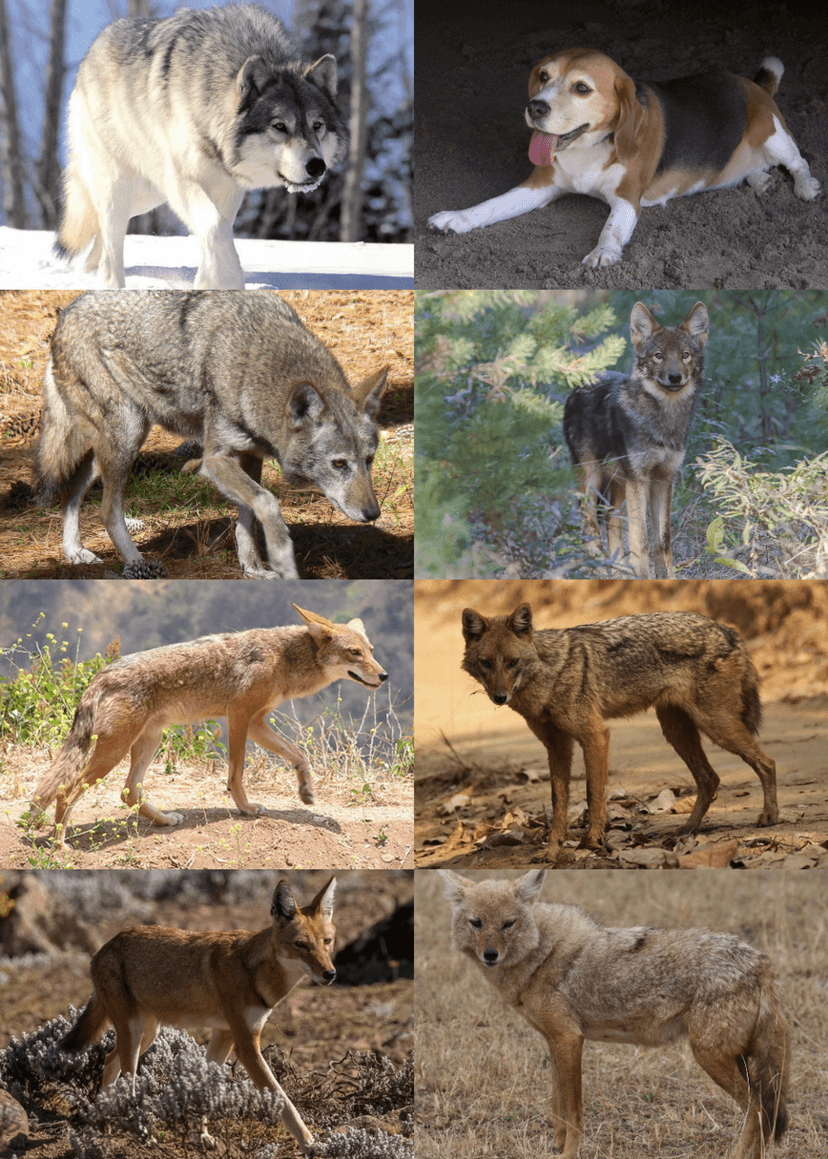
Canis
Canis is a genus of canids that encompasses a diverse group of animals including wolves, dogs, coyotes, and jackals. These species are characterized by their moderate to large size, robust skulls and dentition, long legs, and relatively short ears and tails. They are found across various continents and play significant roles in their respective ecosystems.

Otocyon
The bat-eared fox (Otocyon megalotis) is a unique canid species native to the African savanna, distinguished by its exceptionally large ears which aid in thermoregulation and prey detection. It is the sole surviving member of its genus and is considered genetically distinct from true foxes, with fossil records indicating its appearance in the middle Pleistocene. This small canid primarily feeds on insects, a dietary specialization uncommon among canids, and lives in social groups or pairs in arid and semi-arid environments.