
Colca Canyon
River Canyon·Peru·Colca River
The Colca Canyon is one of the deepest canyons in the world, located in southern Peru near Arequipa. Carved by the Colca River, it features a colorful Andean valley with pre-Inca inhabitants who maintain ancestral traditions and cultivate stepped terraces. The canyon is a significant tourist destination, renowned for its dramatic landscapes, rich indigenous cultures, and the presence of the Andean condor.
Key Facts
- ›Depth of approximately 3,270 meters (10,730 ft), making it one of the world's deepest canyons.
- ›Length of about 70 kilometers (43 MI).
- ›Home to the Collagua and Cabana cultures, who continue to use pre-Inca stepped terraces (andenes).
- ›Third most-visited tourist destination in Peru, attracting around 120,000 visitors annually.
- ›Notable for being a habitat for the Andean condor, with 'Cruz del Condor' being a popular viewing point.
- ›Includes archeological sites with rock art dating back over 7,000 years.

River Erosion
Pre-Inca Stepped Terraces, Cruz Del Condor Viewing Point, Caves of Mollepunko With Rock Art, La Calera Natural Hot Springs, Infiernillo Geyser
Andean Condor, Giant Hummingbird, Andean Goose, Chilean Flamingo, Vizcacha, VicuñA
Agriculture Zone, Alpine Pastures
About Colca Canyon
The Colca Canyon, situated in southern Peru approximately 160 kilometers northwest of Arequipa, stands as one of the world's deepest canyons, plunging to depths of about 3,270 meters (10,730 ft) over its 70-kilometer length. Carved by the Colca River, the canyon is part of a colorful Andean valley that has been home to pre-Inca inhabitants for millennia. These communities, primarily the Collagua and Cabana cultures, maintain their ancestral traditions, including the cultivation of pre-Inca stepped terraces known as 'andenes'.
History and Indigenous Cultures
The valley was inhabited by groups such as the Cabanas and Collaguas prior to the Inca presence, which began around 1320 AD. The Spanish arrived in 1540, and by the 1570s, the inhabitants were consolidated into settlements through the 'Reductions' policy. Evidence of early human presence includes cave paintings and carvings dating back over 7,000 years. The region's cultural heritage is also visible in its churches, which feature notable architecture and religious art.
Geography and Natural Attractions
The canyon's geography transitions from higher altitudes used for livestock to agricultural zones around 3,000 meters above sea level, where the valley deepens into the canyon. The base of the canyon lies around 2,000 meters above sea level, with rims reaching 3,000 to 4,000 meters. Colca Canyon is a vital habitat for the Andean condor, a species often observed soaring near the canyon walls, particularly at the popular tourist spot 'Cruz del Condor'. Other wildlife includes the giant hummingbird, vizcacha, and vicuña. Archeological sites, such as the Caves of Mollepunko, offer insights into ancient life, while natural attractions include hot springs and the potential starting point of the Amazon River.
Tourism and Access
Colca Canyon is Peru's third most-visited tourist destination, drawing around 120,000 visitors annually. Access has been facilitated by the development of roads, with the nearest major city being Arequipa. The canyon offers a blend of natural beauty, cultural immersion, and historical exploration, making it a significant draw for international travelers.
Source: Wikipedia ↗
Frequently Asked Questions
How deep is the Colca Canyon?
The Colca Canyon is approximately 3,270 meters (10,730 ft) deep, making it one of the deepest canyons globally. This impressive depth is a key feature that draws visitors and researchers alike.
What is the geological formation of the Colca Canyon?
The canyon has been formed by the erosive power of the Colca River over millennia. The valley itself is a colorful Andean landscape, with its lower sections developing into the deep canyon.
What are the main activities for tourists in Colca Canyon?
Popular tourist activities include viewing the Andean condors, especially at 'Cruz del Condor', exploring pre-Inca stepped terraces, visiting archeological sites with ancient rock art, and experiencing natural hot springs. Many visitors also stay with local families to share daily activities.
What indigenous cultures inhabit the Colca Valley?
The Colca Valley is inhabited by people of the Collagua and Cabana cultures, who maintain their ancestral traditions. They are known for continuing to cultivate the pre-Inca stepped terraces called andenes.
How can I access Colca Canyon?
Access to Colca Canyon is typically via Arequipa, a city located about 160 kilometers (99 mi) southeast. Roads were improved significantly in the latter half of the 20th century, making access more feasible for visitors.
Are there any notable wildlife in Colca Canyon?
Yes, the canyon is home to the Andean condor, which is a major attraction. Other notable species include the giant hummingbird, Andean goose, Chilean flamingo, vizcacha, and vicuña.
Related Canyons
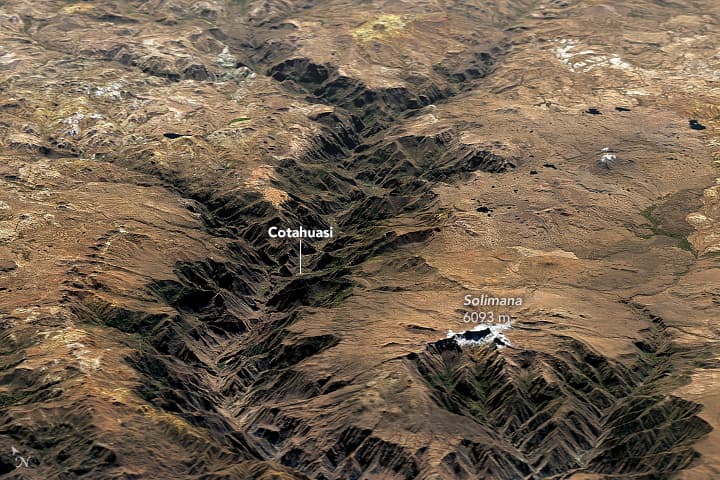
Cotahuasi Canyon
Cotahuasi Canyon, located in southern Peru near Arequipa, is recognized as one of the world's deepest canyons, significantly exceeding the depth of the Grand Canyon. It was carved by the Cotahuasi River between the towering Coropuna and Solimana mountain massifs, showcasing a dramatic landscape with diverse ecosystems and rich pre-Inca heritage.

Aare Gorge
The Aare Gorge is a dramatic canyon carved through a limestone ridge near Meiringen, Switzerland, by the Aare River. Formed approximately 10,000 years ago by glacial meltwater erosion at the end of the Ice Age, this narrow passage features sheer cliffs and is a significant tourist attraction, partly due to its proximity to the famous Reichenbach Falls.

Agawa Canyon
Agawa Canyon is a shallow canyon in Ontario, Canada, formed approximately 1.2 billion years ago by faulting and later carved by the Agawa River. It is now a popular tourist destination within the Agawa Canyon Wilderness Park, accessible by train or hiking trail, and is renowned for its natural beauty, waterfalls, and seasonal foliage.