
Royal Gorge
River Canyon·North America·Cenozoic·Arkansas River
The Royal Gorge is a deep and narrow canyon carved by the Arkansas River in Colorado. Formed over millions of years by the river eroding through rising granite, it is one of the deepest canyons in the state. The gorge is a significant natural landmark and a popular tourist destination, known for its dramatic scenery, the historic Royal Gorge Bridge, and recreational activities.
Key Facts
- ›Maximum depth of 1,250 ft (380 M).
- ›Maximum width of 300 ft (91 M) at the top and 50 ft (15 M) at the base.
- ›Formed by the Arkansas River eroding through granite over approximately 3 million years.
- ›Carved through granite formations below Fremont Peak and YMCA Mountain.
- ›The Royal Gorge Bridge, built in 1929, was once the highest bridge in the world.
- ›A popular site for recreational activities, including rafting, and features an amusement park.
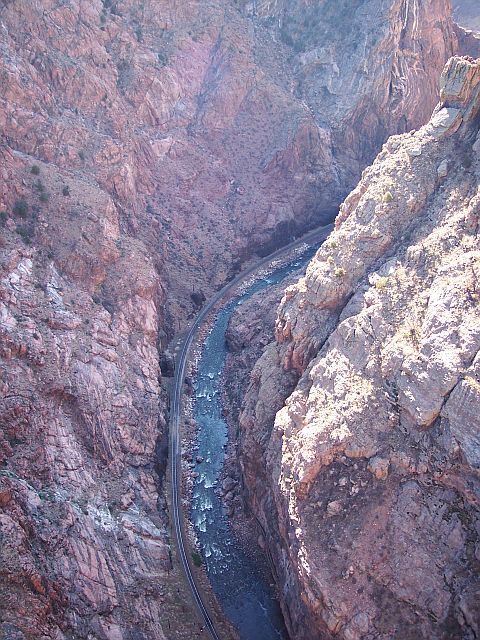
Grand Canyon of the Arkansas (River)
River Erosion
Royal Gorge Bridge, Fremont Peak, Ymca Mountain, Class Iv Rapids
About Royal Gorge
The Royal Gorge is a dramatic natural chasm carved by the Arkansas River in Colorado, located west of Cañon City. This canyon begins near the mouth of Grape Creek and extends for approximately 6 miles (9.7 km), reaching a remarkable depth of 1,250 feet (380 m) and a maximum width of 300 feet (91 m) at its rim. Its formation is a testament to the patient power of water, as the Arkansas River has spent roughly 3 million years relentlessly eroding through the hard granite of the region.
Natural History and Formation
The genesis of the Royal Gorge is deeply intertwined with the geological uplift that formed the Rocky Mountains. As the mountains rose, the Arkansas River, a comparatively small stream at the time, persistently cut into the bedrock. This long, direct erosion through resistant granite is what gives the Royal Gorge its distinctively narrow and deep profile, setting it apart from broader canyons. The surrounding peaks of Fremont Peak and YMCA Mountain stand as silent witnesses to this geological process.
Historical Human Interaction
Long before European settlers arrived, indigenous peoples of the Ute nation found refuge in the Royal Gorge during the winter months, appreciating its protection from winds and its milder climate. Other tribes, such as the Comanche, Kiowa, Sioux, and Cheyenne, used the gorge as a strategic access point for buffalo hunting expeditions into mountain meadow regions. Early European explorers, possibly Spanish conquistadors or fur traders, may have traversed the area, but the first recorded European presence was Zebulon Pike's expedition in 1806. The late 19th century witnessed a fierce "Royal Gorge Railroad War" as the Atchison, Topeka and Santa Fe Railway and the Denver and Rio Grande Railroad vied for control of this vital passage, a conflict that eventually led to a shared rail line.
Modern Significance and Tourism
The Royal Gorge transitioned into a significant transportation route, serving passenger rail travel in the late 1890s. Today, the Royal Gorge Route Railroad offers scenic excursions through the canyon. A major landmark is the Royal Gorge Bridge, constructed in 1929 and for decades recognized as the highest bridge in the world. It now anchors the Royal Gorge Bridge and Park, an amusement park that draws visitors from around the globe. The gorge is also a renowned destination for whitewater rafting, with the Arkansas River presenting challenging Class IV rapids. Despite its popularity, activities such as BASE jumping and bungee jumping are generally prohibited, though occasional special events have permitted such feats.
Source: Wikipedia ↗
Frequently Asked Questions
How was the Royal Gorge formed?
The Royal Gorge was formed by the Arkansas River over approximately 3 million years. As the Rocky Mountains began to rise, the river, then a small stream, continuously eroded the granite it flowed across, gradually cutting a deep channel.
What are the dimensions of the Royal Gorge?
The canyon measures approximately 6 miles (9.7 km) in length. It reaches a maximum depth of 1,250 feet (380 m) and is very narrow, ranging from 50 feet (15 m) wide at its base to 300 feet (91 m) wide at its rim.
What is the significance of the Royal Gorge Bridge?
The Royal Gorge Bridge, completed in 1929, was an engineering marvel and held the record for the highest bridge in the world from 1929 to 2001. It is now the centerpiece of the Royal Gorge Bridge and Park, a major tourist attraction.
What activities can visitors enjoy at Royal Gorge?
Popular activities include rafting on the Arkansas River, which features Class IV rapids. The Royal Gorge Bridge and Park also offers amusement park rides and attractions. A sightseeing train travels through the gorge year-round.
What kind of wildlife and vegetation can be found in the Royal Gorge?
The article text mentions that Native American tribes used the gorge for its protection from wind and its relatively mild climate, suggesting a climate amenable to some vegetation. However, specific details on current wildlife and vegetation types are not provided.
What is the geological makeup of the Royal Gorge?
The Royal Gorge is primarily carved through granite formations. The surrounding mountains, Fremont Peak and YMCA Mountain, are also composed of granite, indicating the rock type the Arkansas River has eroded.
Related Canyons

Big Bend National Park
Big Bend National Park is a vast protected area in West Texas, notable for its extensive Chihuahuan Desert topography and ecology. Formed by the erosive power of the Rio Grande and significant geological uplift, the park preserves a rich tapestry of life, including over 1,200 plant species and hundreds of animal species, as well as ancient fossils and diverse rock formations. Its remote location and dramatic landscapes, including the Chisos Mountains and deep river canyons, make it a significant destination for naturalists and adventurers.

Three Gorges
The Three Gorges are a series of three sequential gorges along the middle reaches of the Yangtze River in China, renowned for their dramatic scenery and historical significance. Formed over millions of years by river erosion and tectonic uplift, these gorges have been a vital waterway and a source of inspiration for art and literature for centuries. Their landscape has been significantly altered by the construction of the Three Gorges Dam, which has impacted the region's ecology and submerged numerous cultural sites.
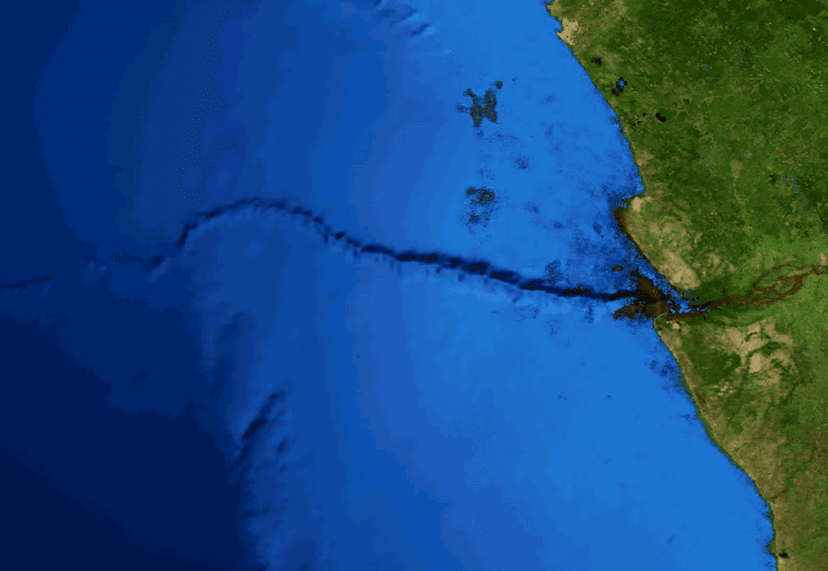
Congo Canyon
Congo Canyon is an immense submarine canyon located at the terminus of the Congo River in Africa, ranking among the largest of its kind globally. Its formation is primarily driven by powerful turbidity currents originating from the Congo River's outflow, which act as underwater avalanches, eroding the canyon and transporting vast amounts of sediment to the Congo Deep-Sea Fan. This process prevents delta formation and contributes to one of the world's largest active submarine fan systems.