
Congo Canyon
Submarine Canyon·Africa·Cenozoic·Congo River
Congo Canyon is an immense submarine canyon located at the terminus of the Congo River in Africa, ranking among the largest of its kind globally. Its formation is primarily driven by powerful turbidity currents originating from the Congo River's outflow, which act as underwater avalanches, eroding the canyon and transporting vast amounts of sediment to the Congo Deep-Sea Fan. This process prevents delta formation and contributes to one of the world's largest active submarine fan systems.
Key Facts
- ›Begins inland on the Congo Estuary at a depth of 21 meters.
- ›Extends 85 kilometers across the continental shelf.
- ›Reaches a maximum depth of 1,100 meters.
- ›Has a maximum width of approximately 14 kilometers.
- ›The Congo Deep-Sea Fan covers about 300,000 km².
- ›Experiences the strongest measured turbidity currents in the world.
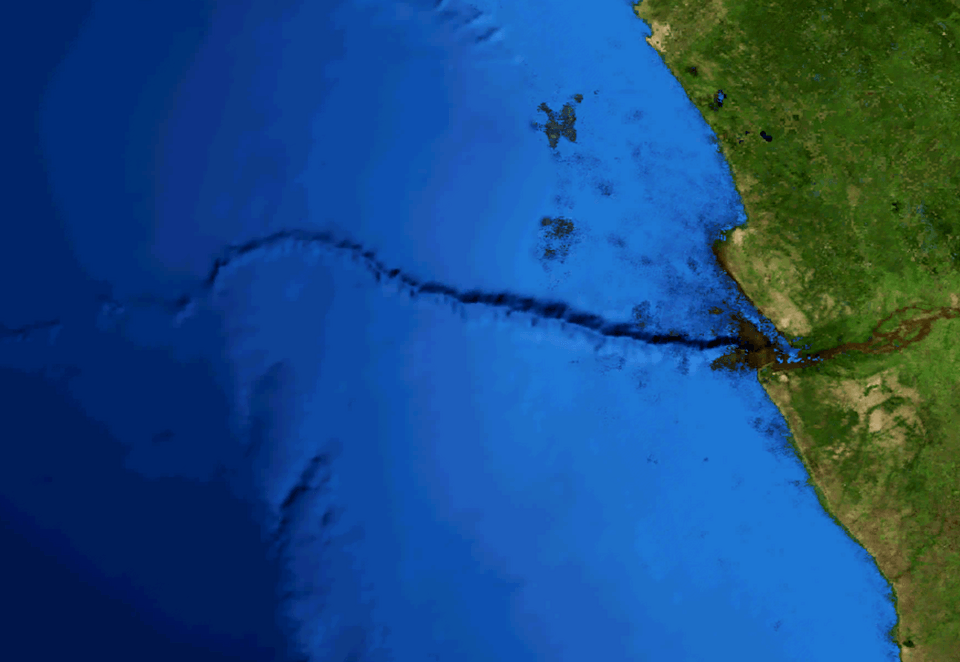
Turbidity Currents, River Erosion
Congo Deep-Sea Fan, Powerful Turbidity Currents
About Congo Canyon
Congo Canyon is a colossal submarine canyon situated at the mouth of the Congo River in Africa, recognized as one of the largest of its kind worldwide. It originates inland within the Congo Estuary at a depth of 21 meters, extending approximately 85 kilometers across the continental shelf before descending the continental slope. The canyon terminates 280 kilometers from its starting point, with its deepest sections reaching a V-shaped profile with walls 1,100 meters high and a maximum width of about 14 kilometers. Beyond the continental slope, it merges into the Congo Deep-Sea Fan.
Formation and Geological Significance
The formation of Congo Canyon is dominated by powerful turbidity currents, which are essentially underwater avalanches. These currents are the strongest ever measured globally and are directly linked to the periods of high outflow from the Congo River. They are the primary agents of erosion within the canyon and are responsible for the significant transport of sediment to the Congo Deep-Sea Fan. This constant sediment flow prevents the formation of a delta at the river's mouth, a characteristic shared by few other major rivers.
The fan itself is an immense geological feature, covering about 300,000 square kilometers and containing at least 0.7 million cubic kilometers of Cenozoic sediments, making it one of the world's most extensive submarine fan systems. Developed after early Cretaceous rifting, the fan is built up by sediment gravity flows and other submarine mass movements, representing a vast and active turbidite system. Despite an occasional net up-canyon bottom current due to upwelling, the force of the turbidity currents ensures continuous deposition, contributing to what is likely the greatest sediment accumulation in the world for a currently active submarine system.
Source: Wikipedia ↗
Frequently Asked Questions
How large is the Congo Canyon?
The Congo Canyon is one of the largest submarine canyons globally. It stretches 85 kilometers across the continental shelf and extends an additional 280 kilometers down the continental slope, reaching a maximum width of about 14 kilometers and a depth of 1,100 meters.
What forces created the Congo Canyon?
The primary geological agent responsible for carving the Congo Canyon is erosion by powerful turbidity currents. These underwater avalanches are driven by the high outflow of the Congo River and are the strongest measured in the world.
What is the significance of the Congo Deep-Sea Fan?
The Congo Deep-Sea Fan is one of the largest submarine fan systems in the world, covering approximately 300,000 km². It receives a massive influx of sediment directly from the Congo River via the submarine canyon, preventing delta formation and accumulating sediments through turbidity currents and other submarine mass movements.
What are turbidity currents and how do they affect the canyon?
Turbidity currents are underwater avalanches of sediment-laden water that can travel hundreds of kilometers. In the Congo Canyon, these currents are the main source of erosion and are responsible for transporting significant amounts of sediment to the deep-sea fan, often destroying equipment placed on the seafloor.
Does the Congo River form a delta?
Unlike most rivers that empty into the sea, the Congo River does not form a delta. This is because nearly all of its sediments are transported by turbidity currents through the submarine canyon to the Congo Deep-Sea Fan.
Related Canyons

Blue Nile
The Blue Nile is a major river originating from Lake Tana in Ethiopia, flowing for approximately 1,450 km through Ethiopia and Sudan before joining the White Nile. It is the primary source of water for the Nile River, supplying about 85.6% of its flow during the rainy season and playing a crucial role in the fertility of the Nile Valley and the development of Ancient Egypt.

Big Bend National Park
Big Bend National Park is a vast protected area in West Texas, notable for its extensive Chihuahuan Desert topography and ecology. Formed by the erosive power of the Rio Grande and significant geological uplift, the park preserves a rich tapestry of life, including over 1,200 plant species and hundreds of animal species, as well as ancient fossils and diverse rock formations. Its remote location and dramatic landscapes, including the Chisos Mountains and deep river canyons, make it a significant destination for naturalists and adventurers.
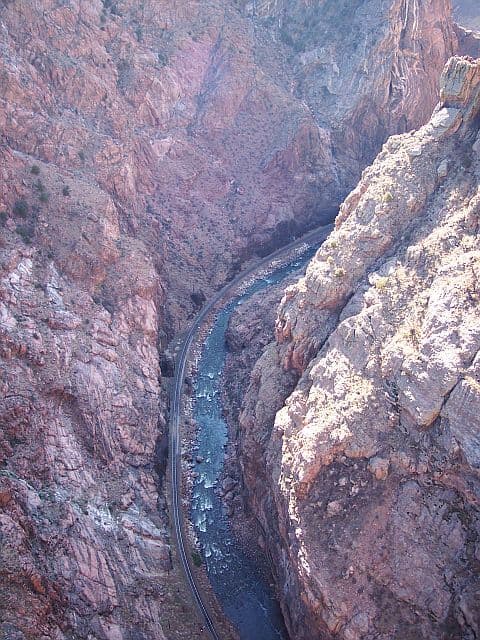
Royal Gorge
The Royal Gorge is a deep and narrow canyon carved by the Arkansas River in Colorado. Formed over millions of years by the river eroding through rising granite, it is one of the deepest canyons in the state. The gorge is a significant natural landmark and a popular tourist destination, known for its dramatic scenery, the historic Royal Gorge Bridge, and recreational activities.