
Rugova Canyon
River Canyon·Kosovo
Rugova Canyon, also known as Rugova Gorge, is a river canyon situated near Peja in western Kosovo, within the Albanian Alps close to the Montenegrin border. It is a significant natural landmark offering opportunities for outdoor activities like hiking, rock climbing, and cave exploration, featuring a unique Via Ferrata called the "Iron Trail". The canyon holds cultural and historical importance, with the Patriarchate of Peja, a key religious site, located at its entrance.
Key Facts
- ›Located in the Albanian Alps near the border with Montenegro.
- ›Offers opportunities for hiking, rock climbing, and cave exploration.
- ›Features the "Iron Trail", the first and only Via Ferrata in the Balkans.
- ›The Patriarchate of Peja, a historical Serbian Orthodox Church seat, is at its entrance.
- ›Also referred to as Rugova Gorge.
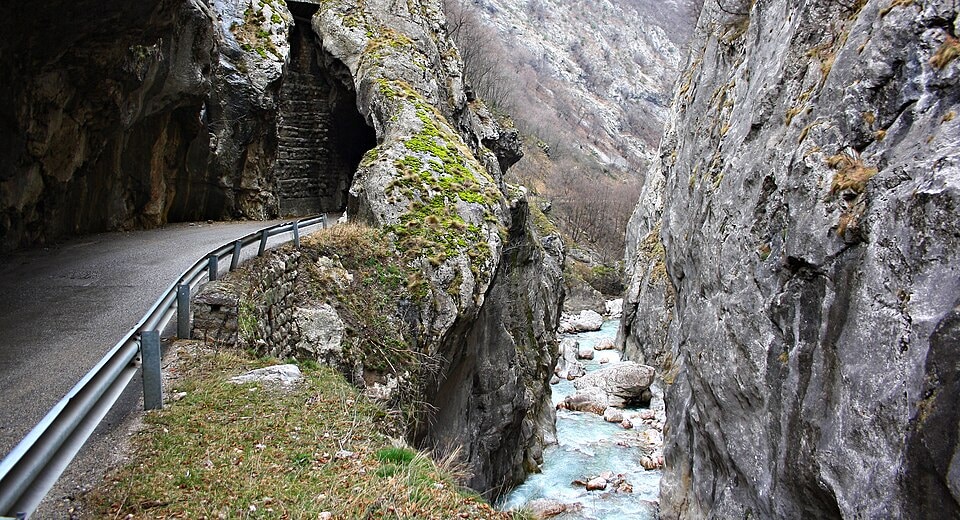
Rugova Gorge, Kanioni i Rugovës, Rugovska klisura
River Erosion
Via Ferrata "Iron Trail"
Kanioni I RugovëS, Gryka E RugovëS
About Rugova Canyon
Rugova Canyon, also known by its Albanian names Kanioni i Rugovës and Gryka e Rugovës, and the Serbian Rugovska klisura, is a prominent river canyon situated near the city of Peja in western Kosovo. Nestled within the dramatic landscape of the Albanian Alps, its location is further defined by its proximity to the border with Montenegro.
Natural Attractions and Activities
The canyon is recognized as a prime destination for outdoor adventure. It offers substantial opportunities for hikers seeking challenging trails, rock climbers drawn to its vertical faces, and cave explorers interested in subterranean wonders. A unique feature for visitors is the "Iron Trail", a Via Ferrata constructed to facilitate rock climbing, distinguishing itself as the first and only such installation in the Balkan region. This trail allows individuals to safely ascend the canyon's rocky terrain.
Cultural and Historical Significance
Beyond its natural appeal, Rugova Canyon holds considerable cultural and historical weight. The Patriarchate of Peja, a site of immense historical and spiritual importance for the Serbian Orthodox Church, is strategically located at the canyon's entrance. This placement highlights the intertwining of natural beauty with the region's long-standing religious heritage.
Source: Wikipedia ↗
Frequently Asked Questions
What activities are available at Rugova Canyon?
Rugova Canyon is an excellent destination for outdoor enthusiasts. Visitors can enjoy hiking, rock climbing, and exploring caves. A notable feature is the "Iron Trail", a Via Ferrata designed to allow hikers to ascend the rocks.
What is the significance of the Patriarchate of Peja in relation to the canyon?
The Patriarchate of Peja, which is the historical and spiritual center of the Serbian Orthodox Church, is situated at the very entrance of Rugova Canyon. This location highlights the canyon's cultural and religious importance alongside its natural beauty.
Is there any special infrastructure for climbing in Rugova Canyon?
Yes, Rugova Canyon boasts a unique attraction for climbers and adventurous hikers called the "Iron Trail". This Via Ferrata is the first and only one of its kind in the Balkans, providing a guided and secured route for climbing the canyon's rocks.
Where is Rugova Canyon located?
Rugova Canyon is located near the city of Peja in western Kosovo. It is situated within the Albanian Alps, in close proximity to the border with Montenegro.
Related Canyons

Aare Gorge
The Aare Gorge is a dramatic canyon carved through a limestone ridge near Meiringen, Switzerland, by the Aare River. Formed approximately 10,000 years ago by glacial meltwater erosion at the end of the Ice Age, this narrow passage features sheer cliffs and is a significant tourist attraction, partly due to its proximity to the famous Reichenbach Falls.

Agawa Canyon
Agawa Canyon is a shallow canyon in Ontario, Canada, formed approximately 1.2 billion years ago by faulting and later carved by the Agawa River. It is now a popular tourist destination within the Agawa Canyon Wilderness Park, accessible by train or hiking trail, and is renowned for its natural beauty, waterfalls, and seasonal foliage.

Agia Eirini Gorge
Agia Eirini Gorge is a scenic canyon located in southwestern Crete, Greece, renowned for its natural beauty and historical significance. Stretching 7.5 kilometers from the village of Agia Eirini to the coastal village of Sougia, it features steep mountain cliffs and forested areas. The gorge played a role in history, notably as an escape route for civilians during Ottoman rule.