
Agia Eirini Gorge
Agia Eirini Gorge is a scenic canyon located in southwestern Crete, Greece, renowned for its natural beauty and historical significance. Stretching 7.5 kilometers from the village of Agia Eirini to the coastal village of Sougia, it features steep mountain cliffs and forested areas. The gorge played a role in history, notably as an escape route for civilians during Ottoman rule.
Key Facts
- ›Length: 7.5 kilometers (4.7 miles).
- ›Depth: Ranges from 45 to 500 meters (148 to 1,640 feet).
- ›Location: Southwestern Crete, Greece, within the Lefka Ori mountains.
- ›Features: Steep mountain cliffs and forested areas.
- ›Historical Event: Provided an escape route for 1,000 women and children from the Ottomans in 1866.

St. Irene Gorge
River Erosion
Steep Mountain Cliffs, Forested Areas
Forested Areas
φαράγγι αγίας ειρήνης
About Agia Eirini Gorge
Agia Eirini Gorge, also known by the English translation St. Irene Gorge, is a significant natural landmark located in the southwestern region of Crete, Greece. Nestled within the Lefka Ori mountain range, the gorge presents a dramatic landscape characterized by steep mountain cliffs and verdant forested areas. Its path begins near the village of Agia Eirini and concludes at Sougia, a village situated on the island's south coast.
Dimensions and Geography
The gorge measures approximately 7.5 kilometers (4.7 miles) in length. Its depth is considerable, varying between 45 meters and reaching up to 500 meters (148 to 1,640 feet) in its deepest sections. This varied topography contributes to its unique ecological environment and visual appeal.
Historical Significance
Agia Eirini Gorge holds a place in the history of Crete, particularly for its role during periods of conflict. A notable event occurred in 1866 when the gorge served as a vital escape route for a group of 1,000 women and children who were fleeing from Ottoman forces. This historical event underscores the gorge's natural defenses and its importance as a passage for survival.
Source: Wikipedia ↗
Frequently Asked Questions
Where is Agia Eirini Gorge located?
Agia Eirini Gorge is situated in the southwestern part of the island of Crete, Greece, specifically within the Lefka Ori mountain range. It extends from the village of Agia Eirini down to the south coast village of Sougia.
What are the dimensions of Agia Eirini Gorge?
The gorge is approximately 7.5 kilometers (4.7 miles) in length. Its depth varies significantly, ranging from about 45 meters to a maximum of 500 meters (148 to 1,640 feet).
What makes Agia Eirini Gorge historically significant?
The gorge holds historical importance as a refuge. In 1866, it served as a crucial escape route for approximately 1,000 women and children fleeing from Ottoman forces.
What can one expect to see in Agia Eirini Gorge?
Visitors to Agia Eirini Gorge can expect to traverse a landscape characterized by steep mountain cliffs and forested areas. The natural beauty of the canyon makes it a notable geographical feature of Crete.
Related Canyons
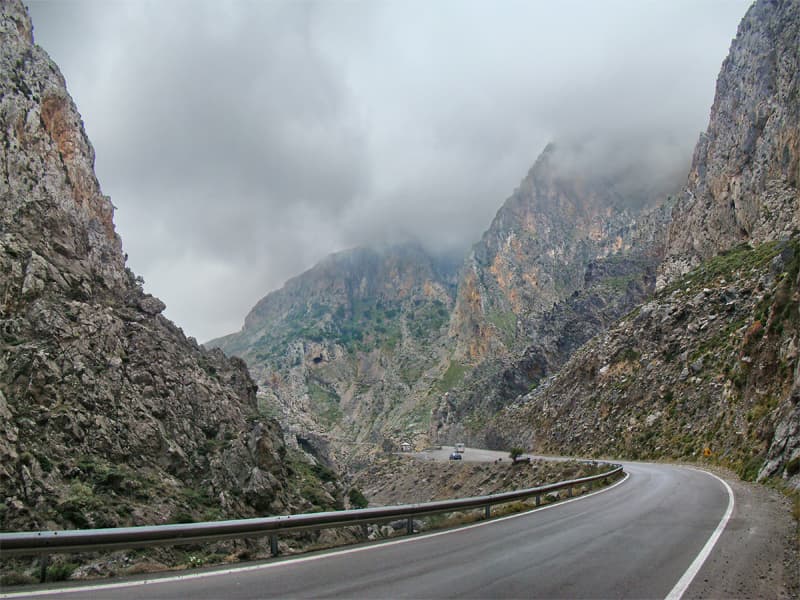
Kourtaliotiko Gorge
Kourtaliotiko Gorge, also known as Asomatos Gorge, is a significant natural feature on the southern side of western Crete, Greece. Carved by the Kourtaliotiko River flowing between the Kouroupa and Xiron mountains, it is renowned for its unique wind-generated "claps" and leads to the famous Preveli beach. The gorge serves as a vital habitat for wildlife, including the Lammergeier vulture, and is a popular destination for hikers.

Richtis Gorge
Richtis Gorge is a state-protected park in eastern Crete, Greece, known for its diverse hiking experience. The gorge, formed by natural erosion, stretches approximately 4 km from the village of Exo Mouliana to Richtis beach, featuring rich vegetation, historical stone bridges, water mills, and culminating in the Richtis Waterfall.
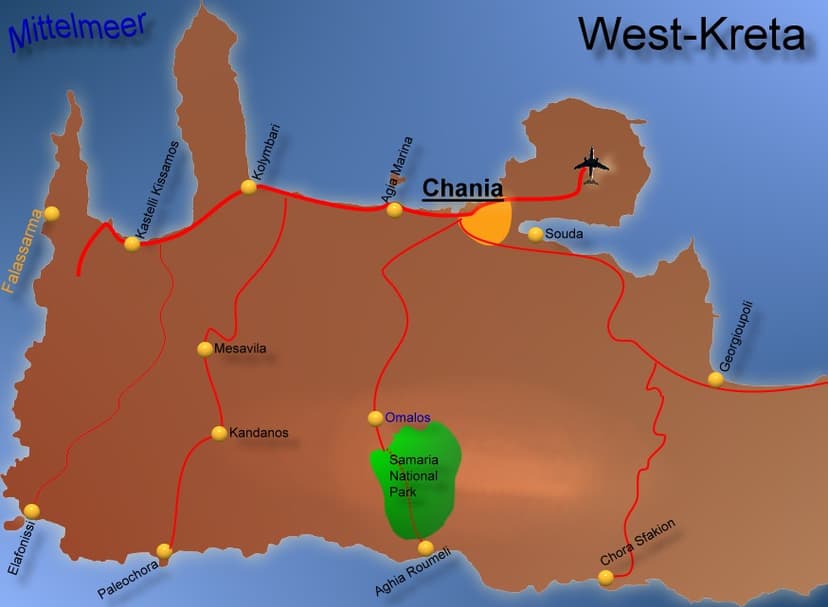
Samaria Gorge
The Samariá Gorge is a National Park in southwest Crete, Greece, renowned as a major tourist attraction and a World's Biosphere Reserve. Carved by a small river between the White Mountains and Mt. Volakias, it stretches 16 km from an altitude of 1,250 m to the Libyan Sea. The gorge is significant as a refuge for the rare kri-kri (Cretan goat) and other endemic species.