
Satkosia Tiger Reserve
Tiger Reserve·India·Mahanadi River
Satkosia Tiger Reserve, located in Odisha, India, is a significant protected area known for its tiger conservation efforts and its dramatic gorge carved by the Mahanadi River. Established as a wildlife sanctuary in 1976 and later as a tiger reserve in 2007, it encompasses a diverse ecosystem of moist deciduous forests and riverine habitats.
Key Facts
- ›Covers an area of 963.87 km² across the Angul and Nayagarh districts of Odisha, India.
- ›Features a 22 km long gorge formed by the Mahanadi River as it passes through the Eastern Ghats mountains.
- ›The reserve's flora includes mixed deciduous forests, with Sal trees and riverine forest communities.
- ›Notable fauna includes leopards, dholes, wild boars, Asian elephants, various deer species, mugger crocodiles, and gharials.
- ›Tigers are currently absent; a tiger translocation project from Madhya Pradesh was suspended in 2019.
- ›Located within the Eastern Highlands moist deciduous forests ecoregion.

River Erosion
Mahanadi River Gorge
Leopard, Indian Wild Dog, Wild Boar, Striped Hyena, Sloth Bear, Leopard Cat, Jungle Cat, Asian Elephant, Spotted Deer, Sambar Deer, Barking Deer, Langur, Porcupine, Pangolin, Mugger Crocodile, Gharial, Indian Python, Indian Giant Squirrel, Catfish
Mixed Deciduous Forests, Sal, Riverine Forest
About Satkosia Tiger Reserve
Satkosia Tiger Reserve is a protected area located in the Angul and Nayagarh districts of Odisha, India. It was initially established as the Satkosia Gorge Wildlife Sanctuary in 1976, covering an area of 796 km². The designation as a tiger reserve occurred in 2007, when it was expanded to encompass the adjacent Baisipalli Wildlife Sanctuary, bringing its total area to 963.87 km².
Geography and Geology
The reserve is geologically significant for the dramatic gorge carved by the Mahanadi River as it flows through the Eastern Ghats mountains. This gorge extends for approximately 22 kilometers, forming a central feature of the landscape. Satkosia Tiger Reserve is situated within the Eastern Highlands moist deciduous forests ecoregion, characterized by its specific climate and biodiversity.
Flora and Fauna
The vegetation within the reserve is predominantly composed of mixed deciduous forests, with the Sal tree (Shorea robusta) being a notable component. Riverine forest communities also thrive along the Mahanadi River. The fauna is diverse, including large mammals such as leopards, dholes (Indian wild dogs), wild boars, and Asian elephants, which are frequently observed crossing rivers. Herbivores like spotted deer, sambar deer, barking deer, langurs, porcupines, and pangolins are also present. The reserve is a habitat for reptiles like the Mugger Crocodile and gharials, as well as the Indian python. Various fish species, including catfish weighing up to 30 kilograms, inhabit its waters.
Conservation Efforts and Status
While designated as a tiger reserve, tigers are currently absent from Satkosia. An initiative to translocate tigers from Kanha National Park in Madhya Pradesh was undertaken but has been suspended since 2019 following the death of a translocated male tiger. The National Tiger Conservation Authority has paused the project pending a thorough review of the translocation program.
Source: Wikipedia ↗
Frequently Asked Questions
What is the Satkosia Tiger Reserve and where is it located?
Satkosia Tiger Reserve is a protected area in India, designated for tiger conservation. It is situated in the Angul and Nayagarh districts of Odisha, spanning across a significant geographical area.
What geological features are found in Satkosia Tiger Reserve?
The reserve is characterized by the Mahanadi River carving a 22-kilometer-long gorge as it traverses through the Eastern Ghats mountains. This gorge is a prominent geographical feature of the area.
What kind of wildlife can be found in Satkosia Tiger Reserve?
The reserve is home to a variety of mammals such as leopards, dholes, wild boars, and Asian elephants. It also supports diverse reptiles like mugger crocodiles and gharials, along with numerous fish species.
Are tigers currently present in Satkosia Tiger Reserve?
Tigers are not currently present in Satkosia Tiger Reserve. A project to translocate tigers from Madhya Pradesh was initiated but has been suspended pending review, following the death of one of the translocated animals.
What are the main types of vegetation in Satkosia Tiger Reserve?
The primary vegetation consists of mixed deciduous forests, which include prominent Sal trees. Riverine forest communities are also a significant part of the plant life found within the reserve.
Related Canyons

Gandikota
Gandikota is a historic fort and village situated on the right bank of the Penna River in Andhra Pradesh, India. It is renowned for the Gandikota canyon, a geological formation carved by the Penna River through the Erramala hills. The fort itself has a long history, serving as a strategic center for various dynasties and featuring a blend of architectural styles.
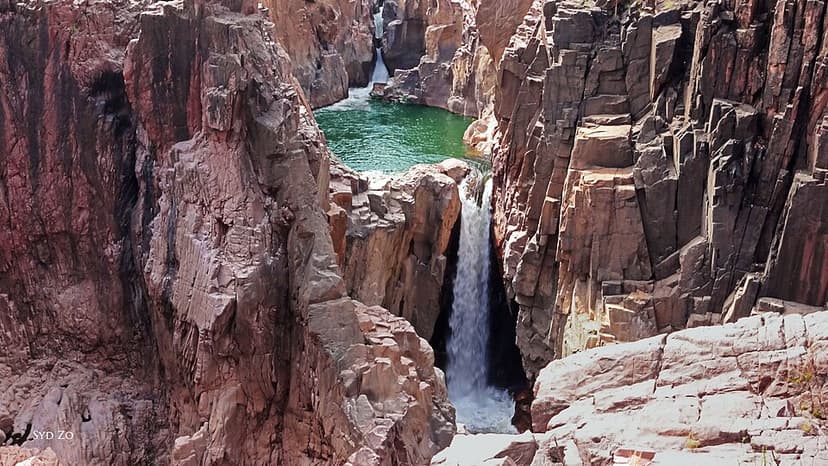
Raneh Falls
Raneh Falls is a natural cascade located on the Ken River in Khajuraho, Madhya Pradesh, India. The falls carve a striking 5-kilometer-long and 30-meter-deep canyon composed of crystalline granite in various colors, with both permanent and seasonal waterfalls. This geological wonder is situated near the Ken Gharial Sanctuary and is part of a gorge rich in igneous rocks. The area is a significant natural attraction, offering a unique display of geological formations and flowing water.