
Raneh Falls
River Canyon·India·Ken River·Granite
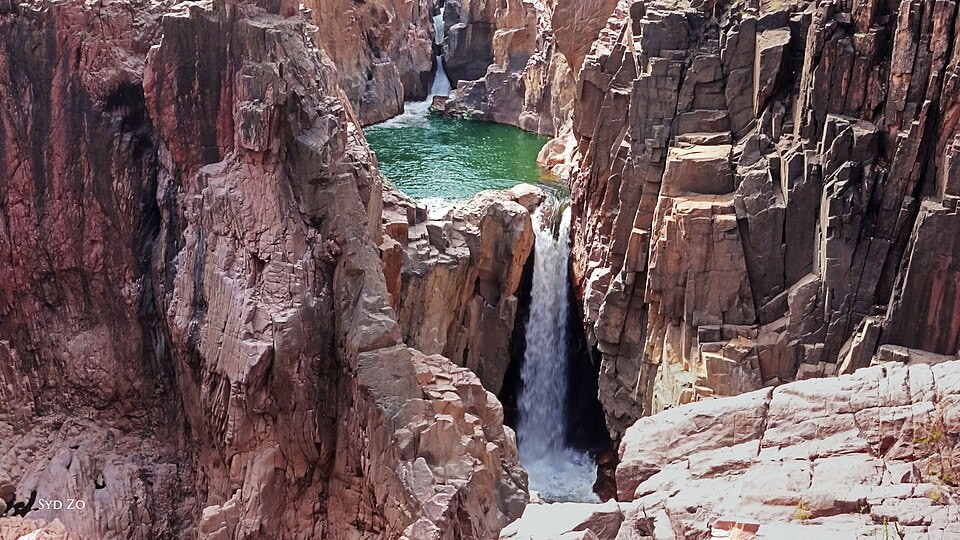
Raneh Falls is a natural cascade located on the Ken River in Khajuraho, Madhya Pradesh, India. The falls carve a striking 5-kilometer-long and 30-meter-deep canyon composed of crystalline granite in various colors, with both permanent and seasonal waterfalls. This geological wonder is situated near the Ken Gharial Sanctuary and is part of a gorge rich in igneous rocks. The area is a significant natural attraction, offering a unique display of geological formations and flowing water.
Key Facts
- ›The canyon is approximately 5 kilometers (3.1 MI) long.
- ›The maximum depth of the canyon is around 30 meters (98 ft).
- ›The canyon walls are made of pure crystalline granite in shades of pink, red, and grey.
- ›It features a series of waterfalls, with larger and smaller falls running year-round and seasonal falls appearing during monsoons.
- ›The Ken River forms the gorge, which is rich in granite and dolomite igneous rocks.
- ›Raneh Falls is located about 20 kilometers (12 MI) from Khajuraho.
River Erosion
Series of Waterfalls, Crystalline Granite Canyon, Colored Granite Rock Formations
About Raneh Falls
Raneh Falls is a significant natural waterfall and canyon located on the Ken River in the vicinity of Khajuraho, within the Indian state of Madhya Pradesh. This geological formation is renowned for its striking canyon, which stretches approximately 5 kilometers in length and plunges to a depth of about 30 meters. The canyon walls are composed of pure crystalline granite, exhibiting a spectrum of colors ranging from delicate pinks and vibrant reds to subtle greys, creating a visually impressive landscape.
Geological Features and Formation
The formation of Raneh Falls is attributed to the erosive power of the Ken River, which has carved this impressive gorge through igneous rocks. The canyon's composition includes granite and dolomite, contributing to its unique coloration and structure. The falls themselves consist of a series of cascades. While some of the larger and smaller waterfalls flow year-round, the monsoon season brings forth additional seasonal falls, enhancing the spectacle.
Location and Surroundings
Situated roughly 20 kilometers from the historic town of Khajuraho, Raneh Falls is a notable natural attraction. Further downstream, at the confluence of the Ken and Khudar rivers, lies the Ken Gharial Sanctuary, indicating the ecological importance of the river system in the region. The nearby Pandav Falls, located within Panna National Park, also highlights the area's rich natural heritage and geological diversity.
Source: Wikipedia ↗
Frequently Asked Questions
What is Raneh Falls?
Raneh Falls is a natural waterfall on the Ken River in Khajuraho, India. It is known for the stunning canyon it has carved out of crystalline granite.
What are the dimensions of the Raneh Falls canyon?
The canyon formed by the Ken River at Raneh Falls is approximately 5 kilometers (3.1 miles) long and reaches a depth of about 30 meters (98 feet).
What kind of rock is the Raneh Falls canyon made of?
The canyon is composed of pure crystalline granite, displaying a variety of colors including pink, red, and grey. The river gorge itself is rich in granite and dolomite igneous rocks.
Are there waterfalls at Raneh Falls?
Yes, Raneh Falls features a series of waterfalls. Larger and smaller falls are present throughout the year, with additional seasonal falls appearing during the monsoon season.
Where is Raneh Falls located?
Raneh Falls is situated in Khajuraho, in the Indian state of Madhya Pradesh. It is located about 20 kilometers (12 miles) away from the famous Khajuraho temples.
What is nearby Raneh Falls?
The Ken Gharial Sanctuary is located downstream from Raneh Falls, at the confluence of the Ken and Khudar rivers. Pandav Falls in Panna National Park is also in the vicinity.
Related Canyons

Gandikota
Gandikota is a historic fort and village situated on the right bank of the Penna River in Andhra Pradesh, India. It is renowned for the Gandikota canyon, a geological formation carved by the Penna River through the Erramala hills. The fort itself has a long history, serving as a strategic center for various dynasties and featuring a blend of architectural styles.

Satkosia Tiger Reserve
Satkosia Tiger Reserve, located in Odisha, India, is a significant protected area known for its tiger conservation efforts and its dramatic gorge carved by the Mahanadi River. Established as a wildlife sanctuary in 1976 and later as a tiger reserve in 2007, it encompasses a diverse ecosystem of moist deciduous forests and riverine habitats.

Coquihalla Canyon
Coquihalla Canyon is a provincial park in southwestern British Columbia, Canada, renowned for its dramatic gorge carved by the Coquihalla River. The canyon features the historic Othello Tunnels, a series of former railway tunnels that are now a popular recreational attraction. Its formation is attributed to the erosive power of the river acting upon granite batholiths, resulting in steep, fragmented walls and a narrow gorge.