
Tara River Canyon
River Canyon·Montenegro, Bosnia and Herzegovina·Tara River
The Tara River Canyon, also known as the Tara River Gorge, is a significant river canyon primarily located in Montenegro, with a portion extending into Bosnia and Herzegovina. Recognized as "The Tear of Europe," it is renowned as the deepest canyon in continental Europe and the third deepest globally. Its formation is attributed to the erosive power of the Tara River, carving through the rugged landscape and creating a unique ecological system.
Key Facts
- ›Depth of up to 1,300 meters (4,300 feet), making it the deepest canyon in continental Europe.
- ›Stretches over 82 kilometers (51 miles) from Bistrica, Montenegro, to Hum, Bosnia and Herzegovina.
- ›The last 36 kilometers form the border between Bosnia and Herzegovina and Montenegro.
- ›Recognized as a UNESCO World Heritage Site as part of Durmitor National Park and a UNESCO "Man and Biosphere" reserve.
- ›Features numerous cascades and rapids, offering whitewater rafting between category 2 and 4.
- ›Is a crucial habitat and spawning ground for the huchen (Hucho hucho) fish.
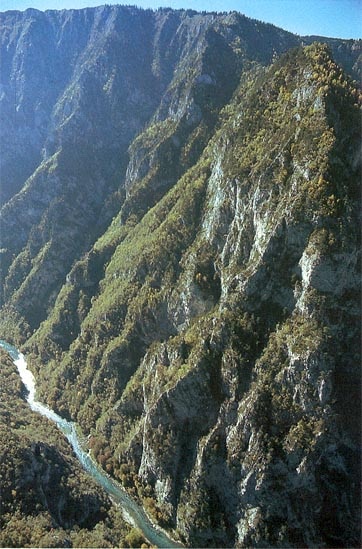
Tara River Gorge, Kanjon Tare, Кањон Таре
River Erosion
High Rocks of the Mountain Range of LjubišNja, Rocky and Pebbly Terraces, Sandy Beaches, High Cliffs, Over 80 Large Caves, Numerous Cascades and Rapids, BajlovićA Sige Wellspring, BučEvica Cave Waterfall
Huchen
About Tara River Canyon
The Tara River Canyon, also referred to as the Tara River Gorge, is a spectacular natural feature carved by the Tara River, predominantly situated in Montenegro with a segment extending into Bosnia and Herzegovina. Dubbed "The Tear of Europe," it is acclaimed as the deepest canyon in continental Europe and ranks as the third deepest globally, surpassed only by the Sulak Canyon and the Grand Canyon.
Geography and Formation
The canyon stretches over 82 kilometers (51 miles), commencing near Bistrica in Montenegro and concluding at Hum in Bosnia and Herzegovina. The final 36 kilometers of its length delineate the border between these two nations. The canyon plunges to a maximum depth of 1,300 meters (4,300 feet), a testament to the relentless erosive power of the Tara River over countless years. Its topography is marked by high cliffs, rocky and pebbly terraces, sandy beaches, and more than 80 caves.
Ecological Significance and Protection
The Tara River, flowing through the canyon, is characterized by its mean fall of 3.6 meters per kilometer, punctuated by a multitude of cascades and rapids that offer whitewater experiences ranging from category 2 to 4. The river is fed by numerous wellsprings and tributaries, contributing to its robust flow. Notably, the Tara River Gorge was recognized in 1977 by UNESCO as part of the "Man and Biosphere" program and was inscribed as a World Heritage Site within Durmitor National Park in Montenegro. In Bosnia and Herzegovina, the canyon's portion is designated as a protected landscape and a nature park. This comprehensive protection ensures the preservation of its unique ecological system, which is a vital habitat and spawning ground for the huchen (Hucho hucho) fish.
Tourism and Activities
The Tara River Canyon is a prime destination for adventure tourism, particularly for whitewater rafting. The most popular one-day rafting route spans 14 kilometers (8.7 miles) from Brstnovica to Sćepan Polje, featuring some of the steepest drops and most challenging rapids. Longer routes are also available, offering a more immersive experience of the canyon's grandeur. Despite its natural appeal, the canyon has faced proposals for hydroelectric dam construction, which have sparked significant environmental concerns and public opposition, underscoring the ongoing efforts to safeguard this natural wonder.
Source: Wikipedia ↗
Frequently Asked Questions
How deep is the Tara River Canyon?
The Tara River Canyon reaches depths of up to 1,300 meters (4,300 feet), establishing it as the deepest canyon in continental Europe and the third deepest worldwide.
What is the length of the Tara River Canyon?
The canyon extends for over 82 kilometers (51 miles), beginning near Bistrica in Montenegro and concluding at Hum in Bosnia and Herzegovina. The final 36 kilometers serve as the border between the two countries.
What geological processes formed the Tara River Canyon?
The canyon was primarily formed by the erosive power of the Tara River over millennia. The river has carved through the mountainous terrain, creating its impressive depth and characteristic features.
Is the Tara River Canyon a protected area?
Yes, the canyon is extensively protected. Within Montenegro, it is part of Durmitor National Park and a UNESCO World Heritage Site. In Bosnia and Herzegovina, the stretch is designated as a nature park, ensuring its ecological preservation.
What activities can be done in the Tara River Canyon?
The Tara River Canyon is a popular destination for whitewater rafting, offering challenging rapids between categories 2 and 4. The best part for rafting with the biggest fall starts from the Brštanovica location.
What is the significance of the Tara River Canyon's water quality?
The water quality of the Tara River is exceptional, and its unique ecological system led to its recognition by UNESCO in 1977 as part of the "Man and Biosphere" program and its inclusion in world ecological biosphere reservations.
Related Canyons

Barron Gorge
Barron Gorge is a dramatic gorge located in Queensland, Australia, carved by the Barron River as it descends the eastern escarpment of the Atherton Tablelands. Renowned for its spectacular waterfalls, particularly the Barron Falls which cascade 265 meters, the gorge is a significant natural landmark within the Wet Tropics World Heritage Area. Historically important for Indigenous peoples and later for hydroelectric power generation, it is now a protected national park and a popular tourist destination.

Chaco Canyon
Chaco Canyon, located in northwestern New Mexico, was a significant cultural and ceremonial center for the Ancestral Puebloans between 900 and 1150 CE. It is renowned for its "great houses," massive multi-story structures built from sandstone blocks and hauled timber, which were among the largest buildings in North America until the 19th century. The canyon's abandonment is believed to be linked to prolonged drought and climate change, leading to the migration of its inhabitants.

Grand Canyon of the Yellowstone
The Grand Canyon of the Yellowstone is a significant geological feature carved by the Yellowstone River in Yellowstone National Park, Wyoming. Its formation is primarily attributed to river erosion, accelerated by uplift and faulting associated with the Yellowstone Caldera, with notable contributions from massive flash floods at the end of the last glacial period. The canyon is renowned for its vibrant colors, dramatic drop-offs, and the presence of active hydrothermal features, making it a major natural wonder and tourist attraction.