
Three Parallel Rivers
River Canyon·China·Jinsha (Yangtze), Lancang (Mekong), Nujiang (Salween)
The Three Parallel Rivers of Yunnan Protected Areas is a UNESCO World Heritage Site located in the Hengduan Mountains of Yunnan province, China. This region is renowned for its exceptional topographical and biodiversity, where three of Asia's major rivers—the Jinsha (Yangtze), Lancang (Mekong), and Nujiang (Salween)—flow in close proximity, separated by high mountain ranges. The site encompasses diverse ecosystems and is a significant area for both natural and cultural heritage.
Key Facts
- ›Covers a region of 180 km by 310 km with 15 core protected areas totaling over 939,000 hectares.
- ›Features three major Asian rivers—Yangtze, Mekong, and Salween—running parallel for over 300 km.
- ›Adjacent headwaters feed five of Asia's significant rivers: Yangtze, Mekong, Salween, Irrawaddy, and Ganges-Brahmaputra.
- ›Home to approximately 6,000 species of plants, 173 species of mammals, and 417 species of birds.
- ›Recognized as potentially the most biologically diverse temperate region on Earth.
- ›Includes peaks over 6,000 meters and a wide range of topographical features from gorges to glaciated peaks.

Yunnan Sānjiāng Bìngliú
River Erosion, Tectonic Activity
Tiger Leaping Gorge, Baima-Meili Xue Shan Mountain Range, Karst Landscapes, Glaciated Peaks
Black Snub-Nosed Monkey, Indian Leopard, Snow Leopard, Clouded Leopard, Gaoligong Pika, Gongshan Muntjac, Chinese Shrew Mole, Capped Langur, Stump-Tailed Macaque, Asiatic Wild Dog, Black Musk Deer, Takin, Smooth-Coated Otter, Hoolock Gibbon, Asian Black Bear, Red Panda, Chestnut-Throated Partridge, Lady Amherst's Pheasant, White-Eared Pheasant, Yunnan Nuthatch, Giant Nuthatch, White-Speckled Laughingthrush, Ferruginous Duck, Severtzov's Grouse, Brown-Winged Parrotbill, Ward's Trogon, Black-Necked Crane, Verreaux's Monal-Partridge
Temperate Coniferous Forests, Temperate Broadleaf Forests
About Three Parallel Rivers
Three Parallel Rivers of Yunnan Protected Areas
The Three Parallel Rivers of Yunnan Protected Areas is a globally significant UNESCO World Heritage Site situated in the rugged Hengduan Mountains of China's Yunnan province. This remarkable landscape is defined by the proximity of three of Asia's most vital river systems: the Jinsha (Yangtze), Lancang (Mekong), and Nujiang (Salween). For over 300 kilometers, these rivers flow in close parallel courses, separated by imposing mountain ranges that reach heights exceeding 6,000 meters, before eventually diverging to reach their respective seas.
The protected areas, comprising fifteen distinct zones, showcase an extraordinary range of topographical diversity. This includes deep gorges, karst formations, and glaciated peaks, a testament to the region's location at a critical tectonic plate boundary. The sheer scale and dramatic relief of the landscape make it a place of immense natural beauty and scientific importance. The site's designation as a World Heritage Site in 2003 underscores its outstanding universal value, recognizing its exceptional biodiversity and unique geological setting.
Biodiversity Hotspot
The Three Parallel Rivers region is considered one of the most biologically diverse temperate regions on Earth. It supports a vast array of plant and animal life, with approximately 6,000 species of plants, 173 species of mammals, and 417 species of birds recorded within its boundaries. Many of these species are endemic to the area, highlighting its role as a crucial sanctuary for unique flora and fauna. The diverse vegetation ranges from temperate coniferous to broadleaf forests, providing habitats for iconic species such as the snow leopard, Indian leopard, and the endemic black snub-nosed monkey, as well as a wealth of bird species.
Cultural Significance
Beyond its natural wonders, the Three Parallel Rivers region is also rich in cultural heritage. It is home to a significant number of Yunnan's diverse ethnic minority groups, including the Tibetan, Nu, Lisu, Bai, Pumi, Naxi, and the small Derung people. Many of these communities maintain their traditional ways of life, discernible in their distinct costumes and customs. The presence of these vibrant cultures adds another layer of depth to the region's significance as a place where natural and human history intertwine.
Source: Wikipedia ↗
Frequently Asked Questions
What are the three parallel rivers?
The "Three Parallel Rivers" refers to the upper reaches of the Jinsha (Yangtze), Lancang (Mekong), and Nujiang (Salween) rivers in Yunnan province, China. These rivers flow roughly parallel to each other for a significant distance, separated by high mountain ranges.
Why is the Three Parallel Rivers region a UNESCO World Heritage Site?
It was designated a UNESCO World Heritage Site in 2003 due to its exceptionally rich biodiversity and outstanding topographical diversity. The region's unique geography and the confluence of major river systems contribute to its global significance.
What kind of wildlife can be found in the Three Parallel Rivers area?
The protected areas are a haven for diverse fauna, including 173 species of mammals and 417 species of birds. Notable mammals include the endemic black snub-nosed monkey, snow leopard, and Indian leopard, alongside numerous other species.
What geological processes formed the Three Parallel Rivers?
The region's dramatic topography, including deep gorges and high peaks, is associated with its location at a 'collision point' of tectonic plates. This geological setting, combined with river erosion, has shaped the unique landscape.
What are some notable features of the Three Parallel Rivers protected areas?
Key features include the Baima-Meili Xue Shan mountain range with its highest peak at 6,740 meters, the Tiger Leaping Gorge, and diverse natural reserves like Gaoligongshan National Nature Reserve. The site also encompasses karst landscapes and glaciated peaks.
Are there significant human settlements or cultures in the region?
Yes, the region is home to many of Yunnan's ethnic groups, including the Derung, Tibetan, Nu, Lisu, Bai, Pumi, and Naxi peoples. Many of these groups maintain traditional customs and attire.
Related Canyons
Longtan Grand Canyon
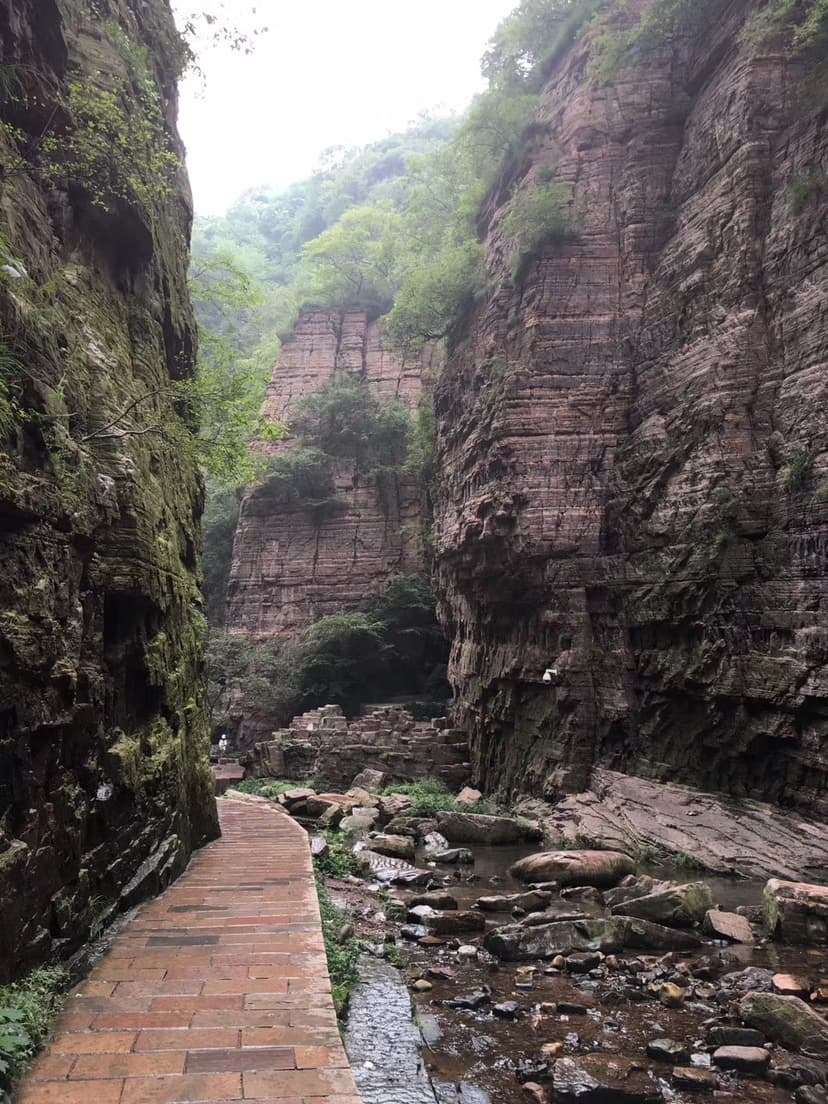
Longtan Grand Canyon is a prominent tourist attraction located in Xin'an County, Luoyang, Henan, China. This U-shaped valley, stretching 12 kilometers, is celebrated for its majestic mountains, serene valleys, cascading waterfalls, and distinctive purplish-red quartz sandstone shaped by centuries of water erosion. It is recognized as a significant part of the Wangwushan-Daimeishan UNESCO Global Geopark and has been lauded as the "First Gorge of Chinese Valleys."

Tiger Leaping Gorge
Tiger Leaping Gorge is a profound river canyon located on the Jinsha River in southwestern China, renowned for its dramatic scenery and the legendary tale of a tiger leaping across its narrowest point. Situated between the Jade Dragon Snow Mountain and Haba Snow Mountain, it is a significant part of the Three Parallel Rivers of Yunnan Protected Areas World Heritage Site and a popular destination for hikers.

Huguan Taihang Grand Canyon
Huguan Taihang Grand Canyon is a significant geographical feature and popular tourist destination located in Shanxi, China. Formed by the uplift of the Taihang Mountains and subsequent river erosion, it features a complex network of deep gorges and steep slopes. The area is recognized for its geological importance, with deep gorges cutting through ancient carbonate rocks, and is a major attraction drawing millions of visitors annually.