
Tiger Leaping Gorge
River Canyon·China·Jinsha River (Upper Yangtze River)
Tiger Leaping Gorge is a profound river canyon located on the Jinsha River in southwestern China, renowned for its dramatic scenery and the legendary tale of a tiger leaping across its narrowest point. Situated between the Jade Dragon Snow Mountain and Haba Snow Mountain, it is a significant part of the Three Parallel Rivers of Yunnan Protected Areas World Heritage Site and a popular destination for hikers.
Key Facts
- ›Approximately 15 kilometers (9.3 miles) in length.
- ›Maximum depth of approximately 3,790 meters (12,430 feet).
- ›Located between Jade Dragon Snow Mountain (5,596 M) and Haba Snow Mountain (5,396 M).
- ›The narrowest point of the river within the gorge is 25 meters (82 ft) wide.
- ›Inhabited primarily by the indigenous Nakhi people.
- ›Part of the three Parallel Rivers of Yunnan Protected Areas World Heritage Site.

虎跳峡, Hǔ tiào xiá
River Erosion
Jade Dragon Snow Mountain, Haba Snow Mountain, Tiger Leaping Stone, Rapids, Waterfalls
Micro-Ecosystems
About Tiger Leaping Gorge
Tiger Leaping Gorge (Chinese: 虎跳峡; pinyin: Hǔ tiào xiá) is a breathtaking river canyon situated on the Jinsha River, a major tributary of the upper Yangtze River, in southwestern China. Located approximately 60 kilometers (37 miles) north of Lijiang City in Yunnan province, it is celebrated for its dramatic topography and the legendary tale that gives it its name.
Geography and Formation
The gorge stretches for about 15 kilometers (9.3 miles) and is defined by the dramatic passage of the Jinsha River between the towering peaks of the 5,596-meter (18,360 ft) Jade Dragon Snow Mountain and the 5,396-meter (17,703 ft) Haba Snow Mountain. The river here descends through a series of powerful rapids, flanked by steep cliffs that plunge nearly 2,000 meters (6,600 ft) to the water's edge. At its narrowest point, the river is compressed to just 25 meters (82 ft) wide. The immense scale of the gorge is further emphasized by its maximum depth of approximately 3,790 meters (12,430 feet) from the river to the adjacent mountain peaks, making it one of the deepest river canyons in the world.
Legend and Inhabitants
According to local legend, the gorge earned its name from a hunted tiger that escaped its pursuer by leaping across the river at its narrowest point, using a large rock in the middle as a stepping stone. The primary inhabitants of the gorge are the indigenous Nakhi people, who live in scattered hamlets. Their livelihoods are largely based on grain cultivation and, increasingly, on the tourism generated by the gorge's popularity.
Tourism and Access
Tiger Leaping Gorge was officially opened to foreign tourists in 1993, although it had already gained recognition among adventurous backpackers in the 1980s. Hiking is a primary activity, with well-maintained trails offering spectacular views. The 'high road' trail, approximately 22 kilometers (14 miles) long, traverses varied micro-ecosystems and passes numerous waterfalls, with guesthouses available for trekkers. A lower road also exists, which follows the river more closely and is subject to rockslides, with portions sometimes disappearing into the river. The gorge is not considered navigable; attempts to raft through it have historically been perilous.
Environmental Significance and Development
Tiger Leaping Gorge is an integral part of the Three Parallel Rivers of Yunnan Protected Areas, recognized as a World Heritage Site since 2003. Despite its protected status, proposals for a hydroelectric dam on the Jinsha River emerged in the early 2000s. These plans, which threatened to displace local populations, alter the river's flow, and irrevocably change the gorge's landscape, were ultimately scrapped in December 2007 following significant environmental concerns. Plans for further development of roads and infrastructure continue to be discussed, often eliciting strong opinions from the local Nakhi community, ranging from opposition to support.
Notable Features
Key geographical landmarks include the imposing Jade Dragon Snow Mountain and Haba Snow Mountain. The Tiger Leaping Stone, a prominent rock in the river, is central to the gorge's namesake legend. The area is also known for its natural crystals, which are mined from surrounding regions. The diverse micro-ecosystems along the hiking trails contribute to the gorge's natural richness.
Source: Wikipedia ↗
Frequently Asked Questions
What is the legend behind the name Tiger Leaping Gorge?
The gorge is named after a legend where a hunted tiger escaped its pursuer by leaping across the river at its narrowest point. This legendary jump is said to have been made using a large rock situated in the middle of the river.
How deep is Tiger Leaping Gorge?
Tiger Leaping Gorge is one of the deepest river canyons globally, with a maximum depth of approximately 3,790 meters (12,430 feet) from the river's surface to the mountain peaks above.
What are the main hiking routes in Tiger Leaping Gorge?
There are two main hiking routes: the 'high road' and the 'lower road'. The high road is longer and more varied, offering micro-ecosystems and waterfalls, while the lower road follows the river more closely with more direct gorge views.
Is Tiger Leaping Gorge a protected area?
Yes, Tiger Leaping Gorge is an essential part of the Three Parallel Rivers of Yunnan Protected Areas, which was designated as a World Heritage Site in 2003.
What kind of development is planned for Tiger Leaping Gorge?
Officials have plans to improve existing trails and roads to accommodate tour buses and further development. These plans have generated mixed reactions from the local Nakhi population.
Has there ever been a hydroelectric dam project in Tiger Leaping Gorge?
Yes, the Chinese government proposed a hydroelectric dam project on the Jinsha River in 2004. However, the Yunnan provincial government scrapped the project in December 2007 due to significant environmental and cultural concerns.
Related Canyons
Longtan Grand Canyon
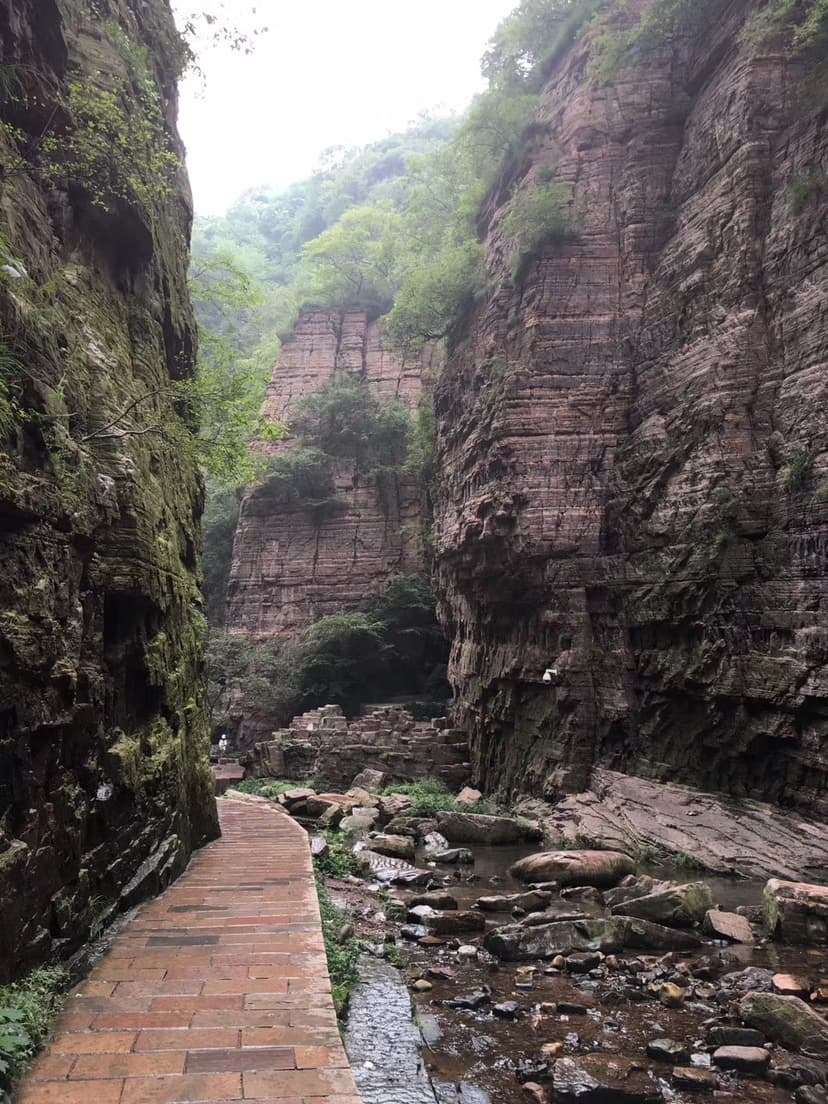
Longtan Grand Canyon is a prominent tourist attraction located in Xin'an County, Luoyang, Henan, China. This U-shaped valley, stretching 12 kilometers, is celebrated for its majestic mountains, serene valleys, cascading waterfalls, and distinctive purplish-red quartz sandstone shaped by centuries of water erosion. It is recognized as a significant part of the Wangwushan-Daimeishan UNESCO Global Geopark and has been lauded as the "First Gorge of Chinese Valleys."

Three Parallel Rivers
The Three Parallel Rivers of Yunnan Protected Areas is a UNESCO World Heritage Site located in the Hengduan Mountains of Yunnan province, China. This region is renowned for its exceptional topographical and biodiversity, where three of Asia's major rivers—the Jinsha (Yangtze), Lancang (Mekong), and Nujiang (Salween)—flow in close proximity, separated by high mountain ranges. The site encompasses diverse ecosystems and is a significant area for both natural and cultural heritage.

Huguan Taihang Grand Canyon
Huguan Taihang Grand Canyon is a significant geographical feature and popular tourist destination located in Shanxi, China. Formed by the uplift of the Taihang Mountains and subsequent river erosion, it features a complex network of deep gorges and steep slopes. The area is recognized for its geological importance, with deep gorges cutting through ancient carbonate rocks, and is a major attraction drawing millions of visitors annually.