
Caiman latirostris
The broad-snouted caiman (Caiman latirostris) is a large crocodilian native to eastern and central South America, inhabiting freshwater wetlands like marshes and swamps, as well as rivers and lakes. It is distinguished by its unusually broad snout, which is adapted for navigating dense vegetation and crushing shells, and it is known to be an omnivore, consuming invertebrates, fish, birds, mammals, and even fruits.
Key Facts
- ›Inhabits freshwater wetlands, floodplains, marshes, swamps, and mangrove forests.
- ›Possesses a broad snout adapted for crushing shells and navigating dense vegetation.
- ›Diet includes invertebrates, turtles, snails, fish, birds, small mammals, amphibians, reptiles, and plant fruits.
- ›Reproduction is temperature-dependent, with warmer temperatures producing males and cooler temperatures producing females.
- ›Historically threatened by hunting for its skin, now facing habitat destruction due to deforestation and pollution.
- ›Considered the third-largest alligatorid species.

Freshwater Wetlands, Floodplains, Marshes, Swamps, Mangrove Forests, Streams, Rivers, Lakes, Ponds, Man-Made Cow Ponds, Disused Stock Tanks, Canals, Ditches
- Adults Normally Grow To 2 To 2.5 m In Length, With Some Males Reaching Up To 3.5 m.
- Captive Adults Weigh Between 23 To 65 kg; A 2.6 m Male Can Weigh Around 80 kg.
- Most Individuals Are Light Olive-Green In Color.
- Possesses A Notably Broad Snout, Adapted For Crushing Shells and Navigating Dense Vegetation.
- Some Individuals Have Spots On Their Faces.
- Females Lay 18 To 50 Eggs Per Clutch, Though Up To 129 Eggs Have Been Found In A Single Nest.
- Eggs Are Laid In Two Layers With A Slight Temperature Difference.
- Sex Determination Is Temperature-Dependent: Warmer Temperatures Produce Males, Cooler Temperatures Produce Females.
- Estrogen and Stress Levels of the Mother Can Influence Sex Ratios.
- Other Factors Besides Temperature Can Affect the Male-Female Sex Ratio of Offspring.
About Caiman latirostris
Broad-Snouted Caiman (Caiman latirostris)
The broad-snouted caiman, scientifically known as Caiman latirostris, is a prominent crocodilian species found across eastern and central South America. It is a significant inhabitant of the Pantanal region, spanning parts of Bolivia, southeastern Brazil, and Paraguay, and its range extends to northern Argentina and Uruguay.
Classification and Size
This species belongs to the family Alligatoridae and is one of three living species within the genus Caiman. It ranks as the second-largest caiman species, surpassed only by the black caiman, and is the third-largest alligatorid overall. Adults typically measure between 2 to 2.5 meters in length, though exceptional males have been recorded up to 3.5 meters. Captive specimens usually weigh between 23 to 65 kg, with larger individuals reaching around 80 kg.
Physical Characteristics
The most distinctive feature of the broad-snouted caiman is its exceptionally wide snout, which is perfectly adapted for its lifestyle. This broad snout is crucial for crushing the shells of its prey and for maneuvering through the dense vegetation common in its marshy habitats. Most individuals exhibit a light olive-green coloration, and some may have facial spots. The snout's structure also leads them to ingest some vegetation while foraging.
Habitat and Diet
Broad-snouted caimans thrive in diverse freshwater wetland environments. Their preferred habitats include floodplains, marshes, swamps, and even some mangrove forests. They are also found in various streams, rivers, lakes, and ponds, favoring areas with still or slow-moving water. Notably, they have adapted to utilize man-made water bodies such as cow ponds, disused stock tanks, canals, and ditches.
The diet of Caiman latirostris evolves with age. Hatchlings feed on small invertebrates like beetles and arachnids. As they grow, their jaws develop the strength to crush shells, allowing them to consume turtles and snails. Mature adults broaden their diet to include small mammals, birds, larger fish, amphibians, and reptiles. Captive observations and studies suggest they are omnivorous, occasionally consuming plant matter like fruits from the 'split-leaf philodendron,' and play a role in seed dispersal.
Reproduction and Conservation
Reproduction in broad-snouted caimans is characterized by temperature-dependent sex determination. Females lay between 18 to 50 eggs in nests, with the temperature of incubation playing a critical role in the sex of the offspring: warmer temperatures (32°C or higher) yield males, while cooler temperatures (31°C or lower) produce females. While hunting for their valuable skin significantly impacted populations from the 1940s onwards, protective legislation has helped their numbers recover. The primary current threat is habitat destruction, driven by deforestation and pollution runoff.
Source: Wikipedia ↗
Frequently Asked Questions
What is the broad-snouted caiman's habitat?
The broad-snouted caiman primarily inhabits freshwater wetlands such as floodplains, marshes, swamps, and mangrove forests. They also frequent streams, rivers, lakes, and ponds, showing a preference for still or slow-moving water bodies, and will utilize man-made features like cow ponds and canals.
What does the broad-snouted caiman eat?
The diet of the broad-snouted caiman varies with age. Hatchlings eat small invertebrates, adolescents crush shells to eat turtles and snails, and adults consume a wider range including small mammals, birds, larger fish, amphibians, reptiles, and even fruits, making them omnivores.
How does temperature affect the broad-snouted caiman's offspring?
The broad-snouted caiman's sex determination is temperature-dependent. Eggs incubated at warmer temperatures (32°C or higher) develop into males, while those at cooler temperatures (31°C or lower) develop into females. This mechanism helps ensure a more even ratio of males and females.
What are the main threats to the broad-snouted caiman?
Historically, the biggest threat to the broad-snouted caiman was large-scale hunting for its valuable skin. Currently, habitat destruction caused by deforestation and pollution runoff poses the most significant danger to the species' survival.
How large does a broad-snouted caiman grow?
Adult broad-snouted caimans typically grow to between 2 to 2.5 meters (6 ft 7 in to 8 ft 2 in) in length in the wild. However, some older males have been recorded reaching up to 3.5 meters (11 ft).
What is distinctive about the broad-snouted caiman's physical appearance?
The most striking physical characteristic of the broad-snouted caiman is its exceptionally broad snout, which gives the species its name. This snout is well-suited for crushing the shells of its prey and for navigating through the dense vegetation found in its marshy habitats.
Related Crocodilians

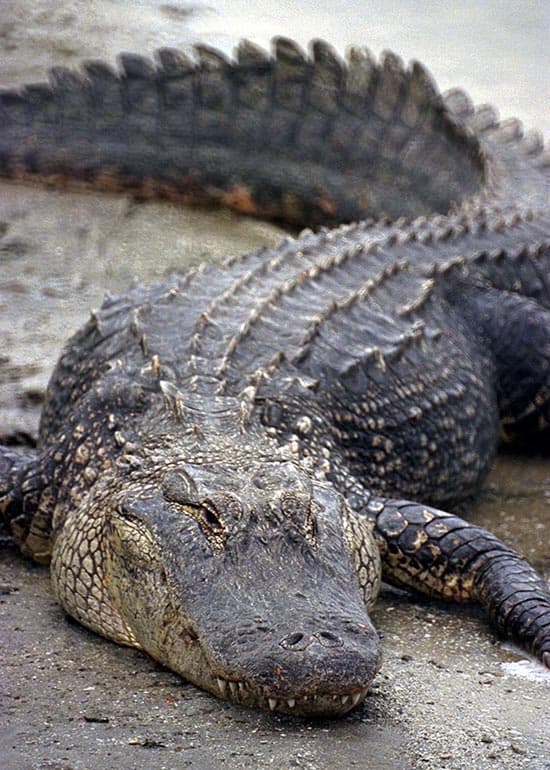
American alligator
The American alligator (Alligator mississippiensis) is a large crocodilian reptile native to the Southeastern United States. It is distinguished by its broad, U-shaped snout and darker coloration compared to the American crocodile. These apex predators play a crucial role as ecosystem engineers in freshwater wetlands, creating vital habitats for other organisms.

Caiman yacare
The yacare caiman, also known as the Paraguayan caiman or piranha caiman, is a species of crocodilian found in South America. It is characterized by its brown coloration with dark blotches and can be distinguished by its lower jaw teeth that can poke through holes in the upper jaw. Historically hunted for its skin, its populations have recovered due to conservation efforts and trade restrictions.
Alligatoridae
The Alligatoridae family encompasses alligators, caimans, and their extinct relatives, forming a distinct lineage within the crocodilian order. This family is characterized by a bony septum between the nostrils and overlapping bony scutes on their ventral armor, distinguishing them from crocodiles and gharials. Alligatoridae members are found in parts of North and South America, with some species adapted to freshwater environments.