
Ceratozamia sabatoi
Ceratozamia sabatoi is a palm-like cycad species native to Mexico, found specifically in the states of Hidalgo and Querétaro. It is characterized by its rounded to cylindrical trunk and prickly leaves, which can be quite long and composed of numerous leaflets. The species grows in pine-oak forests alongside other tree species.
Key Facts
- ›Endemic to Mexico, found in Hidalgo and Querétaro.
- ›Generally palm-like in appearance.
- ›Trunk is rounded and can reach up to 25 cm in length.
- ›Leaves are prickly, up to 80 cm long, with 12 to 136 leaflets.
- ›Found in pine-oak forest habitats.
- ›Known from only two localities, one of which is degraded.

Mexico
Rounded, Becoming More Cylindrical With Age, Maximum Length of 25 Centimeters
Prickly, Up To 80 Centimeters Long, Composed of 12 To 136 Leaflets
Habitat Degradation By Agriculture, Habitat Degradation By Grazing
About Ceratozamia sabatoi
Ceratozamia sabatoi is a species of cycad belonging to the Zamiaceae family, distinguished by its palm-like appearance. This plant is endemic to Mexico, found exclusively in the states of Hidalgo and Querétaro. It is known from only two specific locations, with one of these sites facing degradation due to agricultural practices and grazing.
Botanical Characteristics
The trunk of Ceratozamia sabatoi is typically rounded when young, gradually becoming more cylindrical as the plant matures, reaching a maximum length of approximately 25 centimeters. The species produces 2 to 6 leaves, which are notably prickly and can extend up to 80 centimeters in length. Each leaf is composed of a significant number of leaflets, ranging from 12 to 136.
Habitat and Ecology
Ceratozamia sabatoi grows within pine-oak forest ecosystems. It shares its habitat with a variety of other plant species, including Arbutus xalapensis, Buddleja cordata, Carya ovata, Litsea glaucescens, Meliosma alba, and Prunus serotina. The limited distribution and the degradation of one of its known localities highlight its vulnerability within its natural environment.
Source: Wikipedia ↗
Frequently Asked Questions
Where is Ceratozamia sabatoi found naturally?
Ceratozamia sabatoi is endemic to Mexico, specifically occurring in the states of Hidalgo and Querétaro. It is known from only two distinct locations within these regions.
What does Ceratozamia sabatoi look like?
This cycad generally resembles a palm tree. It has a trunk that starts rounded and becomes more cylindrical with age, reaching a maximum length of 25 centimeters. Its leaves are prickly and can grow up to 80 centimeters long, each composed of many leaflets.
What kind of habitat does Ceratozamia sabatoi grow in?
Ceratozamia sabatoi thrives in pine-oak forest environments. It is found growing alongside other tree species such as Arbutus xalapensis, Buddleja cordata, Carya ovata, Litsea glaucescens, Meliosma alba, and Prunus serotina.
Are there any threats to Ceratozamia sabatoi?
Yes, one of the known localities for Ceratozamia sabatoi is degraded due to agricultural activities and grazing. This suggests habitat loss and alteration are significant threats to its survival.
Related Cycad species

Cycas media
Cycas media is a palm-like, cone-bearing plant found in seasonally dry tropical woodlands along the east coast of Queensland, with additional populations in northern Northern Territory and Western Australia. Its distinctive dark green, leathery leaves are pinnately divided and emerge in annual cycles from a large apical bud. The species is notable for its tolerance to bushfires, often regrowing leaves shortly after a fire.
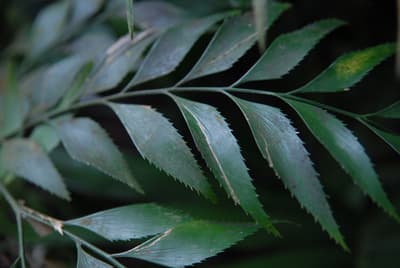
Bowenia serrulata
Bowenia serrulata, commonly known as the Byfield fern, is a unique cycad species belonging to the Stangeriaceae family. Despite its fern-like appearance due to its bipinnate fronds, it is botanically classified as a cycad. This species is endemic to a small region near Byfield, Australia.

Bowenia spectabilis
Bowenia spectabilis is a striking cycad species native to the rainforests of northeastern Queensland, Australia. Known for its unique, fern-like foliage, this species thrives in moist lowland forests and sheltered slopes. Its subterranean, yam-like rhizome has historically been utilized as a food source by Indigenous Australians.