
Cycas annaikalensis
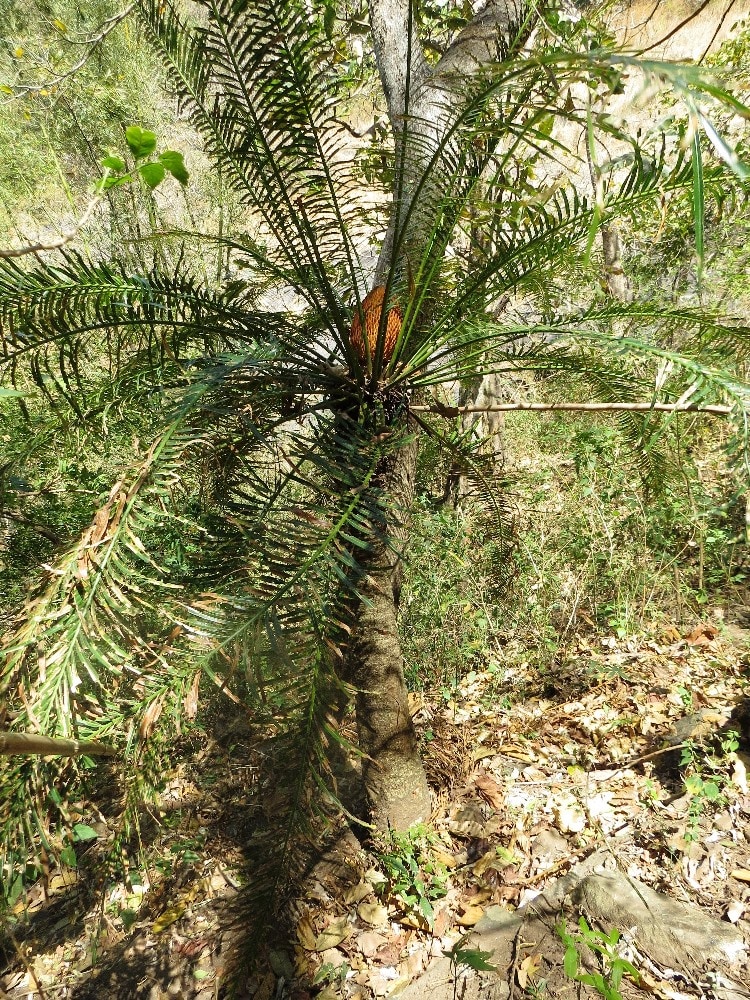
The natural habitat of Cycas annaikalensis is restricted to the Annaikal Hills in Kerala, India. Specific details about its preferred biome or ecological niche are not widely documented, but its endemism suggests a very specialized environment.·Arborescent (tree-like), typical of the Cycas genus.·Critically Endangered
Cycas annaikalensis is a critically endangered cycad species native to the Annaikal Hills of Kerala, India. Discovered in 2006, this species is endemic to a very small region and faces an extremely high risk of extinction, with fewer than 100 individuals remaining in the wild. Its botanical characteristics are typical of the Cycas genus, though specific details beyond its endangered status and limited distribution are not extensively documented in available records.
Key Facts
- ›Critically Endangered status according to the IUCN Red List.
- ›Endemic to the Annaikal Hills in Kerala, India.
- ›Discovered as a distinct species in 2006.
- ›Fewer than 100 individuals are estimated to exist in the wild.
- ›Belongs to the genus Cycas.
India
Typically A Trunk-Forming Stem.
- Leaves are characteristic of the Cycas genus, though specific dimensions or textures for Cycas annaikalensis are not detailed in available records.
- Pinnately compound leaves are a general feature of the genus.
- As a cycad, it reproduces via cones.
- Male and female cones are borne on separate plants.
- Seeds are borne on the margins of the female cone-like structures.
Habitat Loss, Small Population Size
About Cycas annaikalensis
Cycas annaikalensis is a species of cycad that holds the grim distinction of being classified as Critically Endangered. This designation highlights the extreme vulnerability of the species, with fewer than 100 individuals believed to survive in its natural habitat. The species is confined to a very specific and limited geographic area, making it highly susceptible to environmental changes and human impact.
Discovery and Distribution
The scientific description of Cycas annaikalensis dates back to 2006, marking its relatively recent formal recognition within the botanical world. Its native range is extremely restricted, being endemic to the Annaikal Hills, a particular locale situated near Palakkad in the Indian state of Kerala. This narrow distribution underscores the importance of conservation efforts focused on this specific region.
Conservation Concerns
The critically endangered status of Cycas annaikalensis is a direct consequence of its dwindling population and restricted habitat. Factors such as habitat loss are significant threats to its survival. The low number of individuals remaining poses a substantial challenge to the species' long-term viability and genetic diversity. As a member of the Cycas genus, it exhibits typical cycad characteristics, including dioecious reproduction, where male and female reproductive structures are borne on separate plants.
Source: Wikipedia ↗
Frequently Asked Questions
What is the conservation status of Cycas annaikalensis?
Cycas annaikalensis is classified as Critically Endangered by the IUCN Red List. This designation indicates an extremely high risk of extinction in the wild.
Where is Cycas annaikalensis found naturally?
This cycad species is indigenous to the Annaikal Hills, a specific region located near Palakkad in the state of Kerala, India. It is endemic to this particular area.
When was Cycas annaikalensis discovered?
Cycas annaikalensis was formally identified and described as a distinct species in the year 2006. Its discovery highlights the ongoing exploration and documentation of plant biodiversity.
How many Cycas annaikalensis individuals are left?
Current estimates suggest that there are fewer than 100 individuals of Cycas annaikalensis remaining in its natural habitat. This low population size contributes significantly to its critically endangered status.
Related Cycad species

Ceratozamia zaragozae
Ceratozamia zaragozae is a critically endangered cycad species native to a specific region in northeastern Mexico. It is characterized by its unique botanical features, though detailed descriptions are limited in available records. Its survival is significantly threatened by habitat loss.
Ceratozamia hildae
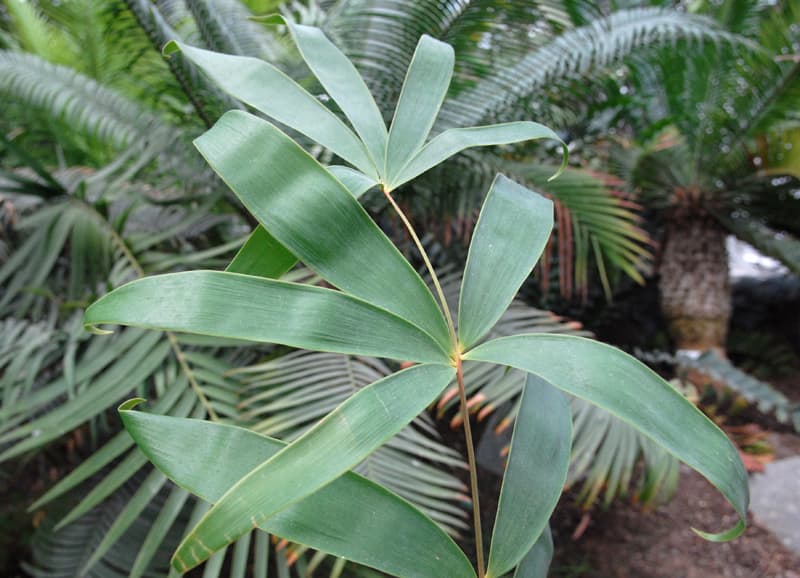
Ceratozamia hildae, commonly known as the Bamboo Cycad, is a species native to Mexico, thriving in moist, humid tropical forests. It is distinguished by its long, papery leaves that cluster at nodes, giving it a bamboo-like appearance, and an underground stem that initially develops a branched root system before producing above-ground stems.

Cycas angulata
Cycas angulata is the largest Australian species of cycad, distinguished by its tall, often branched stems and numerous grey-green to glaucous leaves reaching up to 1.7 meters in length. Native to the Northern Territory and northwest Queensland, it is occasionally cultivated as an ornamental plant and its seeds were historically used as a food source by Aboriginal Australians after careful detoxification.