
Cycas inermis
Semi-deciduous and evergreen seasonal tropical forests, often near coastal areas.·Arborescent·Vulnerable
Cycas inermis is a plant species belonging to the Cycadaceae family, native to Laos and Vietnam. It is characterized by an erect trunk and pinnate fronds with numerous lanceolate leaflets. This dioecious species produces distinct male and female cones and is found in seasonal tropical forests on various soil types.
Key Facts
- ›Native to Laos and Vietnam.
- ›Belongs to the Cycadaceae family.
- ›Features an erect trunk up to 4 meters high.
- ›Fronds are pinnate, reaching up to 3 meters in length.
- ›Dioecious species with separate male and female reproductive structures.
- ›Classified as a vulnerable species by the IUCN Red List.

ThiêN Tuế, Tuế Lá QuyếT
Laos, Vietnam
Erect Trunk, Up To 1.5–4 m High, Diameter of 80–140 mm, Exhibits Growth Rings
- Pinnate fronds
- 2.2–3 m in length
- Surround the crown at the apex of the stem
- Long petiole
- Composed of 130-230 pairs of lanceolate leaflets
- Leaflets are dark green
- Leaflet margin is entire and toothed
- Leaflets are approximately 290–350 mm long
- Leaflets are placed on the spine at an angle of 60-80°
- Male cones are ovoid shaped, 120 mm long and 80 mm wide, producing microspores.
- Female reproductive structures bear megaspores in large numbers on the upper part of the stem, appearing as pinnate leaves enclosing ovules in clumps of 4.
- Megasporophylls have laminae described as "laciniate".
- Oblong seeds
- 50–60 mm long
- Coated with an orange-brown tegument when ripe
About Cycas inermis
What is Cycas inermis?
Cycas inermis is a species of cycad belonging to the Cycadaceae family. It is native to the Southeast Asian countries of Laos and Vietnam, where it can be found in coastal regions and seasonal tropical forests. The plant is notable for its erect trunk, which can reach heights of up to 4 meters, and its crown of large, pinnate fronds. Its Vietnamese names include Thiên tuế and Tuế lá quyết.
Botanical Characteristics
The trunk of Cycas inermis is characterized by growth rings and can have a diameter of up to 140 mm. The fronds are substantial, measuring between 2.2 and 3 meters in length, each composed of numerous lanceolate leaflets. These leaflets are dark green and arranged in pairs along the rachis. The species is dioecious, meaning it has separate male and female individuals. Male plants produce ovoid cones, while female plants bear their reproductive structures, megasporophylls, which are described as "laciniate" or fringed, containing ovules.
Distribution and Habitat
Cycas inermis is predominantly found in Vietnam, extending from near Da Nang south to Cát Tiên National Park, as well as in Laos. It thrives in semi-deciduous and evergreen seasonal tropical forests, often in proximity to coastal areas. The species shows a preference for soils derived from granite, volcanic-metamorphic rock, or volcanic basalt.
Conservation Status
Recognizing the pressures on its natural populations, Cycas inermis has been classified as a Vulnerable species by the International Union for Conservation of Nature (IUCN) Red List. This status indicates that the species is at a high risk of extinction in the wild.
Source: Wikipedia ↗
Frequently Asked Questions
What does the scientific name "Cycas inermis" mean?
The name Cycas inermis translates to "unarmed," which might seem confusing as the petioles do possess small spines. This name likely refers to the absence of larger, more prominent thorns often found on other cycad species.
Where is Cycas inermis found naturally?
This cycad species is indigenous to Laos and Vietnam. It is particularly widespread in the coastal areas of southern and central Vietnam, thriving in regions where seasonal tropical forests persist.
What kind of soil does Cycas inermis prefer?
Cycas inermis is adapted to grow on a variety of soil types. It thrives particularly well on granitic, volcanic-metamorphic, or volcanic-basaltic soils.
How are the male and female reproductive parts of Cycas inermis structured?
Cycas inermis is dioecious, meaning it has separate male and female plants. Male specimens produce ovoid terminal cones that disperse microspores, while female specimens bear megaspores in clumps of four, resembling pinnate leaves that enclose ovules.
What is the conservation status of Cycas inermis?
According to the IUCN Red List, Cycas inermis is classified as a vulnerable species. This designation highlights concerns about its population numbers and the threats it faces in its natural habitat.
Related Cycad species
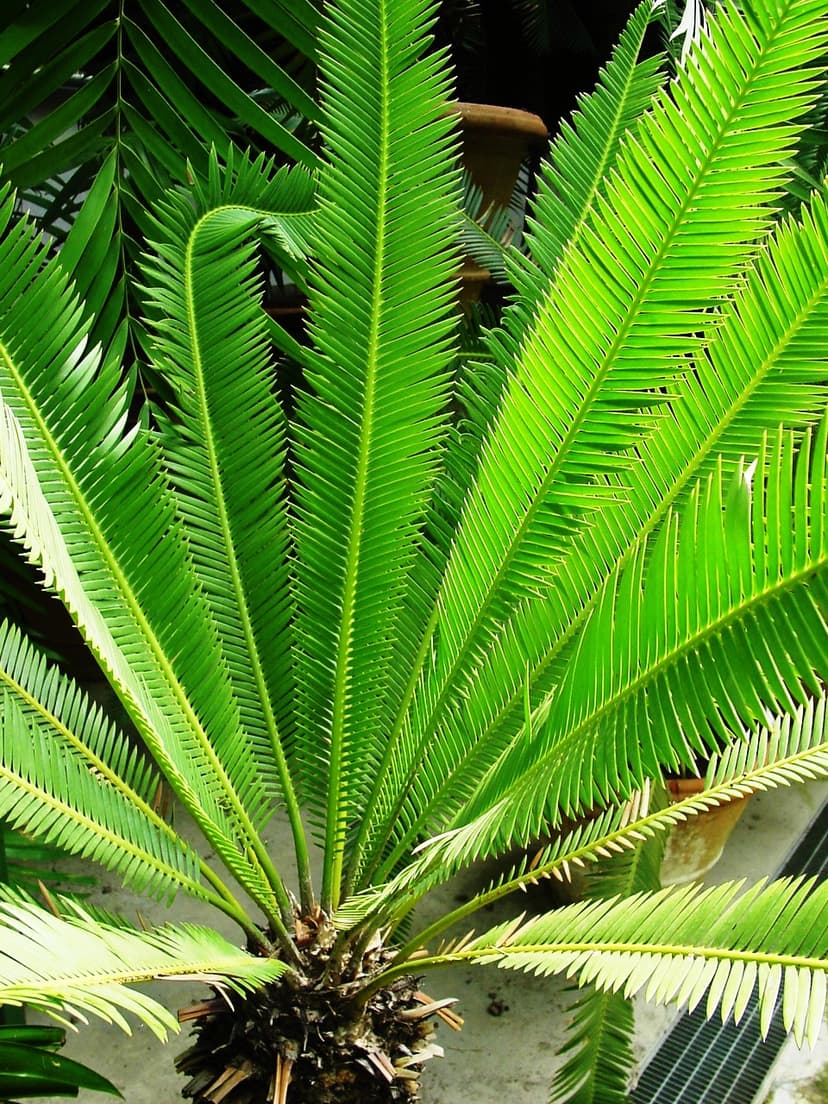
Dioon purpusii
Dioon purpusii, commonly known as Purpus' cycad, is a cycad species native to a limited region in Mexico, specifically Oaxaca and Puebla. This species is characterized by its feather-like leaves that sprout from the top of a trunk, which can grow up to 5 meters tall. A unique botanical feature is its obligatory mutualistic relationship with the beetle Pharaxonotha bicolor, which plays a crucial role in its pollination.

Encephalartos altensteinii
Encephalartos altensteinii is a species of palm-like cycad native to South Africa, known for its impressive height and broad, toothed leaflets. It is commonly referred to as the breadtree or Eastern Cape giant cycad and is recognized for its long-lived individuals, with one specimen at the Royal Botanic Gardens, Kew, being considered the world's oldest potted plant. The species is currently listed as vulnerable due to various threats.

Encephalartos senticosus
Encephalartos senticosus is a species of cycad native to the Lebombo Mountains, spanning Mozambique, Eswatini, and South Africa's Kwazulu-Natal province. It is characterized by its trunk that can reach up to 4 meters tall and its stiff, straight leaves, which are typically 110-150 cm long with glossy, dark green leaflets. A key botanical distinction from its close relative, Encephalartos lebomboensis, lies in the stalked nature of its male cones.