
Dioon purpusii
Dry, tropical deciduous forest, often in the shade of trees on steep rocky slopes of deep gorges, alongside cacti, agaves, and Beaucarnea.·Arborescent·Insect (obligatory mutualism with Pharaxonotha bicolor beetle)·Vulnerable
Dioon purpusii, commonly known as Purpus' cycad, is a cycad species native to a limited region in Mexico, specifically Oaxaca and Puebla. This species is characterized by its feather-like leaves that sprout from the top of a trunk, which can grow up to 5 meters tall. A unique botanical feature is its obligatory mutualistic relationship with the beetle Pharaxonotha bicolor, which plays a crucial role in its pollination.
Key Facts
- ›Endemic to a very small region in Mexico (Oaxaca, Puebla).
- ›Grows up to 5 meters high with a trunk diameter of about 40 cm.
- ›Leaves are long (80-160 cm), feather-like, dark gray-green, and composed of numerous narrow leaflets.
- ›Male cones are long and narrow, while female cones are larger and ovoid.
- ›Engages in an obligatory mutualistic relationship with the beetle Pharaxonotha bicolor for pollination.
- ›Assessed as 'Vulnerable' by the IUCN due to declining numbers.
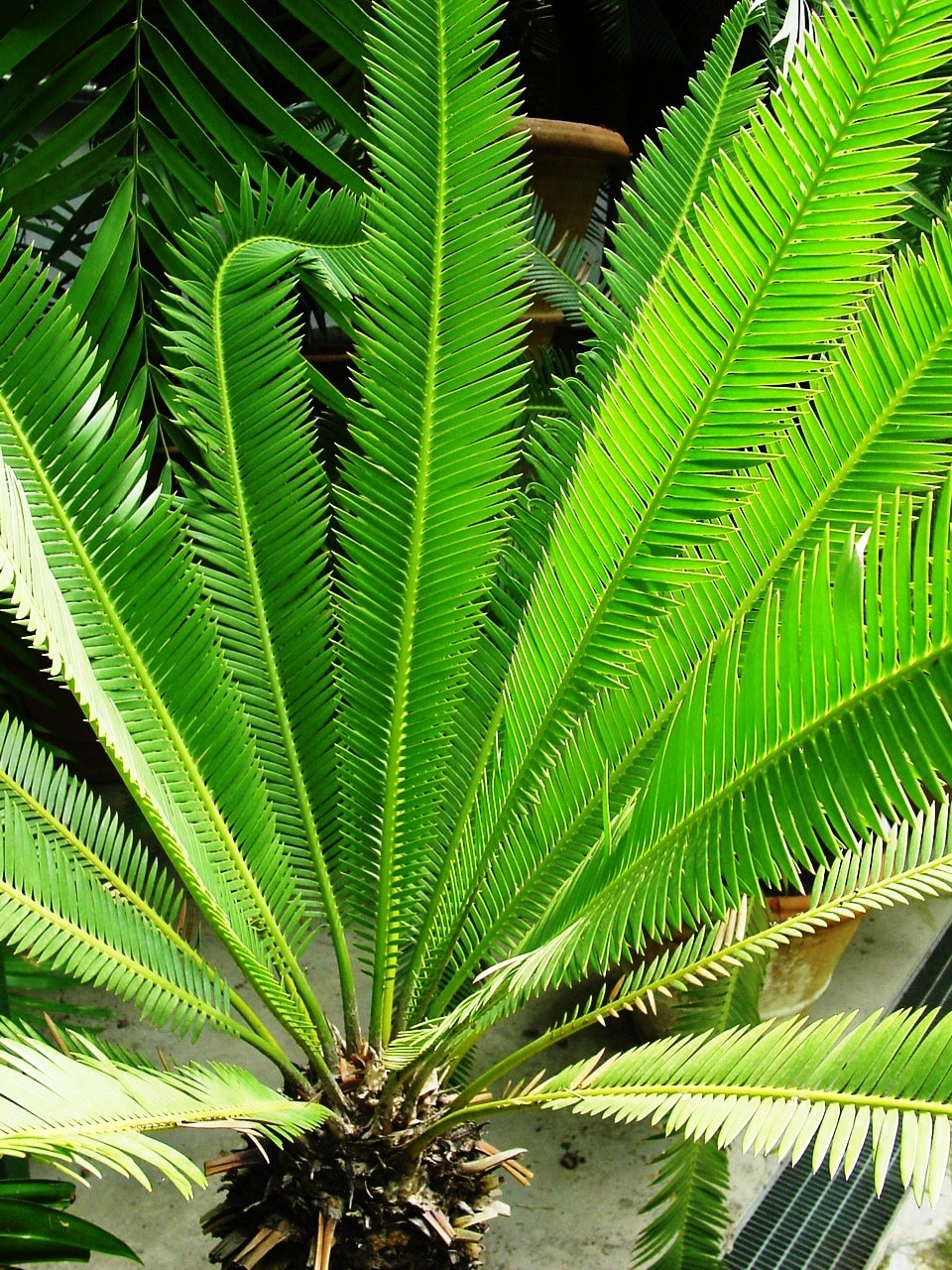
Purpus' Cycad
Mexico
- Grows about 5 meters high or taller.
- Typical diameter at breast height is about 40 cm.
- Long, 80 to 160 cm, feather-like.
- Compound leaves.
- Can be flat or keel-shaped.
- Dark, lusterless gray-green color.
- Each leaf has a rachis with 150 to 260 narrow leaflets.
- Leaflets are inserted along the rachis in symmetrical pairs.
- Leaflets point up and away from the petiole at approximately the same angle.
- The first 5-20 cm of the leaf are fully formed leaflets with flat, dentate margins.
- Leaflets towards the end of the rachis reduce to mere spines.
- Female Cones Are Large , Pale Brown, and Ovoid.
- Male Cones Are Long , Narrow , and Ovoid.
- Male Cones Are Green Or Pallidly Brown.
3–4 cm X 2.5–3.5 cm in size., Ovoid shape., Have cream-colored or white sarcotestas.
Leaves are used locally on Palm Sunday.
Infestations of Cycad Aulacaspis Scale .
About Dioon purpusii
Dioon purpusii: Purpus' Cycad
Dioon purpusii, commonly known as Purpus' cycad, is a distinctive cycad species endemic to a very restricted area within Mexico, specifically found in Tomellín Canyon and the eastern branches of La Cañada de Cuicatlán in the states of Oaxaca and Puebla. This species typically grows into a tree-like form, reaching heights of approximately 5 meters or more, with a substantial trunk diameter of around 40 cm. Its most striking feature is its foliage: long, feather-like leaves that emerge from the apex of the trunk at various angles, displaying a dark, lusterless gray-green hue.
Botanical Characteristics
The leaves of Dioon purpusii are compound, measuring between 80 to 160 cm in length. Each leaf comprises a central rachis adorned with numerous narrow leaflets, ranging from 150 to 260. These leaflets are arranged symmetrically along the rachis and point upwards and away from the petiole. The basal portion of the leaf features fully formed, lanceolate leaflets with flat, dentate margins, while those closer to the tip gradually reduce to spine-like structures. The reproductive structures are also notable: female cones are large, ovoid, pale brown, and seed-bearing, while male cones are longer, narrower, and ovoid, varying in color from green to pallid brown.
Distribution and Habitat
Dioon purpusii is confined to a specific ecological niche within Mexico. It thrives in dry, tropical deciduous forests, often situated in the shade of other trees. The species is predominantly found on the steep, rocky slopes of deep gorges, coexisting with other arid-adapted plants like cacti, agaves, and Beaucarnea. Its natural habitat is characterized by altitudes between 1000 to 1500 meters above sea level, with annual precipitation ranging from 500 to 1000 mm, primarily falling during the summer months. Temperatures in its native range typically range from 20 to 30 °C in summer and 10 to 20 °C in winter.
Ecology and Conservation
A remarkable aspect of Dioon purpusii's ecology is its obligatory mutualistic relationship with the beetle Pharaxonotha bicolor. These beetles inhabit and reproduce within the male cones, feeding on pollen and cone tissues. Crucially, they act as vital pollinators by transferring pollen to the female cones, ensuring the species' reproductive success. Despite its relatively inaccessible habitat and limited local disturbance, Dioon purpusii faces threats. Infestations by the cycad aulacaspis scale (Aulacaspis yasumatsui) have been recorded as a pest. Consequently, the International Union for Conservation of Nature and Natural Resources has assessed its conservation status as 'Vulnerable', with observations indicating a downward trend in its population numbers. The local population utilizes the leaves sparingly, primarily for Palm Sunday celebrations.
Source: Wikipedia ↗
Frequently Asked Questions
What is the scientific name for Purpus' cycad?
The scientific name for Purpus' cycad is Dioon purpusii. This binomial name was given by Joseph Nelson Rose.
Where is Dioon purpusii found naturally?
Dioon purpusii is endemic to a very small region in Mexico, specifically in Tomellín Canyon and the eastern branches of La Cañada de Cuicatlán within the states of Oaxaca and Puebla.
What are the distinctive features of Dioon purpusii leaves?
The leaves of Dioon purpusii are long, typically between 80 to 160 cm, resembling feathers. They are dark, lusterless gray-green and consist of a rachis with 150 to 260 narrow leaflets that point upwards and away from the petiole.
How does Dioon purpusii reproduce?
Reproduction in Dioon purpusii involves pollination facilitated by the beetle Pharaxonotha bicolor. This beetle lives and breeds in the male cones, consuming pollen and cone tissues, and in the process, transfers pollen to the female cones.
What is the conservation status of Dioon purpusii?
Dioon purpusii is classified as 'Vulnerable' by the International Union for Conservation of Nature and Natural Resources. Its population numbers are noted to be trending downwards.
What are the male and female cones of Dioon purpusii like?
The seed cones (female) are large, measuring 35–45 cm in length and 15–20 cm in diameter, and are pale brown and ovoid. The pollen cones (male) are also ovoid but are longer (20–30 cm) and narrower (7-8 cm in diameter), and can be green or pallidly brown.
Related Cycad species

Cycas inermis
Cycas inermis is a plant species belonging to the Cycadaceae family, native to Laos and Vietnam. It is characterized by an erect trunk and pinnate fronds with numerous lanceolate leaflets. This dioecious species produces distinct male and female cones and is found in seasonal tropical forests on various soil types.

Encephalartos altensteinii
Encephalartos altensteinii is a species of palm-like cycad native to South Africa, known for its impressive height and broad, toothed leaflets. It is commonly referred to as the breadtree or Eastern Cape giant cycad and is recognized for its long-lived individuals, with one specimen at the Royal Botanic Gardens, Kew, being considered the world's oldest potted plant. The species is currently listed as vulnerable due to various threats.

Stangeria eriopus
Stangeria eriopus is a unique cycad species native to southern Africa, distinguished by its fern-like leaves that are pinnately-veined. It exhibits considerable variation in leaf length depending on its habitat, with forest forms having longer leaves and grassland forms having shorter, tougher leaves adapted to fire and drought. This species is the sole representative of its genus and is known for its subterranean stem and carrot-shaped tuber.