
Encephalartos altensteinii
Coastal areas including open scrub, steep rocky slopes, evergreen forests in valleys, river banks, and isolated inland mountain sites.·Arborescent, may be branched or unbranched.·Vulnerable
Encephalartos altensteinii is a species of palm-like cycad native to South Africa, known for its impressive height and broad, toothed leaflets. It is commonly referred to as the breadtree or Eastern Cape giant cycad and is recognized for its long-lived individuals, with one specimen at the Royal Botanic Gardens, Kew, being considered the world's oldest potted plant. The species is currently listed as vulnerable due to various threats.
Key Facts
- ›Endemic to South Africa, found in the Eastern Cape and south-western Kwazulu-Natal provinces.
- ›Can grow up to seven meters tall and may be branched or unbranched.
- ›Leaves are long, up to three meters, with rigid, toothed leaflets.
- ›Produces greenish-yellow cones up to 50 cm long; cones and seeds are poisonous to humans.
- ›Known for exceptionally long-lived individuals, with some specimens estimated to be centuries old.
- ›Listed as vulnerable due to habitat destruction, traditional medicine use, and collection.

Breadtree, Broodboom, Eastern Cape Giant Cycad, Ujobane
South Africa
Up To Seven Metres Tall, May Be Branched Or Unbranched
Up to three metres in length, Straight or curved backwards, Leaflets are rigid and fairly broad, One or both margins toothed, No prickles at the base of the leaf
Usually Two To Five Greenish-Yellow Cones, Up To 50 Centimetres Long, Female Scales Covered With Protuberances
Scarlet In Color, Up To Four Centimetres Long
Traditional Medicine
Habitat Destruction, Use For Traditional Medicine, Removal By Collectors
About Encephalartos altensteinii
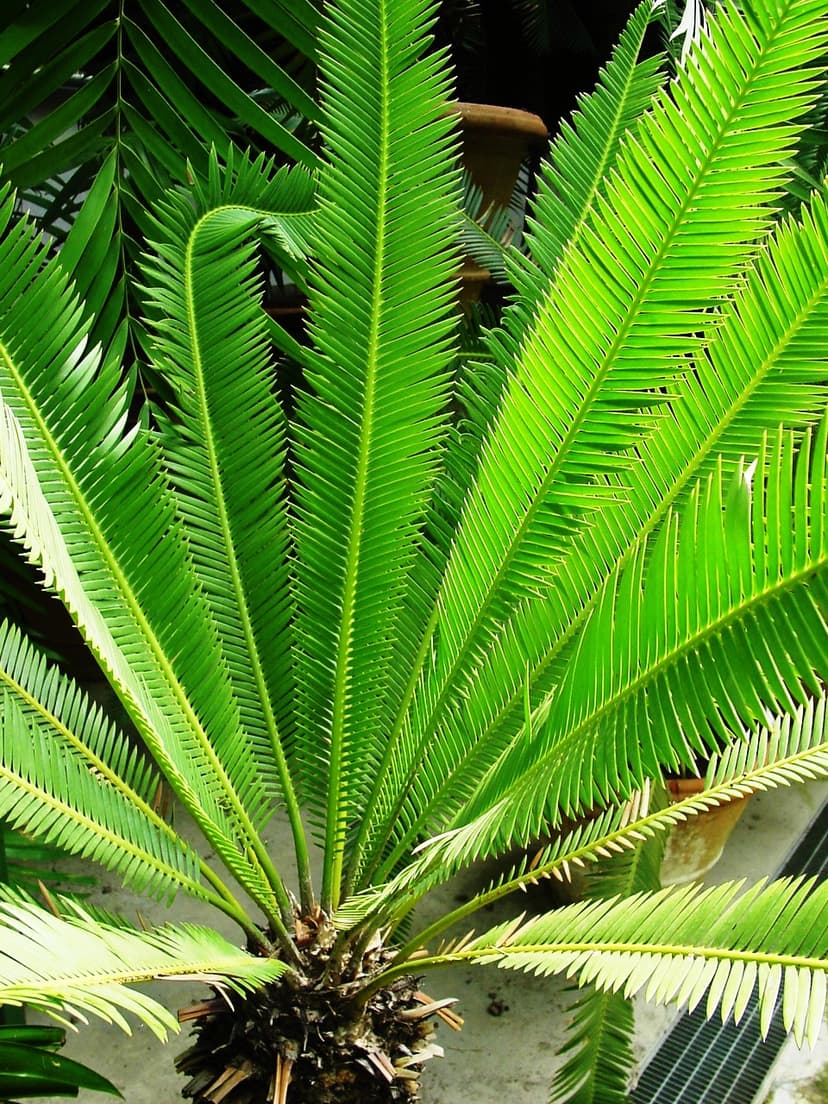
Encephalartos altensteinii is a distinguished species of palm-like cycad belonging to the Zamiaceae family, exclusively found in its native habitat of South Africa. This species is notable for its robust growth, often reaching heights of up to seven meters, with leaves that can extend to three meters in length. The foliage is characterized by rigid, broad leaflets that feature serrated margins, distinguishing it from closely related species like Encephalartos natalensis.
Distribution and Habitat
The natural range of Encephalartos altensteinii spans across the Eastern Cape and south-western KwaZulu-Natal provinces of South Africa. It typically thrives in coastal environments, adapting to diverse sites such as open scrublands, challenging steep rocky slopes, sheltered evergreen forests within valleys, and along riverbanks. The species has also been documented in more isolated inland locations at higher elevations, notably in the Amatola Mountains.
Botanical Significance and Longevity
Encephalartos altensteinii holds a significant place in botanical history due to the remarkable longevity of its individuals. The specimen housed in the Palm House at the Royal Botanic Gardens, Kew, in the United Kingdom, is widely regarded as the oldest potted plant in the world, having been established there in 1775. Other individuals of this species have also demonstrated exceptional lifespans, with one plant in the Lednice Greenhouse, Czech Republic, estimated to be between 300 and 600 years old. The reproductive structures, known as cones, are typically greenish-yellow and can measure up to 50 centimeters in length, with the female cones bearing distinctive protuberances. Both the cones and the scarlet seeds, which can be up to four centimeters long, are known to be poisonous to humans.
Conservation Status
The species is currently classified as Vulnerable on the IUCN Red List. This status reflects significant threats to its survival, including extensive habitat destruction, its utilization in traditional medicine, and the detrimental impact of removal by collectors. These factors underscore the importance of conservation efforts to protect Encephalartos altensteinii in its natural environment.
Source: Wikipedia ↗
Frequently Asked Questions
What is Encephalartos altensteinii commonly known as?
Encephalartos altensteinii is commonly known by several names, including the breadtree, broodboom, Eastern Cape giant cycad, and uJobane in Zulu.
Where is Encephalartos altensteinii found naturally?
This cycad species is endemic to South Africa, with its natural distribution primarily in the Eastern Cape and south-western KwaZulu-Natal provinces.
What are the typical habitats for Encephalartos altensteinii?
Encephalartos altensteinii thrives in coastal areas, favoring open scrub, steep rocky slopes, evergreen forests in valleys, and river banks. It can also be found inland at higher altitudes in isolated mountain sites.
How tall can Encephalartos altensteinii grow?
This cycad species can reach impressive heights, growing up to seven meters (approximately 23 feet) tall. It can grow as a single unbranched stem or develop branches.
Are the cones or seeds of Encephalartos altensteinii safe to consume?
No, the cones and seeds of Encephalartos altensteinii are poisonous to humans. The seeds are scarlet and can be up to four centimeters long.
Why is Encephalartos altensteinii considered vulnerable?
The species is listed as vulnerable primarily due to habitat destruction, its use in traditional medicine, and removal by plant collectors. These factors threaten its survival in its natural environment.
Is Encephalartos altensteinii a long-lived plant?
Yes, Encephalartos altensteinii is known for its longevity. An individual at the Royal Botanic Gardens, Kew, is considered the oldest potted plant in the world, and another in the Czech Republic is estimated to be between 300 and 600 years old.
Related Cycad species

Stangeria eriopus
Stangeria eriopus is a unique cycad species native to southern Africa, distinguished by its fern-like leaves that are pinnately-veined. It exhibits considerable variation in leaf length depending on its habitat, with forest forms having longer leaves and grassland forms having shorter, tougher leaves adapted to fire and drought. This species is the sole representative of its genus and is known for its subterranean stem and carrot-shaped tuber.
Dioon purpusii
Dioon purpusii, commonly known as Purpus' cycad, is a cycad species native to a limited region in Mexico, specifically Oaxaca and Puebla. This species is characterized by its feather-like leaves that sprout from the top of a trunk, which can grow up to 5 meters tall. A unique botanical feature is its obligatory mutualistic relationship with the beetle Pharaxonotha bicolor, which plays a crucial role in its pollination.

Cycas inermis
Cycas inermis is a plant species belonging to the Cycadaceae family, native to Laos and Vietnam. It is characterized by an erect trunk and pinnate fronds with numerous lanceolate leaflets. This dioecious species produces distinct male and female cones and is found in seasonal tropical forests on various soil types.