
Cycas maconochiei
Specific habitat details are not provided, but it is endemic to Australia's Northern Territory.·Arborescent or shrub-like, typical of the genus Cycas.
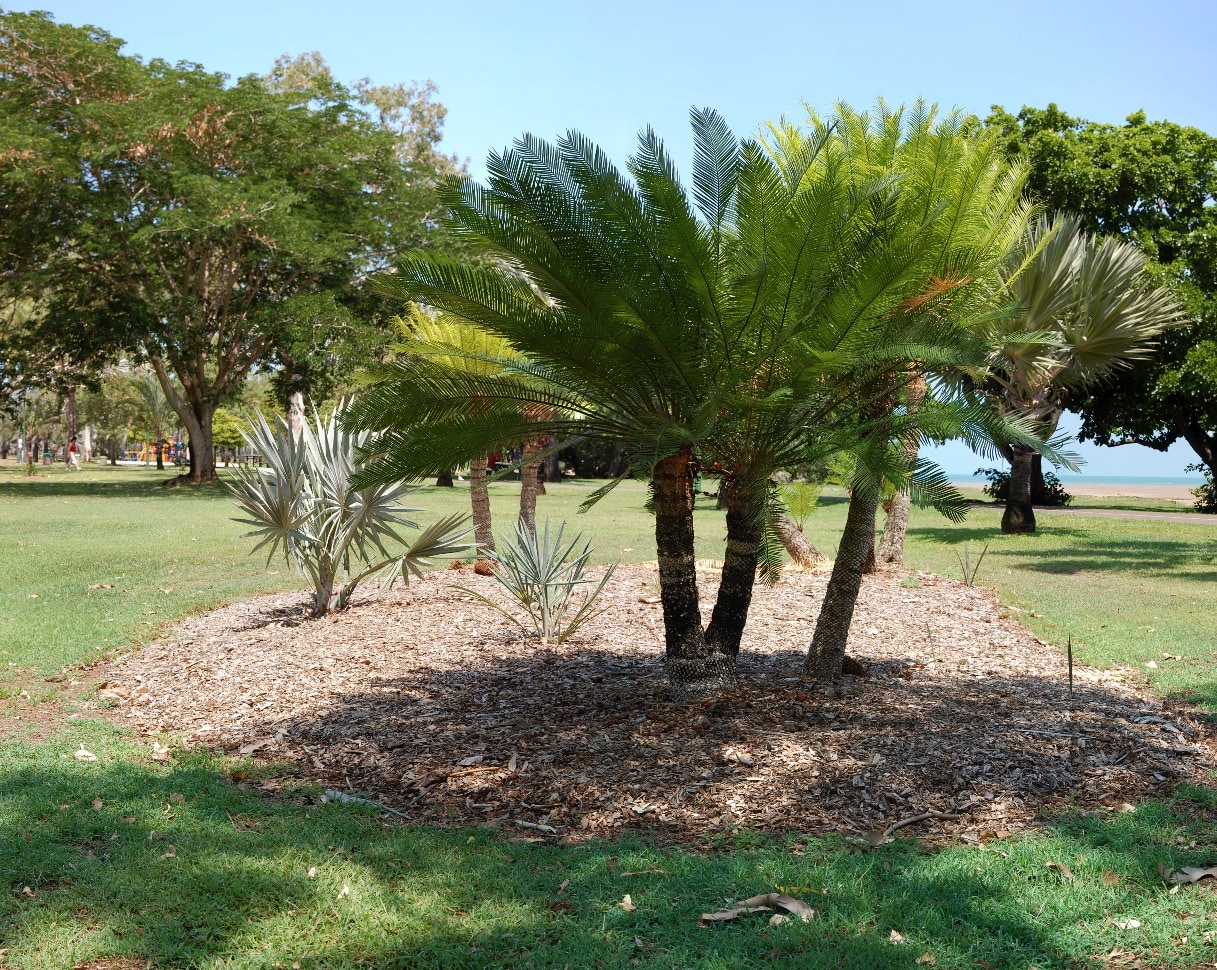
Cycas maconochiei is a species of cycad native to Australia's Northern Territory. It is characterized by its distinct subspecies, which contribute to its botanical diversity within its endemic range.
Key Facts
- ›Endemic to Australia's Northern Territory.
- ›Features three recognized subspecies: C. maconochiei ssp. maconochiei, C. maconochiei ssp. lanata, and C. maconochiei ssp. viridis.
- ›Belongs to the Cycadaceae family.
- ›The specific habitat and growth characteristics are detailed within its subspecies.
- ›Appears to be a slow-growing plant, typical of many cycad species.
Australia
Pinnately Compound Leaves.
- Dioecious, with male and female cones produced on separate plants.
About Cycas maconochiei
Cycas maconochiei is a species of cycad that is exclusively found in Australia's Northern Territory. As a member of the ancient Cycadaceae family, it shares characteristics with other cycads, including its reproductive biology and growth form.
Botanical Classification and Distribution
This species is endemic to the Northern Territory, meaning it is native and restricted to this particular geographic region. Cycas maconochiei is further divided into three distinct subspecies: C. maconochiei ssp. maconochiei, C. maconochiei ssp. lanata, and C. maconochiei ssp. viridis. These subspecies likely represent variations in morphology and potentially habitat preference within the broader Northern Territory range.
Reproductive Characteristics
Like many cycads, Cycas maconochiei is dioecious, a trait that signifies the presence of separate male and female plants. Reproduction involves the development of cones, with male plants producing pollen-bearing cones and female plants bearing seeds, typically on modified leaves. The pollination mechanism for this species is not detailed, but cycads generally rely on factors like wind or insects for pollen transfer.
Source: Wikipedia ↗
Frequently Asked Questions
Where is Cycas maconochiei found?
Cycas maconochiei is endemic to Australia's Northern Territory. Its distribution is localized to this specific region within Australia.
Are there different types of Cycas maconochiei?
Yes, there are three recognized subspecies of Cycas maconochiei. These are C. maconochiei ssp. maconochiei, C. maconochiei ssp. lanata, and C. maconochiei ssp. viridis.
What family does Cycas maconochiei belong to?
Cycas maconochiei belongs to the botanical family Cycadaceae. This family is known for its ancient lineage of seed-bearing plants.
Related Cycad species

Encephalartos horridus
Encephalartos horridus, commonly known as the Eastern Cape blue cycad, is a distinctive, low-growing cycad native to the Eastern Cape Province of South Africa. It is recognized for its striking blue-gray, spiny leaves and typically develops a subterranean stem. This species thrives in arid shrublands and rocky ridges, exhibiting a slow growth rate and requiring specific conditions for successful cultivation.
Encephalartos afer
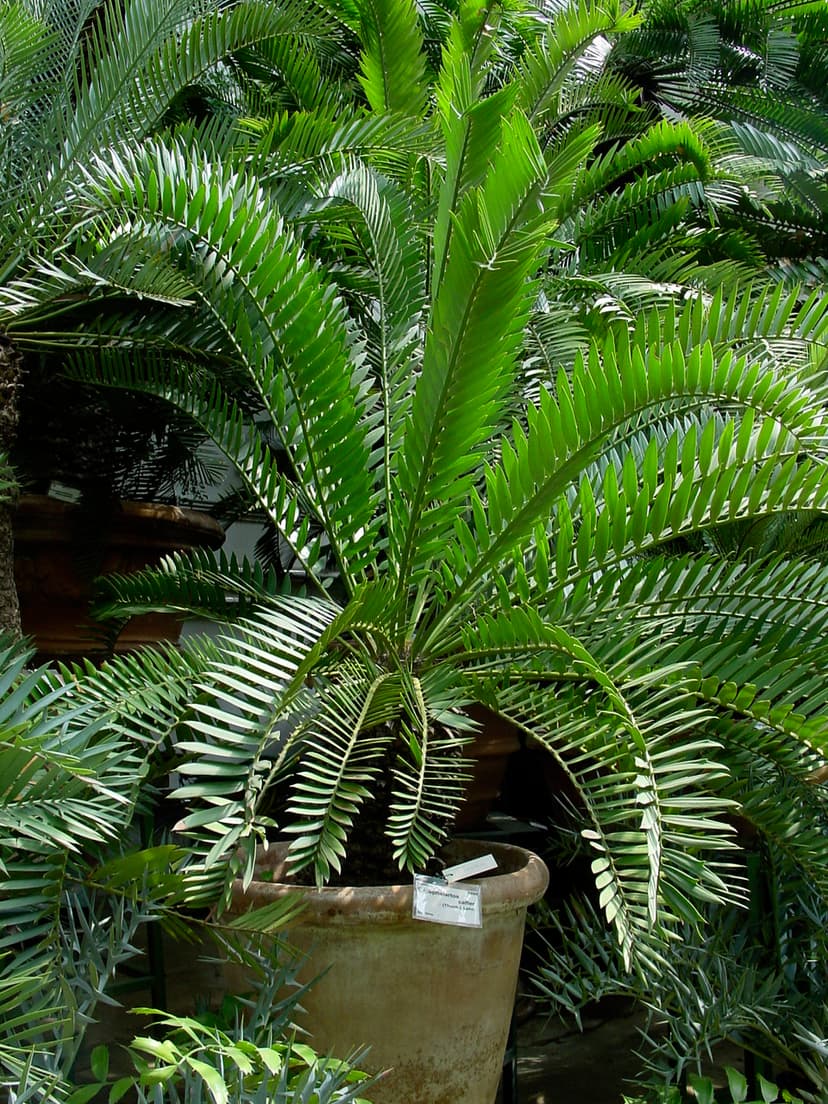
Encephalartos afer, commonly known as the Eastern Cape dwarf cycad, is a species of cycad native to South Africa's Eastern Cape Province. This plant is characterized by its typically underground stem, from which emerge long, pinnate, dark green leaves that often have a distinctive ruffled, feathery appearance due to irregularly twisted leaflets. Both male and female plants produce reproductive cones, with females bearing scarlet-colored seeds.

Encephalartos ghellinckii
Encephalartos ghellinckii, commonly known as the Drakensberg cycad, is an evergreen species endemic to South Africa, primarily found in the Natal Drakensberg region. It thrives in diverse habitats from foothills to high elevations, including stream banks, steep grassy slopes, and sandstone outcrops, demonstrating remarkable resistance to veldfires, snow, and frost. Distinctive features include its olive to yellow-green fronds, narrow leaflets with revolute margins, and lemon-colored, woolly cones.