
Cycas revoluta
Thrives in warm temperate and subtropical regions when grown outdoors; requires bright light when grown indoors. Prefers sandy, well-drained soil.·Arborescent to subterranean in youth, with trunks lengthening above ground with age.·insect or artificial
Cycas revoluta, commonly known as the sago cycad, is a gymnosperm native to southern Japan. It is characterized by a thick, fibrous trunk and a crown of shiny, dark green leaves, and is often mistaken for a palm due to its superficial resemblance. This species is cultivated for its ornamental value and for the production of sago from its pith, though careful processing is required due to its toxicity.
Key Facts
- ›Native to southern Japan, including the Ryukyu Islands.
- ›Possesses a thick, fibrous trunk and a symmetrical crown of dark green, revolute-edged leaves.
- ›Can grow very old and reach significant heights, but is a very slow-growing plant.
- ›All parts of the plant are toxic, with the seeds containing the highest concentration of cycasin.
- ›Widely cultivated as an ornamental plant and for its edible starch, which requires careful detoxification.
- ›Recognized with the Royal Horticultural Society's Award of Garden Merit.
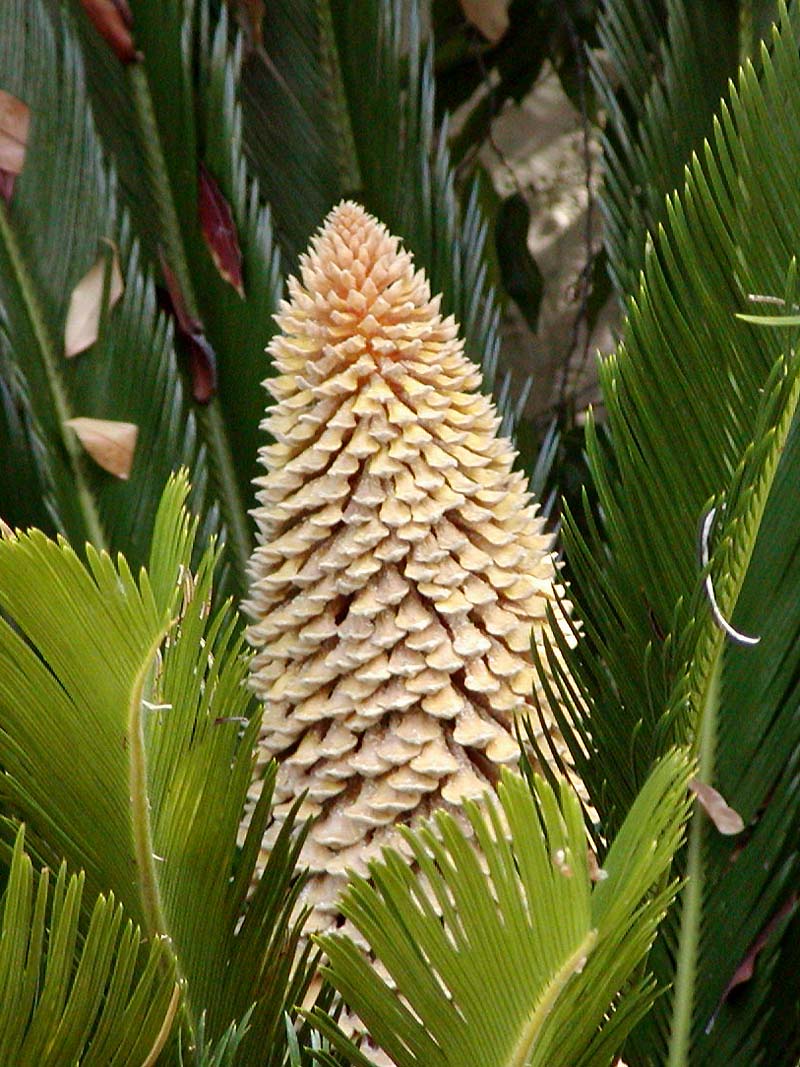
Sago Cycad, Sago Palm, King Sago, Japanese Sago Palm, Kungi Palm
Southern Japan, Ryukyu Islands
- Thick, shaggy trunk, typically about 20 cm in diameter, sometimes wider.
- Trunk is very low to subterranean in young plants.
- Lengthens above ground with age.
- Can grow into very old specimens with 6–7 m of trunk.
- Trunks can branch several times, producing multiple heads of leaves.
- Crown of shiny, dark green leaves.
- Leaves are 50–150 cm long when plants are of reproductive age.
- Feather-like rosette shape, up to 1 m in diameter.
- Crowded, stiff, narrow leaflets are 8–18 cm long.
- Leaflets have strongly recurved or revolute edges.
- Basal leaflets become more like spines.
- Petioles are 6–10 cm long and have small protective barbs.
- Males bear pollen cones.
- Females bear groups of megasporophylls.
- Estragole is the primary volatile compound emitted from both male and female cones.
- Contain the highest level of the toxin cycasin.
- Should not be eaten due to persistent toxins.
- Can cause gastrointestinal irritation and liver failure.
Sago Production, Ornamental Plant, Landscape Plant, Bonsai Plant
Aulacaspis Yasumatsui
About Cycas revoluta
Cycas revoluta, commonly known as the sago cycad, is a striking gymnosperm native to the southern regions of Japan, including the Ryukyu Islands. It is frequently mistaken for a palm tree due to its superficial similarities in appearance, particularly its leaf structure, though they are botanically unrelated. This species is widely recognized for its ornamental value, gracing gardens and botanical collections worldwide, and also holds historical significance as a source of sago starch.
Botanical Characteristics
The sago cycad is distinguished by its robust, fibrous trunk, which can reach substantial heights over many decades, and its dense crown of glossy, dark green leaves. These leaves, typically 50–150 cm long, grow in a symmetrical rosette and feature stiff, narrow leaflets with characteristic revolute edges. The plant is slow-growing, with mature specimens requiring a century or more to reach their impressive stature. Cycas revoluta is dioecious, meaning individual plants are either male or female, producing distinct cones for reproduction. Its root system features symbiotic relationships with cyanobacteria for nitrogen fixation.
Cultivation and Uses
Cycas revoluta is one of the most popular cycads in cultivation, adaptable to various climates with outdoor cultivation in warm temperate and subtropical zones and indoor cultivation in colder regions. It prefers well-drained, sandy soil and tolerates drought and both sun and shade, though indoor plants need ample light. The pith of the trunk and roots contains a starch that can be processed into sago, a food source used similarly to palm sago. However, this processing demands extreme caution due to the plant's inherent toxicity.
Toxicity and Threats
All parts of the sago cycad are toxic, with the seeds containing the highest concentration of cycasin, a potent toxin that can cause severe liver damage and other serious health issues in humans and animals. The plant is particularly dangerous to pets, which may find it palatable. While widely cultivated, the species faces threats from pests like the scale insect Aulacaspis yasumatsui, which can decimate populations if left unchecked.
Source: Wikipedia ↗
Frequently Asked Questions
What is Cycas revoluta?
Cycas revoluta, also known as the sago cycad, is a species of gymnosperm native to southern Japan. It is recognized for its distinctive thick, fibrous trunk and crown of shiny, dark green leaves. The plant is cultivated both for its ornamental appeal and as a source of sago starch.
Is Cycas revoluta a palm tree?
No, Cycas revoluta is not a palm tree, although it is sometimes mistaken for one due to a superficial resemblance in leaf arrangement and its common name 'sago palm'. Botanically, it belongs to the Cycadaceae family, which is distinct from the Arecaceae family of palms.
How large can Cycas revoluta grow?
Cycas revoluta can grow into very old specimens with trunks reaching 6–7 meters (20–23 ft) in height, sometimes wider. The largest known cultivated specimen is 8 meters (26 ft) tall and 1.6 meters (5 ft 3 in) thick. The plant is very slow-growing, requiring 50–100 years to achieve significant height.
What are the uses of Cycas revoluta?
Cycas revoluta is widely cultivated as an ornamental plant in gardens and as a bonsai. Its pith contains edible starch, which is used for producing sago. However, extracting and preparing this starch requires careful washing to leach out inherent toxins.
Is Cycas revoluta poisonous?
Yes, all parts of Cycas revoluta are toxic, particularly the seeds, which contain high levels of the toxin cycasin. Ingestion can cause severe gastrointestinal irritation, liver failure, and even death in animals and humans. Pets are at particular risk.
What are the cultivation requirements for Cycas revoluta?
Cycas revoluta thrives in sandy, well-drained soil with some organic matter and requires good drainage to prevent rot. It grows well in full sun or outdoor shade but needs bright light when grown indoors. It is drought-tolerant and can withstand mild to somewhat cold temperatures if the ground remains dry.
Related Cycad species

Encephalartos horridus
Encephalartos horridus, commonly known as the Eastern Cape blue cycad, is a distinctive, low-growing cycad native to the Eastern Cape Province of South Africa. It is recognized for its striking blue-gray, spiny leaves and typically develops a subterranean stem. This species thrives in arid shrublands and rocky ridges, exhibiting a slow growth rate and requiring specific conditions for successful cultivation.
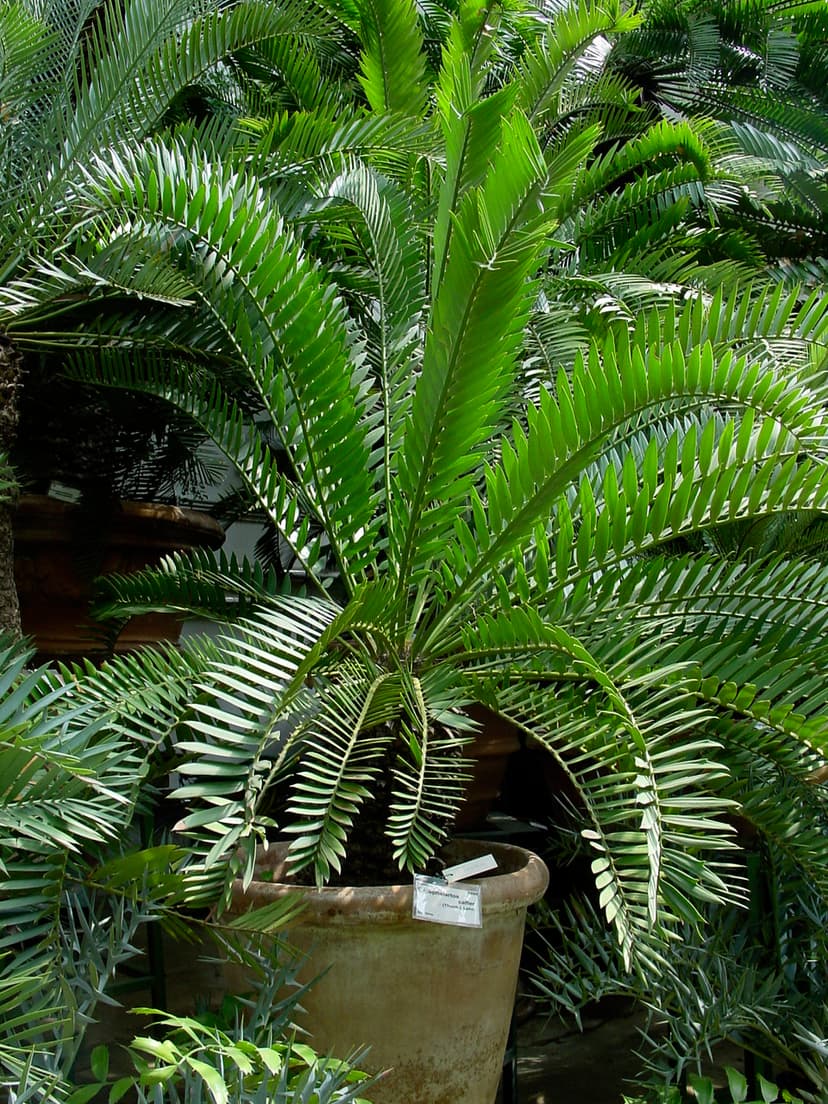
Encephalartos afer
Encephalartos afer, commonly known as the Eastern Cape dwarf cycad, is a species of cycad native to South Africa's Eastern Cape Province. This plant is characterized by its typically underground stem, from which emerge long, pinnate, dark green leaves that often have a distinctive ruffled, feathery appearance due to irregularly twisted leaflets. Both male and female plants produce reproductive cones, with females bearing scarlet-colored seeds.

Encephalartos ghellinckii
Encephalartos ghellinckii, commonly known as the Drakensberg cycad, is an evergreen species endemic to South Africa, primarily found in the Natal Drakensberg region. It thrives in diverse habitats from foothills to high elevations, including stream banks, steep grassy slopes, and sandstone outcrops, demonstrating remarkable resistance to veldfires, snow, and frost. Distinctive features include its olive to yellow-green fronds, narrow leaflets with revolute margins, and lemon-colored, woolly cones.