
Cycas zeylanica
Information on specific habitat preferences is limited, but it is found in island environments.·Unbranched shrub
Cycas zeylanica, also known as maha-madu in Sri Lanka, is an unbranched shrub that can grow up to 3 meters tall. This cycad species is characterized by its long, pinnately compound leaves, each bearing numerous leaflets. While now primarily found in the Andaman and Nicobar Islands, it was historically present in Sri Lanka, though a significant portion of its population there was lost due to the 2004 tsunami.
Key Facts
- ›Endemic to the Andaman and Nicobar Islands, with a historical presence in Sri Lanka.
- ›Grows as an unbranched shrub up to 3 meters in height.
- ›Features long leaves, reaching up to 200 cm, with numerous leaflets.
- ›Male cones are fusiform and measure up to 45 mm, while female cones are up to 30 cm long with 2-5 ovules.
- ›Seeds are flattened to ovoid and are orange-brown in color.

Maha-Madu
Andaman and Nicobar Islands, Sri Lanka
Unbranched, Up To 3 m Tall
Up To 200 cm Long, Green, Glossy, Pinnately Compound, Up To 100 Leaflets
- Pollen-producing cones are fusiform and up to 45 mm long.
- Ovule-producing structures are up to 30 cm long.
- Megasporophylls each bear 2-5 ovules.
Flattened To Ovoid, Orange-Brown
Tsunami of December 2004
About Cycas zeylanica
Cycas zeylanica is a species of cycad recognized for its shrub-like growth habit and distinctive foliage. Commonly known as maha-madu in Sri Lanka, this plant has a unique biogeographical history, being primarily endemic to the Andaman and Nicobar Islands in the present day, with a former significant presence in Sri Lanka.
Botanical Description
As an unbranched shrub, Cycas zeylanica typically reaches a height of up to 3 meters (approximately 9.8 feet). Its leaves are a prominent feature, growing up to 200 centimeters (79 inches) in length. These leaves are green, possess a glossy texture, and are pinnately compound, meaning they are divided into numerous leaflets. Each leaf can bear up to 100 individual leaflets.
Reproductively, Cycas zeylanica exhibits separate male and female structures. The pollen-producing cones, known as microsporophylls, are fusiform (tapering at both ends) and measure up to 45 millimeters (1.8 inches) in length. The ovule-producing structures, or megasporophylls, are considerably larger, reaching up to 30 centimeters (12 inches) long, and each typically contains between 2 to 5 ovules. The seeds produced are flattened to ovoid in shape and are noted for their orange-brown coloration.
Distribution and Conservation
Historically, Cycas zeylanica was found in Sri Lanka, but a devastating event significantly impacted its population there. The tsunami of December 2004 caused the destruction of a majority of the population in Sri Lanka, though a few trees are still cited in the Hanguranketha town Adikarigama area. At present, the species is apparently endemic to the Andaman and Nicobar Islands, indicating a shift in its primary geographic range due to natural disasters.
Source: Wikipedia ↗
Frequently Asked Questions
What is the common name for Cycas zeylanica in Sri Lanka?
In Sri Lanka, Cycas zeylanica is commonly known as maha-madu. This name was used by the local population before its significant population decline.
Where is Cycas zeylanica naturally found?
Currently, Cycas zeylanica is apparently endemic to the Andaman and Nicobar Islands. It was also previously found in Sri Lanka, but its numbers there were severely impacted by the 2004 tsunami.
What are the characteristics of Cycas zeylanica's leaves?
The leaves of Cycas zeylanica are long, reaching up to 200 cm (79 inches) in length. They are green, glossy, and pinnately compound, meaning they are divided into many leaflets, with up to 100 leaflets per leaf.
How does Cycas zeylanica reproduce?
Reproduction involves pollen-producing cones (microsporophylls) and ovule-producing structures (megasporophylls). The male cones are fusiform and up to 45 mm long, while the female structures are up to 30 cm long and contain 2-5 ovules.
What do the seeds of Cycas zeylanica look like?
The seeds of Cycas zeylanica are described as flattened to ovoid in shape. They are orange-brown in color, indicating a stage of maturity.
Related Cycad species
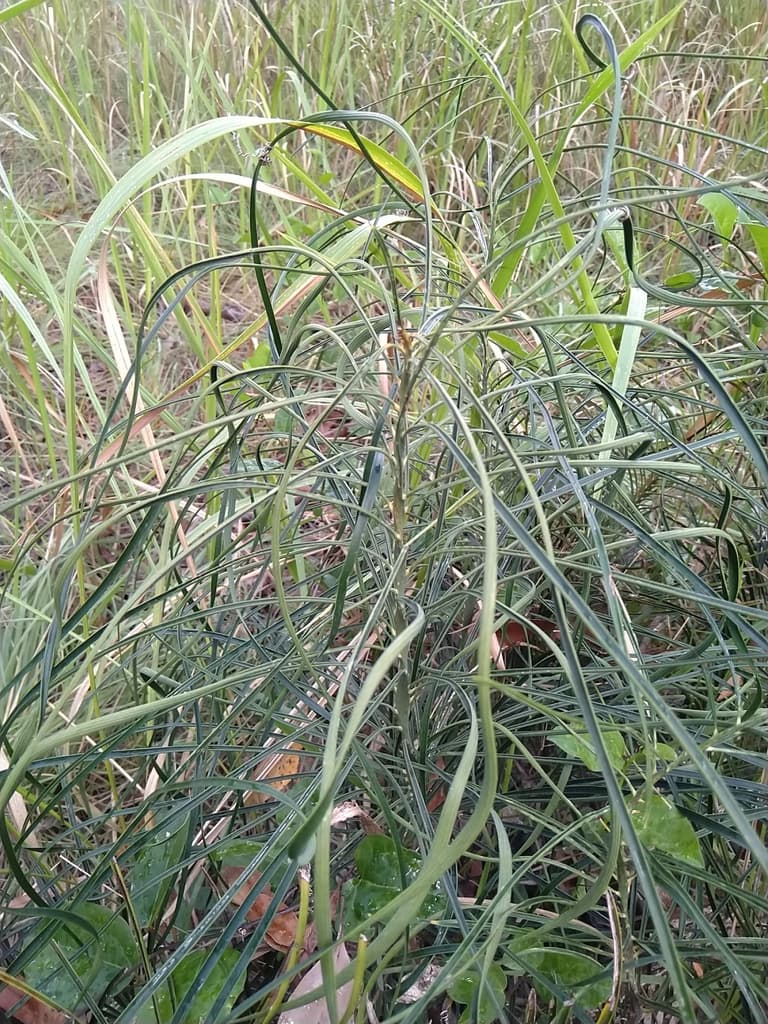
Macrozamia parcifolia
Macrozamia parcifolia is a species of cycad native to Australia, belonging to the Zamiaceae family. Its botanical characteristics are primarily defined by its classification within this family, though specific details regarding its morphology, habitat, and distribution are limited in available records.

Zamia montana
Zamia montana is a critically endangered cycad species endemic to the Antioquia Department of Colombia. Found in subtropical or tropical moist montane forests, this species is characterized by its extreme rarity and the significant threats posed by logging activities within its natural habitat. The species faces a high risk of extinction, with its only known population located in an area that has undergone recent logging.
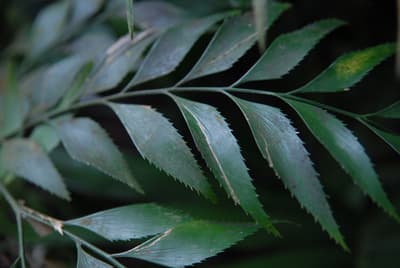
Bowenia serrulata
Bowenia serrulata, commonly known as the Byfield fern, is a unique cycad species belonging to the Stangeriaceae family. Despite its fern-like appearance due to its bipinnate fronds, it is botanically classified as a cycad. This species is endemic to a small region near Byfield, Australia.