
Encephalartos msinganus
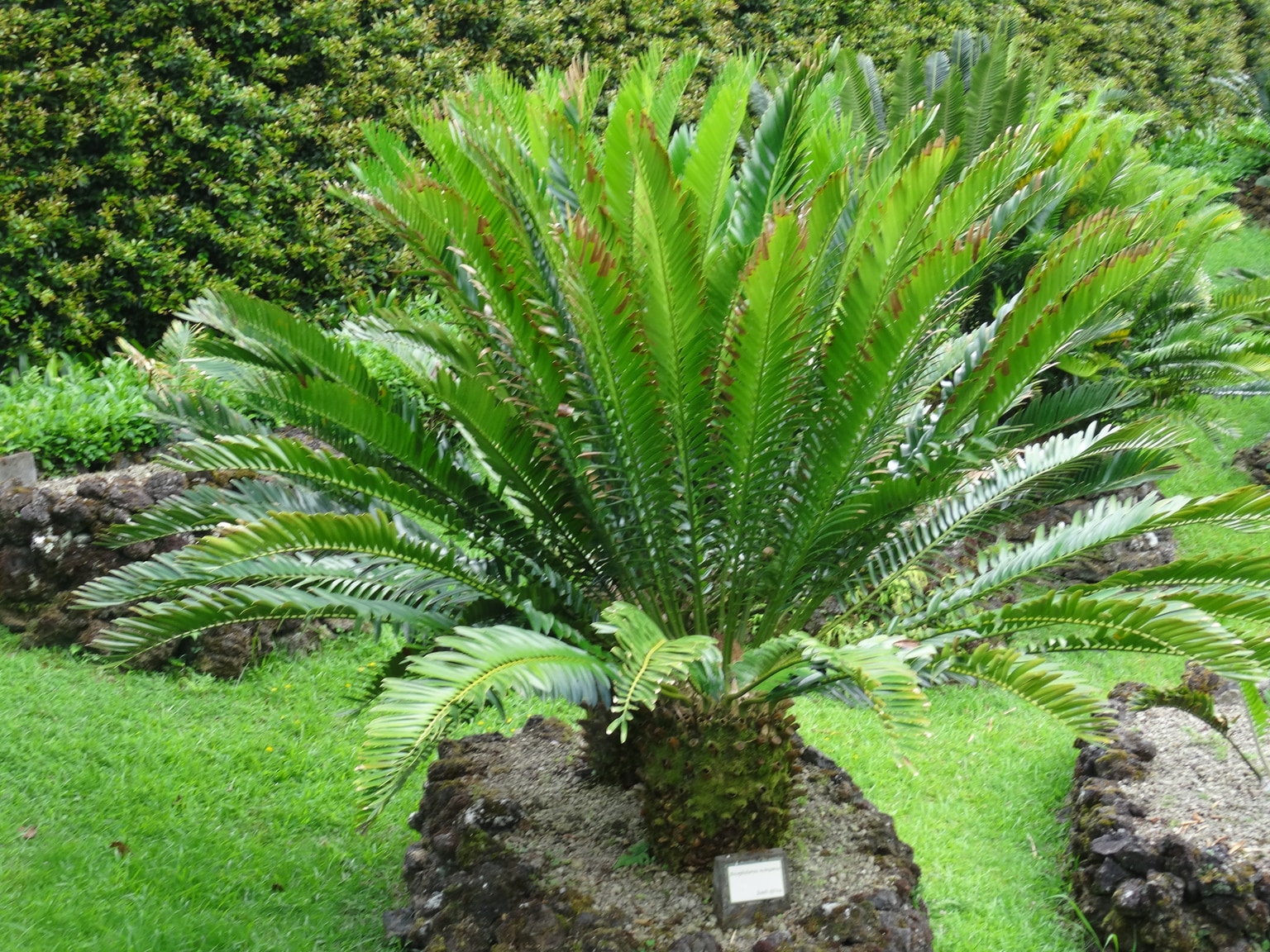
Encephalartos msinganus is a tree-like cycad species native to Kwazulu-Natal, South Africa. It is characterized by its stiff, light green leaves that can reach up to 1.5 meters in length, and its robust, spiny apex. This dioecious species produces distinct male and female cones, with oblong seeds covered in a red sarcotesta.
Key Facts
- ›Native to Kwazulu-Natal, South Africa.
- ›Can grow into a tree-like form with stems up to 3 meters tall.
- ›Leaves are 110-150 cm long, light green, stiff, and keeled.
- ›Leaflets are lanceolate, arranged oppositely at a 60º angle.
- ›Dioecious, with ovoid male cones (30-40 cm long) and larger female cones (42 cm long).
- ›Seeds are oblong and possess a red sarcotesta.
Kwazulu-Natal
Can grow up to 3 meters tall, Up to 35 centimeters in diameter
- Light green color
- Stiff texture
- 110-150 centimeters long
- Keeled shape
- Green spine is straight or slightly curved
- Lanceolate leaflets
- Leaflet margins are smooth
- Leaflet apex thins to form a robust spine
- Basal leaves are smaller and often reduced to spines
- Male cones are ovoid-shaped, pale yellow, 30–40 cm long and 11–12 cm broad, up to four per plant.
- Female cones are ovoid-shaped, about 42 cm long, 22 cm in diameter, may be covered with thin brown hair, usually one or two per plant.
Oblong, Covered By A Red Sarcotesta
About Encephalartos msinganus
Encephalartos msinganus is a species of cycad recognized for its tree-like growth habit and distinctive foliage. Native to the KwaZulu-Natal region of South Africa, this species contributes to the diverse flora of the area.
Botanical Description
The plant typically develops a trunk that can achieve a height of up to 3 meters and a diameter of 35 centimeters. Its leaves are a notable feature, being light green, stiff, and measuring between 110 and 150 centimeters in length, with a pronounced keeled shape. The leaves are composed of lanceolate leaflets, which are arranged oppositely on the rachis at an angle of approximately 60 degrees. These leaflets possess smooth margins and taper to a robust spine at their apex, with basal leaves often reduced to spines.
Reproductive Characteristics
Encephalartos msinganus is a dioecious species, meaning individual plants are either male or female. The male cones are ovoid, pale yellow, and measure between 30 and 40 centimeters in length and 11 to 12 centimeters in breadth, with a single plant capable of producing up to four such cones. Female cones are also ovoid, larger at about 42 centimeters in length and 22 centimeters in diameter, and may be covered in fine brown hair; typically, one or two female cones are produced per plant. The seeds are oblong and are characterized by a red sarcotesta.
Source: Wikipedia ↗
Frequently Asked Questions
What is the typical size of Encephalartos msinganus?
Encephalartos msinganus can grow into a tree-like form, with stems reaching up to 3 meters in height and 35 centimeters in diameter. Its leaves are also substantial, measuring between 110 and 150 centimeters in length.
How are the leaves of Encephalartos msinganus described botanically?
The leaves are light green, stiff, and keeled in shape, typically 110-150 cm long. The lanceolate leaflets are arranged oppositely on the rachis at an angle of approximately 60 degrees. They have smooth margins and taper to a robust spine at the apex.
What are the reproductive cones of Encephalartos msinganus like?
This species is dioecious, meaning it has separate male and female plants. Male cones are ovoid, pale yellow, and measure 30-40 cm long by 11-12 cm broad, with up to four cones per plant. Female cones are similarly ovoid, about 42 cm long and 22 cm in diameter, potentially covered in thin brown hair, with one or two cones typically produced per plant.
What are the seeds of Encephalartos msinganus?
The seeds of Encephalartos msinganus are oblong in shape and are enclosed by a distinctive red sarcotesta.
Related Cycad species
Encephalartos heenanii
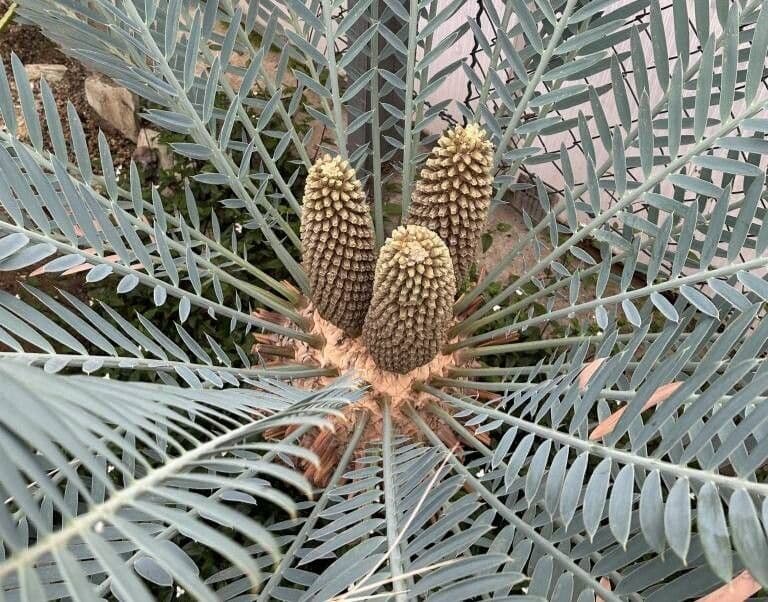
Encephalartos heenanii, commonly known as Heenan's cycad, is a tree-like cycad species native to Southern Transvaal Province, South Africa. It is characterized by its robust stem, reaching up to 3 meters in height, and striking light green leaves that can grow over a meter long. This dioecious species produces distinct male and female cones, with seeds enclosed in a red sarcotesta.

Encephalartos laevifolius
Encephalartos laevifolius is a critically endangered cycad species native to South Africa and Eswatini. It is a tree-like plant that can grow up to 3.5 meters tall, characterized by its pinnate leaves with smooth-edged, leathery leaflets. This dioecious species produces distinct male and female cones, and its seeds are covered in a sarcotesta.

Encephalartos manikensis
Encephalartos manikensis, commonly known as the Gorongo Cycad or Gorongowe Cycad, is a species of cycad native to Mozambique and Zimbabwe. It is characterized by a tree-like structure reaching up to 1.5 meters in height, topped with a crown of feather-like leaves. This dioecious species produces distinct male and female cones, with the female cones being larger and broader than the male ones.