
Macrozamia dyeri
Coastal heath on sand·Arborescent (tree-like)
Macrozamia dyeri, also known as djeeri, is a species of cycad endemic to Western Australia, found near Esperance. It is characterized by a large, above-ground trunk, deeply keeled foliage with wide leaflets, and narrow, extended reproductive cones. While its seeds, when properly prepared, were a significant food source for indigenous peoples, the plant is otherwise toxic to many species due to toxins produced by nitrogen-fixing cyanobacteria in its roots.
Key Facts
- ›Endemic to Western Australia, specifically near Esperance.
- ›Possesses a large, above-ground trunk, giving it a tree-like form.
- ›Features deeply keeled leaves with wide leaflets.
- ›Seeds are edible after correct preparation, historically an important food source.
- ›Contains toxins (macrozamin and cycasin) produced by symbiotic cyanobacteria in its roots.
- ›Found in coastal heath on sandy soils, absent from jarrah woodlands.

Djeeri
Western Australia
Large Above Ground Trunk
Deeply Keeled, Wide Leaflets
Narrow, Extended
- Consumable When Prepared Correctly
- Sarcotesta Contains Toxins
- Central Part of the Seed Still Contains Toxins After Preparation
Food Source
About Macrozamia dyeri
Macrozamia dyeri, known by its Nyungar name djeeri, is a distinctive species of cycad native to the coastal heathlands of Western Australia, specifically found near Esperance. This plant is characterized by its substantial, above-ground trunk, which gives it a tree-like appearance, and its foliage, which features deeply keeled leaves with notably wide leaflets. The reproductive cones are described as narrow and extended.
Ecological and Nutritional Significance
The ecological role and historical significance of Macrozamia dyeri are closely tied to its seeds. While the plant itself is toxic to many species due to toxins like macrozamin and cycasin produced by symbiotic cyanobacteria in its roots, its seeds have been a vital food source for indigenous peoples of the region for millennia. Archaeological evidence points to the preparation of these seeds at least thirteen thousand years ago. The detoxification process involved a specialized method using a mordak and burying the seeds for extended periods. Despite this preparation, the central part of the seed retained some toxins.
Distribution and Dispersal
The distribution of Macrozamia dyeri has been observed to correlate with areas of long-term human habitation, often near freshwater sources like lakes, springs, and granitic outcrops. The dispersal of its seeds is facilitated by various fauna, including birds like the emu and mammals such as the common possum (Trichosurus vulpecula), locally known as quumarl. However, the extent to which human activity, whether intentional or inadvertent, has influenced its dispersal remains a subject of consideration due to the presence of these animal dispersers.
Taxonomy
First formally described in 1885 by Ferdinand von Mueller as Encephalartos dyeri, the species was later reclassified into the Australian genus Macrozamia by Charles Gardner in 1930. The specific epithet, 'dyeri', was chosen to honor W. Thiselton Dyer, who served as the assistant director of Kew Garden at the time of its description. The common name 'djeeri' is derived from the Nyungar language, where it signifies 'Zamia'.
Source: Wikipedia ↗
Frequently Asked Questions
What is Macrozamia dyeri commonly known as?
Macrozamia dyeri is commonly known by the Nyungar language name djeeri. This name refers to the plant as a 'Zamia'.
Where is Macrozamia dyeri found naturally?
Macrozamia dyeri is endemic to Western Australia, occurring in the eastern Recherche section of the Esperance Plains bioregion. Its habitat is coastal heath on sandy soils, typically away from jarrah woodlands.
Are the seeds of Macrozamia dyeri edible?
Yes, the seeds of Macrozamia dyeri are consumable when prepared correctly. Archaeological evidence suggests seeds were prepared for consumption as early as thirteen thousand years ago.
How were the seeds of Macrozamia dyeri prepared for consumption?
The seeds were detoxified by burying them in a depression lined with leaf bases of Xanthorrhoea platyphylla for several weeks. This process, using an instrument called a mordak, removed toxins from the sarcotesta surrounding the seeds.
What makes Macrozamia dyeri toxic?
Macrozamia dyeri produces toxins, specifically macrozamin and cycasin. These toxins are generated by cyanobacteria that engage in nitrogen fixation within the plant's coralloid roots.
What is the scientific classification of Macrozamia dyeri?
Macrozamia dyeri was first described by Ferdinand von Mueller as Encephalartos dyeri in 1885. The current classification within the genus Macrozamia was established by Charles Gardner in 1930.
Related Cycad species
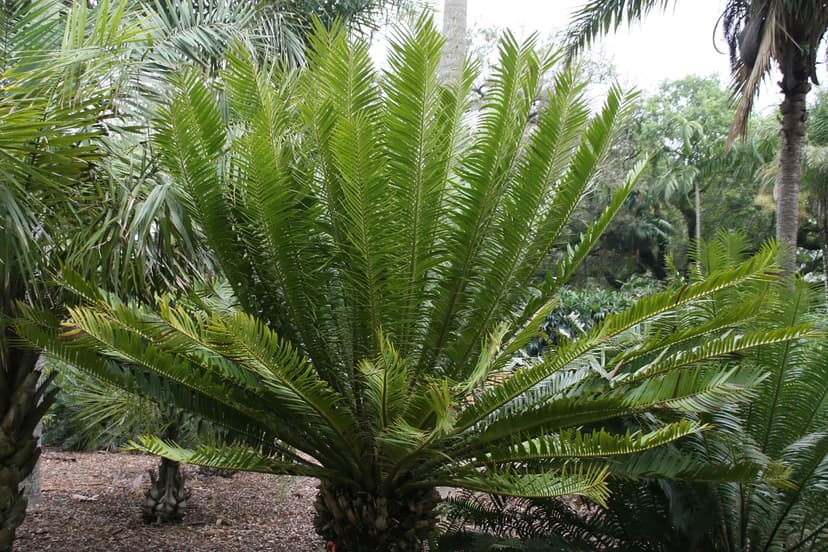
Encephalartos tegulaneus
Encephalartos tegulaneus, commonly known as the Kenyan giant cycad, is a striking cycad species native to Kenya. This tree-like plant is characterized by its tall, straight stem and large, lance-shaped leaves. It is found in specific regions of Kenya, growing at considerable altitudes, and is notable for its impressive, golden-yellow reproductive cones.
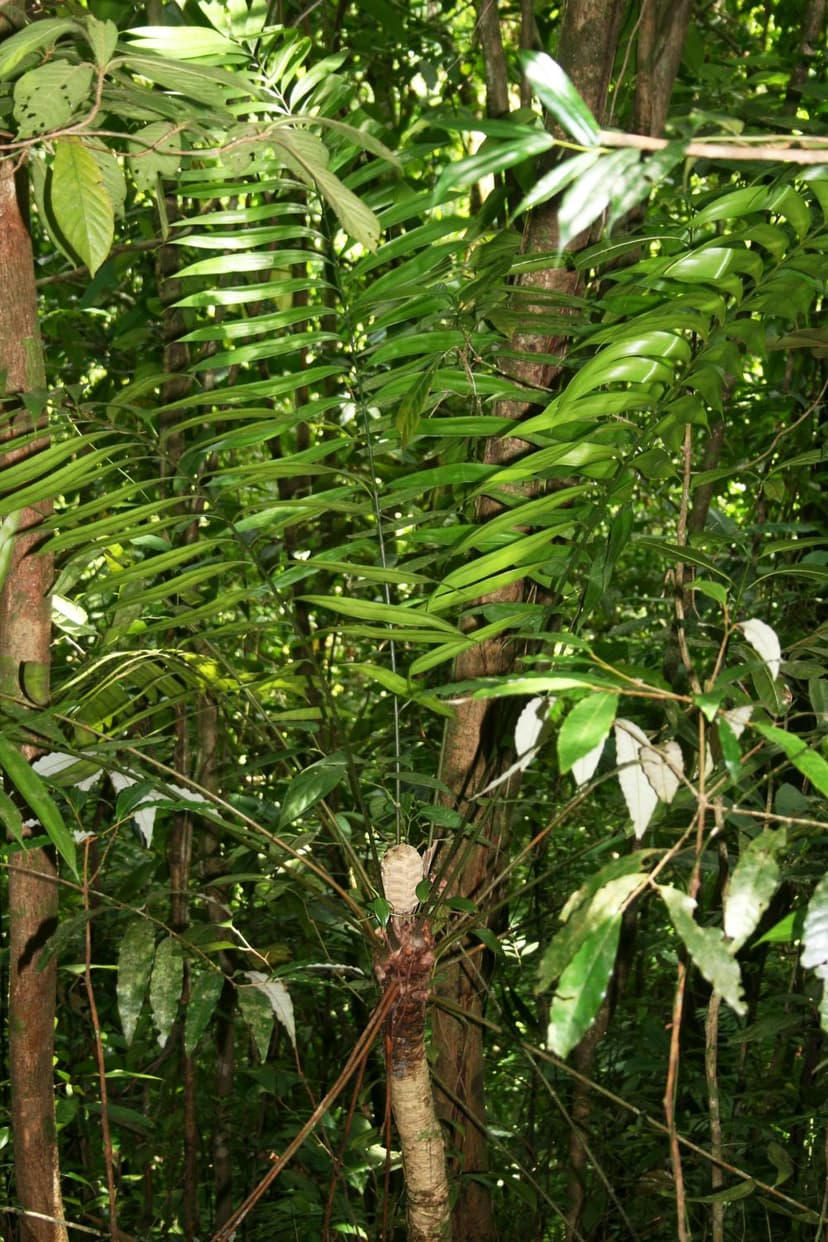
Zamia fairchildiana
Zamia fairchildiana is a species of cycad native to the rainforests of southeastern Costa Rica and western Panama. Characterized by its erect, tree-like stem and long, compound leaves adorned with prickles, this dioecious plant plays a crucial role in its ecosystem, particularly through its mutualistic relationship with the beetle Pharaxonotha confusa. Unfortunately, Zamia fairchildiana is currently threatened by habitat loss.
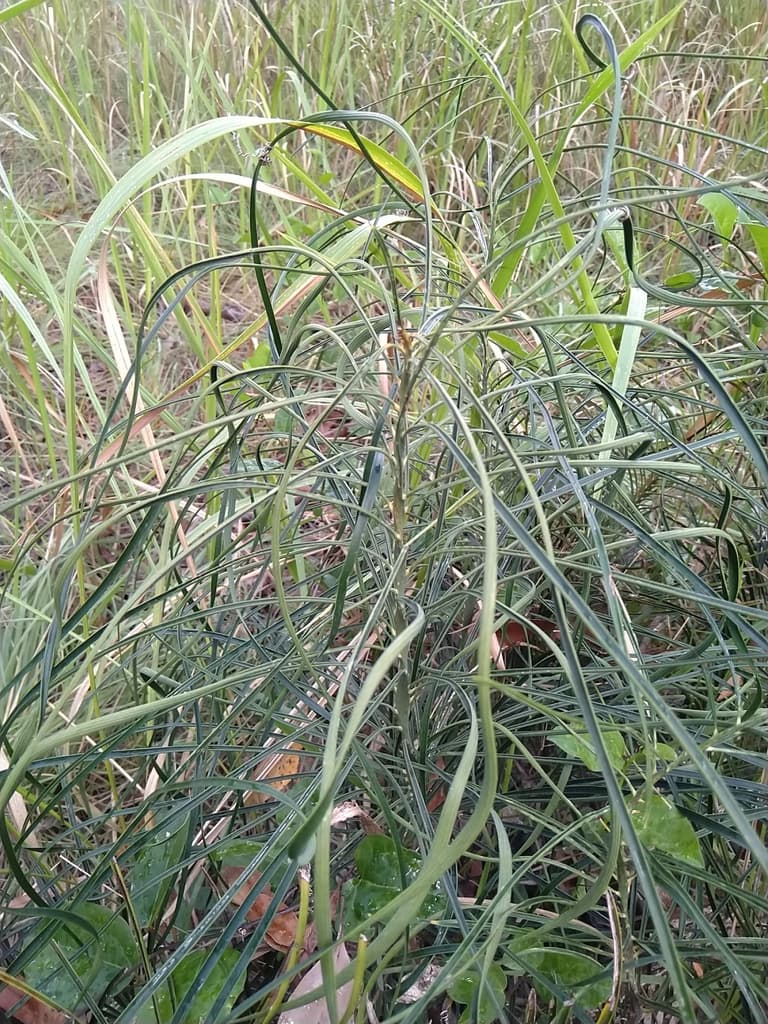
Macrozamia parcifolia
Macrozamia parcifolia is a species of cycad native to Australia, belonging to the Zamiaceae family. Its botanical characteristics are primarily defined by its classification within this family, though specific details regarding its morphology, habitat, and distribution are limited in available records.