
Zamia fairchildiana
Rainforests with approximately 5,000 mm of average annual rainfall.·Arborescent (tree-like)·Mutualistic relationship with the beetle Pharaxonotha confusa.·Threatened
Zamia fairchildiana is a species of cycad native to the rainforests of southeastern Costa Rica and western Panama. Characterized by its erect, tree-like stem and long, compound leaves adorned with prickles, this dioecious plant plays a crucial role in its ecosystem, particularly through its mutualistic relationship with the beetle Pharaxonotha confusa. Unfortunately, Zamia fairchildiana is currently threatened by habitat loss.
Key Facts
- ›Found in southeastern Costa Rica and western Panama.
- ›Possesses an erect stem reaching up to 1 meter tall, covered in prickles on the petioles and lower rachis.
- ›Its leaves can grow up to 2.5 meters long and bear 10 to 30 pairs of leaflets.
- ›It is dioecious, meaning individual plants are either male or female.
- ›Engages in an obligatory mutualistic relationship with the beetle Pharaxonotha confusa for pollination.
- ›Threatened by habitat loss in its natural range.
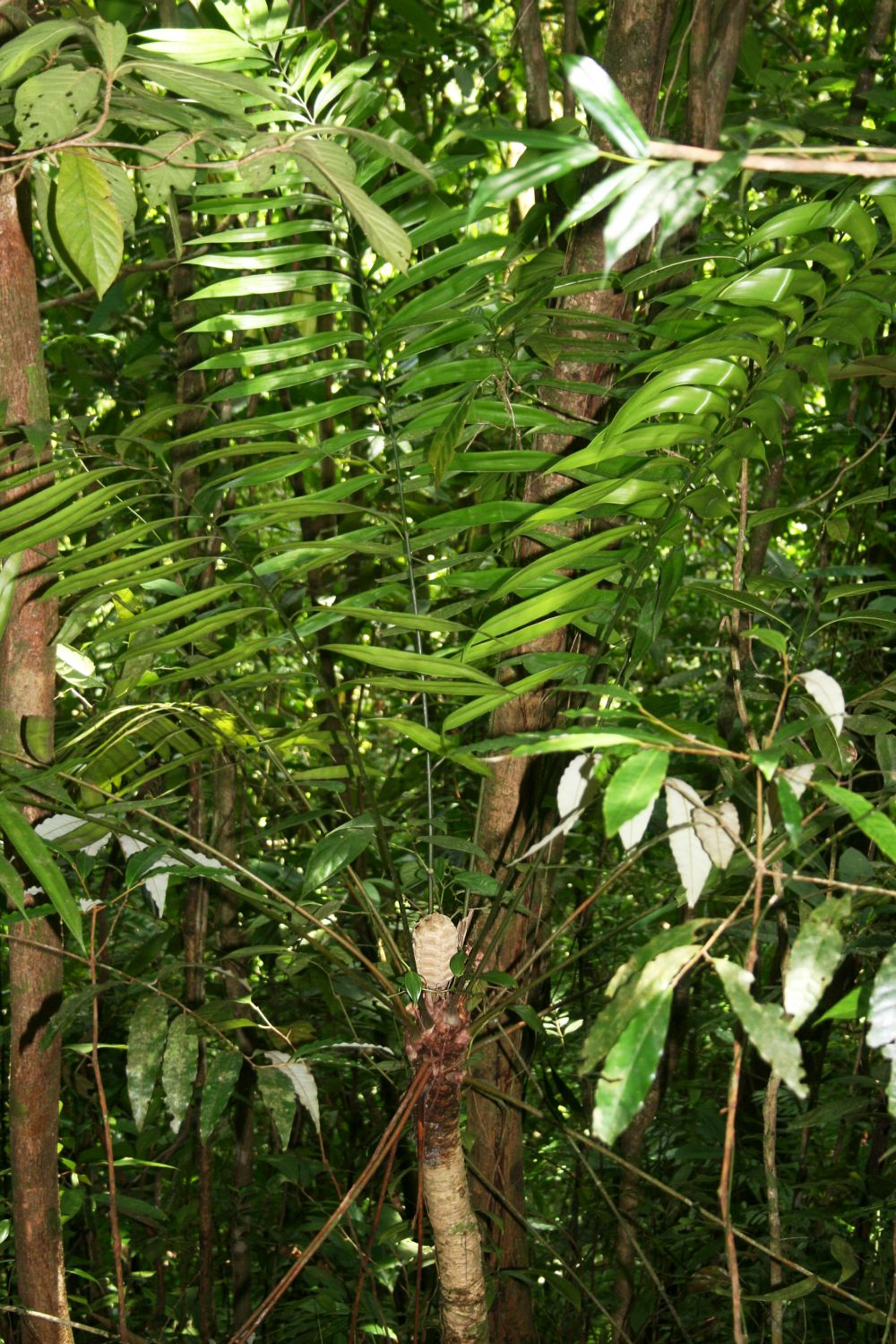
Southeastern Costa Rica, Western Panama
Erect, 0.5 To 1 Meter Tall, 6 To 15 Centimeters In Diameter
- Compound leaves
- 0.7 to 2 meters long
- Petioles 0.3 to 0.8 meters long, densely covered with prickles
- Lower third of the rachis also has prickles
- 10 to 30 pairs of leaflets per leaf
- Leaflets are oblong, somewhat sickle-shaped, with acute points
- Leaflets have a few fine teeth near the tip
- Male strobili: cylindrical, 10 to 40 cm long, 2 to 5 cm in diameter, cream to yellow in color.
- Female strobili: cylindrical, 20 to 30 cm long, 6 to 10 cm in diameter, yellow-green to light brown in color.
Ovoid, 1 To 1.5 cm Long, Red In Color
Habitat Loss
About Zamia fairchildiana
Zamia fairchildiana is a striking species of cycad belonging to the Zamiaceae family, native to the humid rainforests of southeastern Costa Rica and western Panama. Its botanical form is characterized by a stout, erect stem, typically ranging from 0.5 to 1 meter in height, from which emerge several compound leaves. These leaves are notable for their considerable length, often reaching up to 2 meters, and are further distinguished by the presence of prickles on the petioles (leaf stalks) and the lower section of the leaf's mid-rib (rachis). The leaflets themselves are oblong and somewhat sickle-shaped, with fine teeth near their tips.
Reproduction and Mutualism
As with all cycads, Zamia fairchildiana is dioecious, meaning individual plants are exclusively male or female. The reproductive structures, or cones, differ in appearance between the sexes: male cones are cylindrical and cream to yellow, while the larger female cones are yellow-green to light brown. A unique aspect of this species' reproductive biology is its obligatory mutualistic relationship with the beetle Pharaxonotha confusa. These beetles inhabit and breed within the male cones, feeding on pollen and cone tissue. Crucially, they serve as the primary pollinators, transferring pollen to the female cones, thereby facilitating the species' reproduction. Interestingly, most Zamia fairchildiana plants readily produce cones, even when growing in shaded environments, and their ripe seeds are visible in female cones before the cones begin to disintegrate, a feature that distinguishes them from closely related species.
Distribution and Conservation
The natural distribution of Zamia fairchildiana is concentrated in southeastern Costa Rica, with notable populations reported around the Golfo Duce in Puntarenas Province. A smaller population is also found in Chiriquí Province, Panama. The species thrives in rainforest habitats that receive substantial annual rainfall, averaging around 5,000 millimeters. Regrettably, Zamia fairchildiana is currently classified as threatened, primarily due to habitat loss, which poses a significant risk to its long-term survival in the wild.
Source: Wikipedia ↗
Frequently Asked Questions
Where is Zamia fairchildiana found?
Zamia fairchildiana is indigenous to the rainforests of southeastern Costa Rica, particularly around the Golfo Duce in Puntarenas Province, and a small population exists in Chiriquí Province, Panama.
What are the physical characteristics of Zamia fairchildiana?
This cycad has an erect, tree-like stem that can grow between 0.5 to 1 meter tall and 6 to 15 centimeters in diameter. It bears compound leaves that are 0.7 to 2.5 meters long, with petioles and the lower part of the leaf's mid-rib covered in prickles. Each leaf typically has 10 to 30 pairs of oblong leaflets.
How does Zamia fairchildiana reproduce?
Zamia fairchildiana is dioecious, meaning it has separate male and female plants. Male cones are cylindrical and cream to yellow, while female cones are larger and yellow-green to light brown. Unlike some related species, most plants produce cones even in shaded conditions.
What is the role of the beetle Pharaxonotha confusa?
The beetle Pharaxonotha confusa has an obligatory mutualistic relationship with Zamia fairchildiana. It lives and breeds in the male cones, consuming pollen and cone tissues. In return, the beetle acts as a pollinating vector by transferring pollen to the female cones.
What are the conservation concerns for Zamia fairchildiana?
The primary threat to Zamia fairchildiana is habitat loss. This species is listed as threatened due to the ongoing destruction of its natural rainforest environment.
Related Cycad species
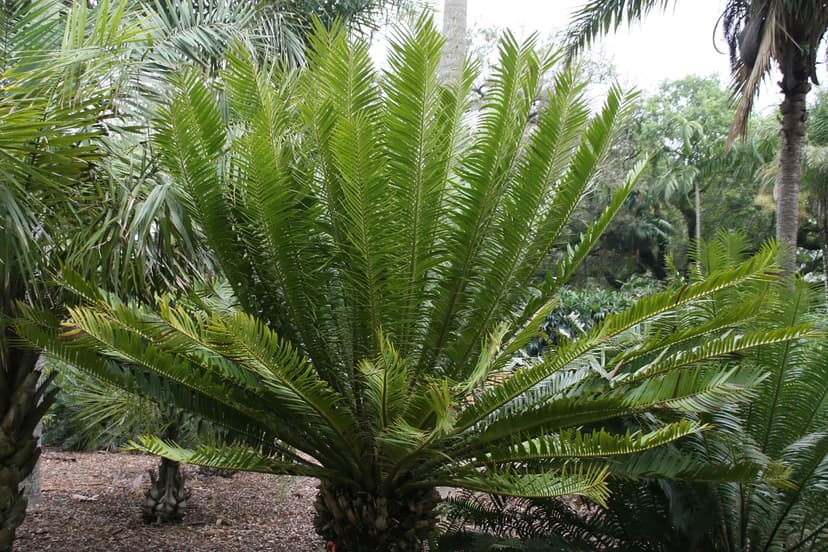
Encephalartos tegulaneus
Encephalartos tegulaneus, commonly known as the Kenyan giant cycad, is a striking cycad species native to Kenya. This tree-like plant is characterized by its tall, straight stem and large, lance-shaped leaves. It is found in specific regions of Kenya, growing at considerable altitudes, and is notable for its impressive, golden-yellow reproductive cones.

Macrozamia dyeri
Macrozamia dyeri, also known as djeeri, is a species of cycad endemic to Western Australia, found near Esperance. It is characterized by a large, above-ground trunk, deeply keeled foliage with wide leaflets, and narrow, extended reproductive cones. While its seeds, when properly prepared, were a significant food source for indigenous peoples, the plant is otherwise toxic to many species due to toxins produced by nitrogen-fixing cyanobacteria in its roots.

Zamia acuminata
Zamia acuminata is a species of cycad found in the tropical forests of Costa Rica and Panama. It is characterized by its subterranean stem, long pinnately compound leaves with acuminate leaflets, and distinctive cream to tan reproductive cones. This species is notably threatened by habitat loss, highlighting the importance of its conservation.