
Encephalartos tegulaneus
Grows at altitudes between 1,200–2,300 metres.·Arborescent (tree-like)·Varies by subspecies: E. tegulaneus subsp. tegulaneus is Least Concern; E. tegulaneus subsp. powysii is Critically Endangered.
Encephalartos tegulaneus, commonly known as the Kenyan giant cycad, is a striking cycad species native to Kenya. This tree-like plant is characterized by its tall, straight stem and large, lance-shaped leaves. It is found in specific regions of Kenya, growing at considerable altitudes, and is notable for its impressive, golden-yellow reproductive cones.
Key Facts
- ›Endemic to Kenya, found in Eastern Province and the Matthews Range.
- ›Can grow into a tall tree, with stems reaching up to 10 meters in height.
- ›Leaves are long, up to 1.8 meters, and composed of numerous spiny leaflets.
- ›Dioecious, meaning it has separate male and female plants.
- ›Male cones are cylindrical (40-50 cm long), while female cones are oval (40-70 cm long).
- ›The subspecies E. tegulaneus subsp. powysii is critically endangered.
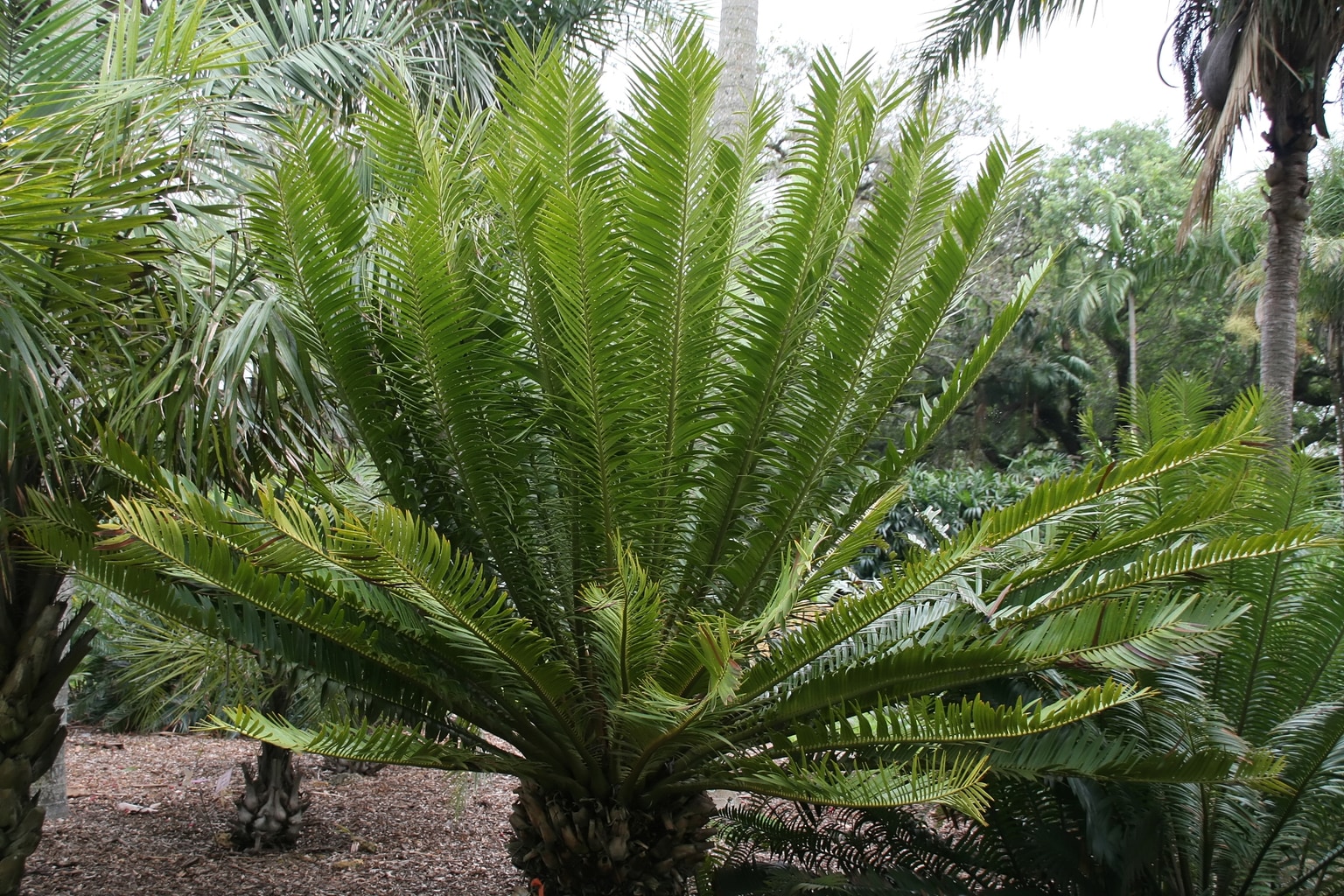
Kenyan Giant Cycad
Kenya
Tall, straight stem, Reaching up to 10 metres in height, 30–55 centimetres diameter
- 120–180 centimetres long
- Form a crown at the top of the stem
- Consist of many pairs of lance-shaped leaflets
- Leaflets are about 16–22 centimetres long
- Leaflets become spiny towards the base of the petiole
- Male Cones Are Cylindrical, 40–50 Centimetres Long and 12–14 Centimetres Wide, Bright Yellow.
- Female Cones Are Oval, 40–70 Centimetres Long and 19–30 Centimetres Wide, Golden Yellow.
- Pollen Cone Scales Overlap Like Roof Tiles .
Overcollecting, Limited Distribution
About Encephalartos tegulaneus
Encephalartos tegulaneus: The Kenyan Giant Cycad
Encephalartos tegulaneus, commonly known as the Kenyan giant cycad, is a magnificent cycad species indigenous to Kenya. This plant is characterized by its impressive tree-like growth habit, featuring a tall, straight stem that can ascend to heights of up to 10 meters with a diameter of 30-55 centimeters. Its leaves, reaching lengths of 120-180 centimeters, form a striking crown atop the stem. These leaves are composed of numerous pairs of lance-shaped leaflets, each approximately 16-22 centimeters long, which develop spiny edges towards the base of the petiole.
Botanical Features and Distribution
The Kenyan giant cycad is found in specific locations within Kenya, namely the Eastern Province near Embu and the Matthews Range in Rift Valley Province, where it thrives at altitudes ranging from 1,200 to 2,300 meters. This species is dioecious, meaning individual plants are either male or female. The reproductive structures, or cones, are a notable feature: male plants produce bright yellow, cylindrical cones (40-50 cm long, 12-14 cm wide), while female plants bear larger, golden-yellow oval cones (40-70 cm long, 19-30 cm wide). The specific epithet 'tegulaneus' was chosen due to the overlapping, tile-like appearance of the pollen cone scales.
Conservation Status
Encephalartos tegulaneus is recognized in two subspecies, each with a distinct conservation outlook. E. tegulaneus subsp. tegulaneus is currently assessed as Least Concern. However, E. tegulaneus subsp. powysii faces a much more precarious future, being critically endangered primarily due to overcollection and its extremely restricted geographic distribution. The discovery of this species is credited to Joy Adamson in May 1954, an individual renowned for her work chronicled in "Born Free."
Source: Wikipedia ↗
Frequently Asked Questions
Where is Encephalartos tegulaneus found?
Encephalartos tegulaneus is endemic to Kenya. It is found in the Eastern Province near Embu and on the Matthews Range in Rift Valley Province.
What does the Kenyan giant cycad look like?
This cycad has a tree-like growth form with a tall, straight stem that can reach up to 10 meters. Its leaves are long, about 1.2 to 1.8 meters, and topped with many lance-shaped leaflets that can be spiny near the base.
What are the cones of Encephalartos tegulaneus like?
Male plants produce bright yellow, cylindrical cones measuring 40-50 cm long and 12-14 cm wide. Female plants bear golden-yellow, oval cones that are larger, ranging from 40-70 cm long and 19-30 cm wide.
Are there different types of Encephalartos tegulaneus?
Yes, there are two subspecies. E. tegulaneus subsp. tegulaneus is listed as Least Concern. However, E. tegulaneus subsp. powysii is Critically Endangered due to overcollection and its very limited distribution.
Who discovered Encephalartos tegulaneus?
The Kenyan giant cycad was discovered in May 1954 by Joy Adamson, who is widely known as the author of the book "Born Free".
Related Cycad species
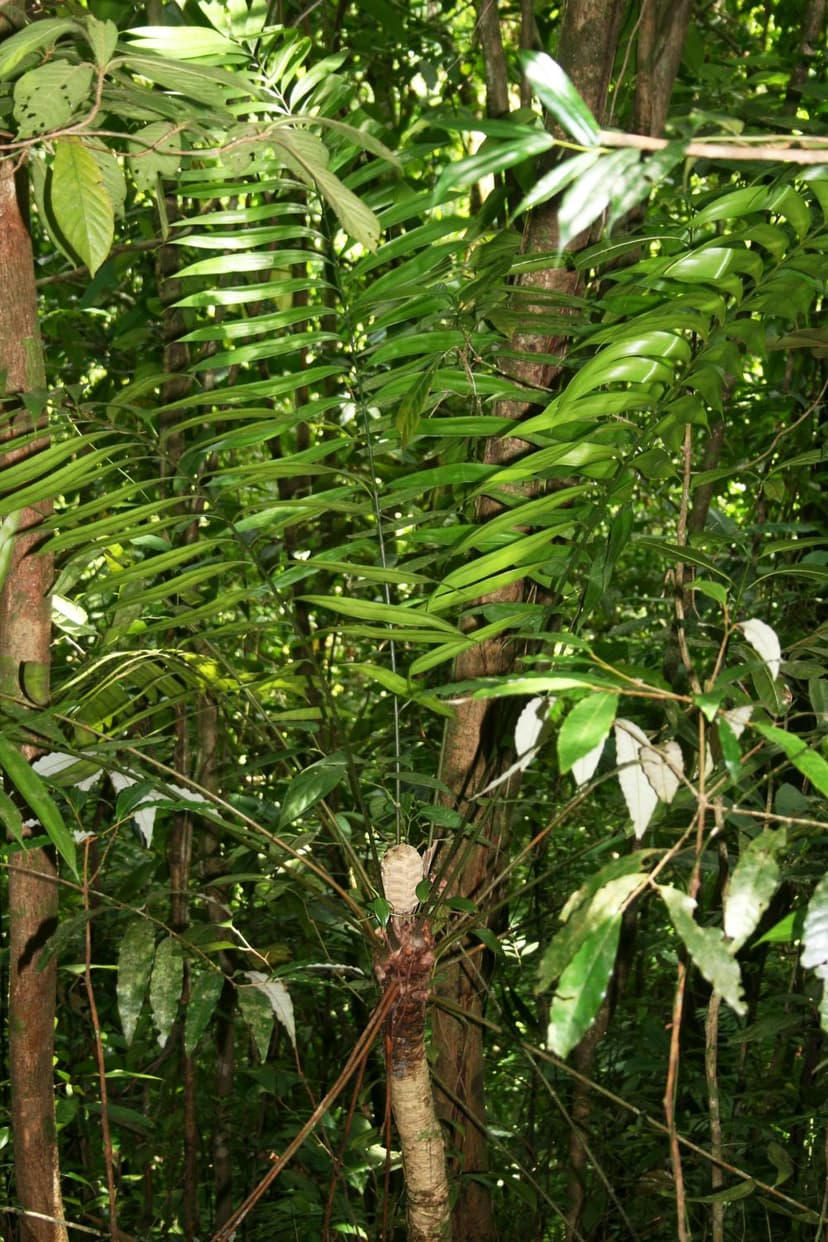
Zamia fairchildiana
Zamia fairchildiana is a species of cycad native to the rainforests of southeastern Costa Rica and western Panama. Characterized by its erect, tree-like stem and long, compound leaves adorned with prickles, this dioecious plant plays a crucial role in its ecosystem, particularly through its mutualistic relationship with the beetle Pharaxonotha confusa. Unfortunately, Zamia fairchildiana is currently threatened by habitat loss.

Macrozamia dyeri
Macrozamia dyeri, also known as djeeri, is a species of cycad endemic to Western Australia, found near Esperance. It is characterized by a large, above-ground trunk, deeply keeled foliage with wide leaflets, and narrow, extended reproductive cones. While its seeds, when properly prepared, were a significant food source for indigenous peoples, the plant is otherwise toxic to many species due to toxins produced by nitrogen-fixing cyanobacteria in its roots.

Encephalartos horridus
Encephalartos horridus, commonly known as the Eastern Cape blue cycad, is a distinctive, low-growing cycad native to the Eastern Cape Province of South Africa. It is recognized for its striking blue-gray, spiny leaves and typically develops a subterranean stem. This species thrives in arid shrublands and rocky ridges, exhibiting a slow growth rate and requiring specific conditions for successful cultivation.