
Macrozamia montana
Wet sclerophyll forests on well-drained soils, under a eucalypt canopy, often on mountainous areas, slopes, and steep ridges.·Subterrestrial woody stem, sometimes a short developing trunk.
Macrozamia montana is a cycad species native to New South Wales, Australia, characterized by its subterranean or short woody stem and glossy, dark green leaves. It thrives in wet sclerophyll forests under eucalypt canopies on well-drained soils, often found on mountainous slopes and steep ridges.
Key Facts
- ›Endemic to New South Wales, Australia.
- ›Typically has a subterranean or short woody stem.
- ›Leaves are glossy, dark green, and can reach lengths of 100–204 cm.
- ›Female cones may become horizontal or rest on the ground during development.
- ›Prefers well-drained soils in wet sclerophyll forests.
- ›Named 'montana' for its tendency to grow on mountainous areas.

New South Wales, Australia
Usually Subterrestrial Woody Stem, Sometimes A Short Developing Trunk
Bright green young fronds, Dark green and bent when fully grown, Glossy leaves, Leaf length: 100–204 cm, Petioles: 6–15 cm long, Plants can have up to 70 fronds
- Female cones have a tendency to change to a horizontal position or completely rest on the ground during development.
About Macrozamia montana
Macrozamia montana is a species of cycad belonging to the Zamiaceae family, recognized for its unique growth habit and specific ecological niche. It is an endemic species, found exclusively in New South Wales, Australia. The botanical name, 'montana', directly references its preferred habitat, as the species is known for growing on the sides of mountainous areas, slopes, and steep ridges.
Description and Habitat
This cycad typically exhibits a subterrestrial woody stem, though it can sometimes develop into a short trunk. Its fronds emerge a bright green and mature to a dark green hue, often bending as they fully develop. The leaves are glossy and can reach impressive lengths of 100–204 cm, supported by petioles measuring 6–15 cm. Macrozamia montana thrives in wet sclerophyll forests, preferring well-drained soils and growing beneath the canopy of eucalypt trees. The species can be found in areas that are notably susceptible to weed invasion, such as by the perennial shrub Lantana camara.
Botanical Relationships
While part of the broader genus Macrozamia, Macrozamia montana is noted as being isolated from other species within the genus. It shares a closer relationship with larger specimens of Macrozamia communis found in New South Wales compared to smaller populations of the same species located to the north of Newcastle. A distinguishing feature in its relation to Macrozamia communis is the significantly shorter petioles of Macrozamia montana.
Reproductive Characteristics
A notable characteristic of Macrozamia montana is the behavior of its female cones during development. They exhibit a tendency to shift into a horizontal position or to rest entirely on the ground, a feature that distinguishes it within its genus.
Source: Wikipedia ↗
Frequently Asked Questions
What does the name 'Macrozamia montana' mean?
The specific epithet 'montana' in Macrozamia montana refers to mountains or coming from mountains. This name was given by Ken Hill in 1998 due to the species' attribute of growing on the sides of mountainous areas, slopes, and steep ridges.
What are the typical growing conditions for Macrozamia montana?
Macrozamia montana grows under a eucalypt canopy in wet sclerophyll forests. It prefers well-drained soils and can be found in areas prone to weed infestation, particularly by Lantana camara.
What are the key physical characteristics of Macrozamia montana?
This species usually presents a subterrestrial woody stem or sometimes a short developing trunk. Its young fronds are bright green, maturing to a dark green and becoming bent when fully grown. The leaves are glossy and can reach lengths of 100–204 cm, with petioles typically 6–15 cm long.
How are the cones of Macrozamia montana unique?
During their development, the female cones of Macrozamia montana have a tendency to shift into a horizontal position or to lie completely on the ground. This is a notable characteristic of the species.
How does Macrozamia montana relate to other Macrozamia species?
Macrozamia montana is part of the genus Macrozamia but is considered isolated from other species within the genus. It shows a closer relationship to larger specimens of Macrozamia communis found in New South Wales than to smaller ones located north of Newcastle.
Related Cycad species
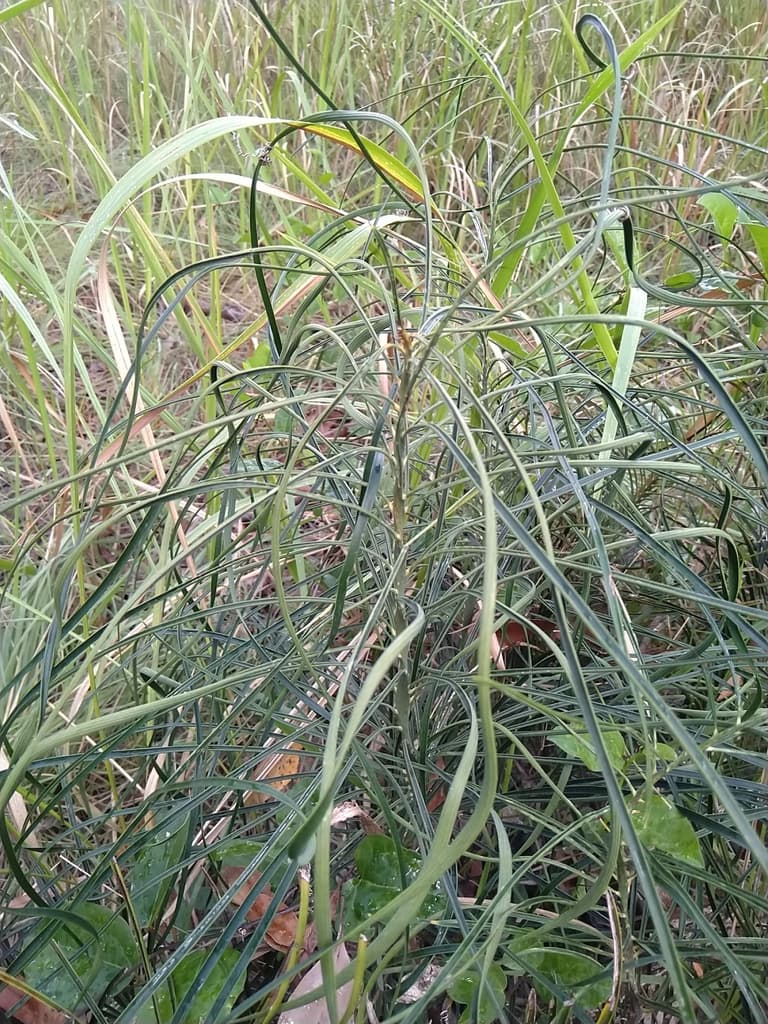
Macrozamia parcifolia
Macrozamia parcifolia is a species of cycad native to Australia, belonging to the Zamiaceae family. Its botanical characteristics are primarily defined by its classification within this family, though specific details regarding its morphology, habitat, and distribution are limited in available records.

Zamia montana
Zamia montana is a critically endangered cycad species endemic to the Antioquia Department of Colombia. Found in subtropical or tropical moist montane forests, this species is characterized by its extreme rarity and the significant threats posed by logging activities within its natural habitat. The species faces a high risk of extinction, with its only known population located in an area that has undergone recent logging.
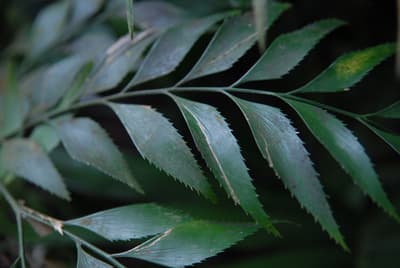
Bowenia serrulata
Bowenia serrulata, commonly known as the Byfield fern, is a unique cycad species belonging to the Stangeriaceae family. Despite its fern-like appearance due to its bipinnate fronds, it is botanically classified as a cycad. This species is endemic to a small region near Byfield, Australia.