
Zamia amplifolia
Bush or small tree·Not specified
Zamia amplifolia is a species of cycad endemic to the Calima River watershed in Colombia. It is characterized by its large leaves with smooth-edged leaflets and a stem that can reach up to 2.5 meters in height. This dioecious plant produces distinct male and female cones, with the female cones being significantly larger than the male ones.
Key Facts
- ›Endemic to the Calima River watershed in Valle del Cauca Department, Colombia.
- ›Features large leaves, with leaflets measuring up to 50 cm long and 15 cm wide.
- ›Possesses a stem that can grow up to 2.5 meters tall.
- ›Is dioecious, meaning individual plants are either male or female.
- ›Female cones are ovoid to ovoid-cylindrical, reaching up to 40 cm in length.
- ›Seeds are ovoid with a red fleshy outer coat.
Colombia
Up To 2.5 Metres Tall, Covered With Prickles On the Stalk
- Three to six leaves per plant
- Leaves 1 to 2 metres long
- Petiole is 0.5 to 1 metre long
- Stalk is covered with prickles
- Six to ten leaflets per leaf
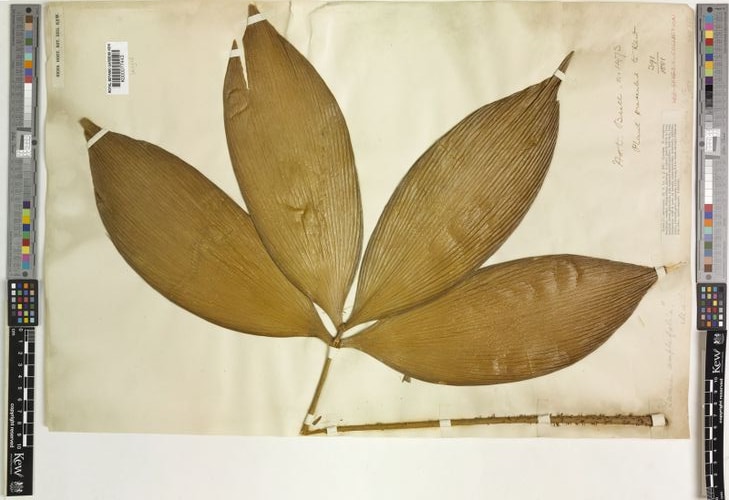
- Leaflets are elliptical, pointed at the ends, and have smooth edges
- Leaflets in the middle are 30 to 50 centimetres long and 12 to 15 centimetres wide
- Male strobili are cylindrical to elongate-cylindrical, 8 to 12 cm long and 1 to 2 cm in diameter, cream to tan in color.
- Female cones are ovoid to ovoid-cylindrical, 20 to 40 cm long and 8 to 12 cm in diameter, brown in color, and stand on short peduncles.
Ovoid, 1.5 To 2.5 Centimetres In Diameter, Have A Red Sarcotesta
Rarity, Limited Distribution
About Zamia amplifolia
Zamia amplifolia is a species of cycad belonging to the Zamiaceae family. It is notably endemic to the Calima River watershed, a specific region within the Valle del Cauca Department of Colombia. This species is recognized for its substantial size and distinctive leaf morphology.
Description and Characteristics
Zamia amplifolia presents as a bush or small tree, capable of reaching heights of up to 2.5 meters (approximately 8 feet). Each plant typically bears between three to six leaves, which are considerable in length, ranging from 1 to 2 meters (about 3 to 6.5 feet). The petiole, or leaf stalk, is also lengthy, measuring between 0.5 to 1 meter (roughly 1.5 to 3.3 feet), and is characterized by prickles that may extend onto the lower portion of the leaf’s axis. The leaves are comprised of six to ten leaflets. These leaflets are elliptical in shape, tapering to a point at their ends, and possess smooth margins. The leaflets found towards the middle of the leaf are particularly large, measuring 30 to 50 centimeters (12 to 20 inches) in length and 12 to 15 centimeters (4.7 to 5.9 inches) in width. The specific epithet 'amplifolia' was chosen to highlight the significant size of these leaflets.
As with all members of the Zamia genus, Zamia amplifolia is dioecious, meaning that individual plants are either exclusively male or female. The reproductive structures, known as strobili or cones, differ in appearance between the sexes. Male cones are cylindrical to elongate-cylindrical, measuring 8 to 12 centimeters (3.1 to 4.7 inches) in length and 1 to 2 centimeters (0.39 to 0.79 inches) in diameter, and typically exhibit a cream to tan coloration. Female cones are substantially larger, being ovoid to ovoid-cylindrical, ranging from 20 to 40 centimeters (7.9 to 15.7 inches) in length and 8 to 12 centimeters (3.1 to 4.7 inches) in diameter. They are brown in color and emerge from short stalks called peduncles. The seeds of Zamia amplifolia are ovoid, measuring 1.5 to 2.5 centimeters (0.59 to 0.98 inches) in diameter, and are enclosed by a distinctive red sarcotesta, which is the outer fleshy covering.
Distribution and Rarity
Zamia amplifolia is considered a rare species with a very restricted geographical distribution. As of recent documentation, it has been observed at only a few locations in close proximity to its neotype locality. Its appearance is similar to that of Zamia skinneri, found in Panama, with the primary distinguishing feature being the smooth edges of Zamia amplifolia's leaflets, in contrast to the toothed edges of Zamia skinneri.
Source: Wikipedia ↗
Frequently Asked Questions
What is the scientific name of this cycad species?
The scientific name of this cycad species is Zamia amplifolia. It belongs to the Zamiaceae family.
Where is Zamia amplifolia found naturally?
Zamia amplifolia is endemic to the Calima River watershed, located within the Valle del Cauca Department of Colombia. Its distribution is considered very limited.
What are the distinguishing features of Zamia amplifolia's leaves?
Zamia amplifolia has large leaves, typically 1 to 2 meters in length. The plant has six to ten leaflets that are elliptical in shape, pointed at the ends, and possess smooth edges. The leaflets in the middle of the leaf are notably large.
Can you describe the cones of Zamia amplifolia?
Zamia amplifolia is dioecious, meaning it has separate male and female cones. Male cones are cylindrical, 8 to 12 cm long, and cream to tan in color. Female cones are larger, ovoid to ovoid-cylindrical, 20 to 40 cm long, and brown in color.
How tall can Zamia amplifolia grow?
Zamia amplifolia can grow as a bush or small tree, with its stem reaching up to 2.5 meters (approximately 8 feet) in height.
Related Cycad species

Cycas angulata
Cycas angulata is the largest Australian species of cycad, distinguished by its tall, often branched stems and numerous grey-green to glaucous leaves reaching up to 1.7 meters in length. Native to the Northern Territory and northwest Queensland, it is occasionally cultivated as an ornamental plant and its seeds were historically used as a food source by Aboriginal Australians after careful detoxification.

Zamia dressleri
Zamia dressleri is a species of cycad native to Eastern Panama, thriving in rainforest environments. This species is distinguished by its subterranean stem and large, compound leaves, each bearing numerous toothed leaflets. Its reproductive structures include cylindrical male cones and ovoid, wine-red female cones, with the seeds also being red.

Macrozamia secunda
Macrozamia secunda is a species of cycad endemic to New South Wales, Australia, characterized by its blue to grey fronds and reddish seeds. It thrives in regions with consistent annual rainfall. This species is a member of the Zamiaceae family.