
Zamia disodon
Specific locations within the Antioquia Department in Colombia and Huánuco Province in Peru.·Subshrub·Not specified, but habitat is severely threatened and species is believed to be rare.
Zamia disodon is a species of cycad native to Colombia and Peru, characterized by its small shrub-like growth form. It features compound leaves with distinctive toothed leaflets and a short, stout stem. Despite its limited known distribution, it is believed to be rare and faces significant habitat threats.
Key Facts
- ›Endemic to Colombia and Peru.
- ›Grows as a small shrub with a stem up to 50 cm tall.
- ›Possesses compound leaves with transparent, elliptic, and toothed leaflets.
- ›Leaflets are toothed along the edges, with double teeth near the tips.
- ›Believed to be rare and faces severely threatened habitat.
- ›Reproductive cones (strobili) have not yet been observed.
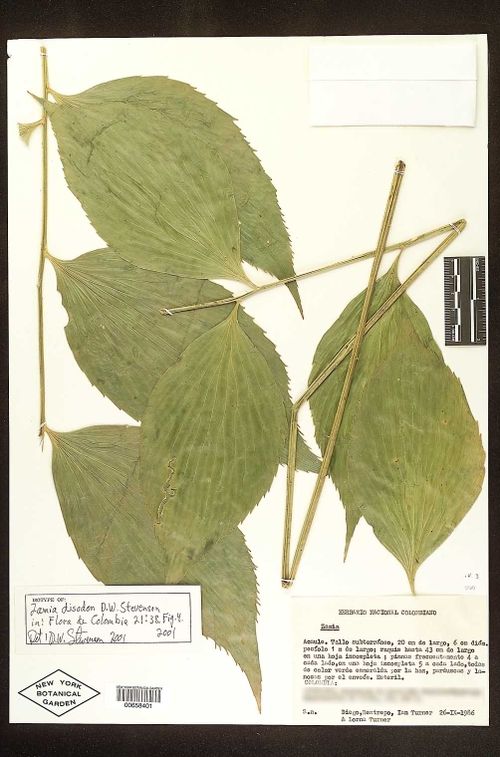
Colombia, Peru
Up to 50 cm tall, 5 to 8 cm in diameter, Two to four compound leaves at the apex
- Compound leaves up to 50 cm long
- Leaflets are transparent, elliptic, and toothed along the edges
- Double teeth present near the tips of leaflets
- Leaflets in the middle of the leaf are 12 to 20 cm long and 6 to 10 cm wide
Strobili Have Not Been Observed.
Sold In Local Markets
Habitat Loss, Collection For Local Markets
About Zamia disodon
Zamia disodon is a species of plant belonging to the Zamiaceae family, recognized as a cycad. It is a subshrub that is endemic to Colombia and Peru, with its known occurrences limited to specific locations within Colombia's Antioquia Department and Peru's Huánuco Province. The species is characterized by its relatively small size and distinctive foliage.
Description and Habitat
This cycad typically grows as a small shrub, featuring a stem that can reach up to 50 centimeters in height and measure between 5 to 8 centimeters in diameter. At the apex of the stem, two to four compound leaves emerge. Each leaf can be up to 50 centimeters long, attached to a petiole that is up to 25 centimeters long and may be sparsely covered with prickles. The central axis of the leaf is about 25 centimeters long. The leaflets are described as transparent, elliptic, and toothed along their edges, with notable double teeth near the tips. Leaflets found in the middle of the leaf typically range from 12 to 20 centimeters in length and 6 to 10 centimeters in width. As of current knowledge, reproductive cones (strobili) for Zamia disodon have not been observed.
Zamia disodon is known from very few locations, and reported collections of the plant have been infrequent, suggesting it is a rare species. Despite its rarity, it has been documented that the plant is sold in local markets. The natural habitat of Zamia disodon is reported to be severely threatened, posing a significant concern for its long-term survival.
Source: Wikipedia ↗
Frequently Asked Questions
What is Zamia disodon?
Zamia disodon is a species of plant belonging to the Zamiaceae family, commonly known as a cycad. It is a subshrub native to specific regions in Colombia and Peru.
What does Zamia disodon look like?
This cycad grows as a small shrub with a stem that can reach up to 50 centimeters in height and 5 to 8 centimeters in diameter. It has two to four compound leaves at the top of the stem, each up to 50 centimeters long, with a stalk that may have sparse prickles. The leaves are composed of three to five pairs of leaflets that are transparent, elliptic, and toothed along their edges.
Where is Zamia disodon found?
Zamia disodon is known to grow in two locations within the Antioquia Department of Colombia and in one location in Huánuco Province of Peru. Its reported collections are infrequent, suggesting it is a rare species.
What is the conservation status of Zamia disodon?
While the specific IUCN conservation status is not detailed, the article notes that the habitat of Zamia disodon is severely threatened. The species is believed to be rare, and it has been observed being sold in local markets, indicating potential pressures.
Have the reproductive cones of Zamia disodon been observed?
No, reproductive cones, also known as strobili, have not been observed for Zamia disodon according to available records. This lack of observation might be due to its rarity or the specific timing of botanical surveys.
Related Cycad species
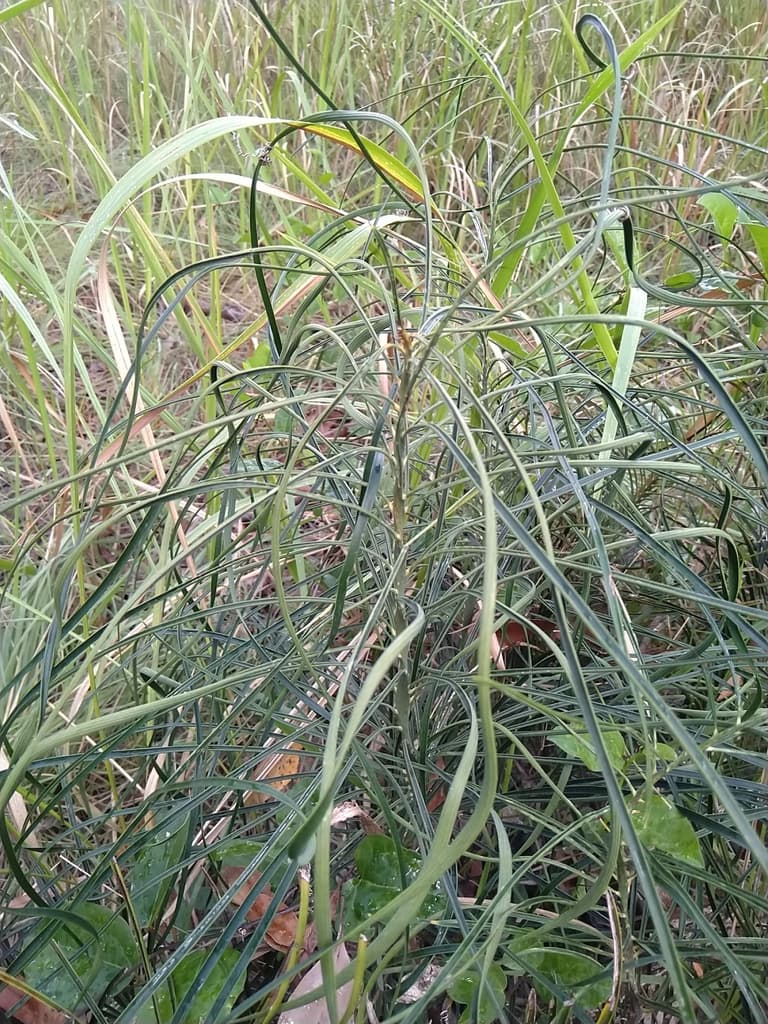
Macrozamia parcifolia
Macrozamia parcifolia is a species of cycad native to Australia, belonging to the Zamiaceae family. Its botanical characteristics are primarily defined by its classification within this family, though specific details regarding its morphology, habitat, and distribution are limited in available records.

Zamia montana
Zamia montana is a critically endangered cycad species endemic to the Antioquia Department of Colombia. Found in subtropical or tropical moist montane forests, this species is characterized by its extreme rarity and the significant threats posed by logging activities within its natural habitat. The species faces a high risk of extinction, with its only known population located in an area that has undergone recent logging.
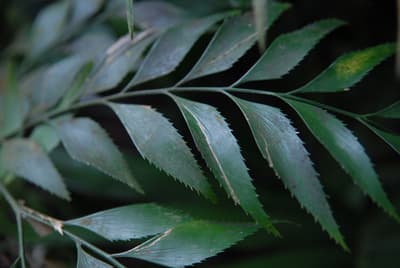
Bowenia serrulata
Bowenia serrulata, commonly known as the Byfield fern, is a unique cycad species belonging to the Stangeriaceae family. Despite its fern-like appearance due to its bipinnate fronds, it is botanically classified as a cycad. This species is endemic to a small region near Byfield, Australia.