
Zamia nesophila
Sandy beaches close to the sea, and inland in tropical forests on low hills.·Shrub or small tree·Mutualism with the beetle Pharaxonotha clarkorum·Critically Endangered
Zamia nesophila, commonly known as "guade teet," is a species of cycad found on several islands in northwestern Panama. Primarily inhabiting sandy beaches near the sea, it can also be found inland in forests. This species is characterized by its shrub or small tree growth form and is critically endangered due to coastal development.
Key Facts
- ›Endemic to islands in northwestern Panama.
- ›Grows on sandy beaches close to the sea, and also inland in forests.
- ›Has a stem that can grow up to 2.8 meters tall and branch.
- ›Leaves are long, typically between 116 to 239 cm, with 5 to 12 pairs of leaflets.
- ›Reproduction is dioecious, with separate male and female cones.
- ›Critically endangered due to seaside development.
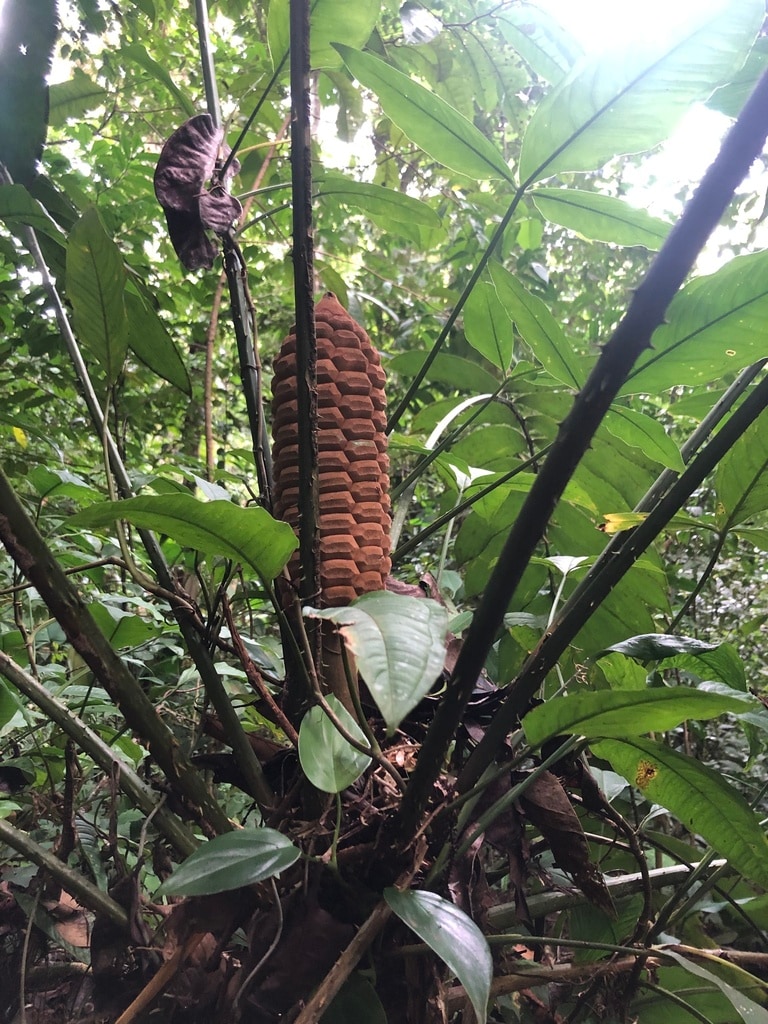
Guade Teet
Panama
- Grows up to 2.8 meters tall.
- 6 to 24 centimeters in diameter.
- May branch at the base or the top, sometimes both.
- Up to 20 leaves per crown, average about 11.
- 116 to 239 centimeters long.
- 5 to 12 pairs of leaflets.
- Leaflets are elliptic, acuminate, and plicate between veins.
- Leaflets have serrated edges.
- Leaflets along the middle of the stem are 25 to 38 centimeters long and 6.5 to 10.5 centimeters wide.
- Young leaves are bright green, maturing to a glossy medium green.
- Microstrobili: 8 to 16 cm long, 2 to 2.5 cm wide, conical-cylindrical or elongated conical-cylindrical.
- Microstrobili occur singly or in groups of 2 to 5, reddish-golden to brownish-yellow.
- Megastrobili: 15 to 39 cm long, 4.5 to 10.4 cm wide, cylindrical-globose.
- Usually a single megastrobolus per plant.
- Megastrobili emerge with yellow-brown to tan hairs, maturing to green or grayish-green with tan to brown hairs.
1.9 to 2.8 cm long and 1.1 to 1.8 cm wide., 400 or more seeds in a mature cone., Sarcotesta is bright red on a mature seed.
Seaside Development, Coastal Development
About Zamia nesophila
Zamia nesophila, known by its common name "guade teet," is a species of cycad that belongs to the Zamiaceae family. This plant is endemic to several islands located in northwestern Panama, with its primary habitat being sandy beaches situated close to the sea. A portion of the population also thrives inland within tropical forests.
Botanical Description
As a shrub or small tree, Zamia nesophila can develop a stem reaching up to 2.8 meters (9 ft 2 in) in height and between 6 to 24 centimeters (2.4 to 9.4 in) in diameter. The stem is capable of branching, either at its base, top, or sometimes both. Each crown typically bears up to 20 leaves, with an average of about 11. These leaves are notably long, measuring between 116 to 239 centimeters (46 to 94 in), and are adorned with 5 to 12 pairs of leaflets. The leaflets themselves are elliptic in shape, tapering to a point (acuminate), and exhibit a pleated texture (plicate) between the veins, with edges that are serrated. When they first emerge, the leaves display a bright green color, maturing to a glossy medium green.
Reproduction and Mutualism
Zamia nesophila is dioecious, meaning that individual plants are either male or female, producing distinct male or female reproductive cones (strobili). The microstrobili, or male cones, are typically 8 to 16 centimeters (3.1 to 6.3 in) long and 2 to 2.5 centimeters (0.79 to 0.98 in) wide, varying in shape from conical-cylindrical to elongated conical-cylindrical. They can appear singly or in clusters of two to five and are characterized by a reddish-golden to brownish-yellow hue. The megastrobili, or female cones, are larger, measuring 15 to 39 centimeters (5.9 to 15.4 in) in length and 4.5 to 10.4 centimeters (1.8 to 4.1 in) in width. These are usually cylindrical-globose, with typically one megastrobolus per plant. Initially covered in yellow-brown to tan hairs, they mature to a green or grayish-green color, still bearing tan to brown hairs. Each mature cone can contain 400 or more seeds, which are 1.9 to 2.8 centimeters (0.75 to 1.10 in) long and 1.1 to 1.8 centimeters (0.43 to 0.71 in) wide, distinguished by a bright red sarcotesta (seed coat). Pollination events have been observed occurring three times annually. A significant aspect of its reproductive biology is the obligatory mutualistic relationship with the beetle Pharaxonotha clarkorum. These beetles inhabit and breed within the male cones, feeding on pollen and cone tissues, and critically, they serve as the primary pollinating vector by transferring pollen to the female cones.
Habitat and Conservation
Zamia nesophila is endemic to a small number of islands within the Bocas del Toro Archipelago. Its preferred habitat consists of sandy soil found among vegetation on beaches, with the largest populations situated just above the high tide line, enduring salt spray and occasional flooding. A secondary habitat includes acidic soil rich in humus on low hills within tropical forests on some of these islands. Unfortunately, the species faces severe threats from human activities. Significant populations, including one along a beach that once numbered around 15,000 plants, have been largely destroyed by coastal development since 2007. Another population of at least 10,000 plants was similarly decimated by the construction of a beach resort, and smaller populations have also suffered from seaside development, leading to its critically endangered conservation status.
Source: Wikipedia ↗
Frequently Asked Questions
What is Zamia nesophila?
Zamia nesophila, also known as "guade teet," is a species of cycad belonging to the Zamiaceae family. It is a plant that grows as a shrub or small tree and is native to islands in northwestern Panama.
Where is Zamia nesophila found?
This cycad species is endemic to several islands in the Bocas del Toro Archipelago in northwestern Panama. Its primary habitat is sandy beaches near the coast, though some populations are found in inland tropical forests.
What are the characteristics of Zamia nesophila's leaves?
The leaves of Zamia nesophila are quite long, ranging from 116 to 239 centimeters, and possess 5 to 12 pairs of leaflets. The leaflets are elliptic, taper to a point, and are pleated between the veins, with serrated edges. Young leaves are bright green, maturing to a glossy medium green.
How does Zamia nesophila reproduce?
Like other Zamia species, Zamia nesophila is dioecious, meaning individual plants are either male or female, producing either male or female cones. Male cones are reddish-golden to brownish-yellow, while female cones are typically green or grayish-green. Seeds have a bright red outer coat.
What is the conservation status of Zamia nesophila?
Zamia nesophila is classified as critically endangered. This status is primarily due to extensive habitat loss caused by seaside development, which has significantly impacted its populations.
What is the relationship between Zamia nesophila and the beetle Pharaxonotha clarkorum?
There is an obligatory mutualistic relationship between Zamia nesophila and the beetle Pharaxonotha clarkorum. The beetles live and breed in the male cones, consuming pollen and cone tissues, and in doing so, they act as pollinators by transferring pollen to female cones.
Related Cycad species
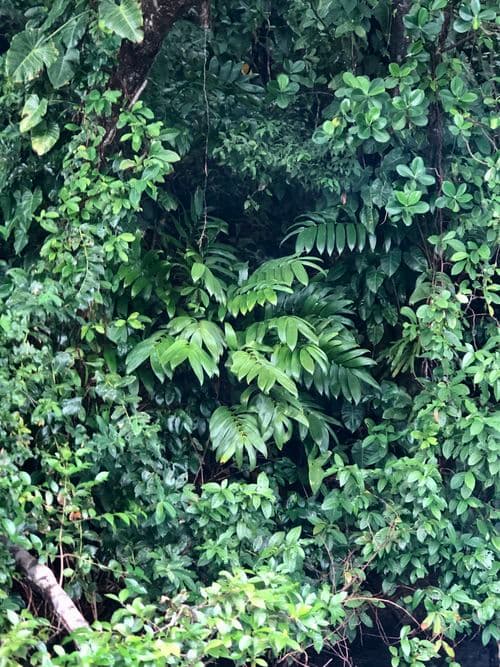
Zamia hamannii
Zamia hamannii is a species of cycad endemic to a small island off the northwestern Caribbean coast of Panama. It is characterized by its shrub or small tree form, with stems that can reach up to 2.4 meters in height and branch at the base or top. The species exhibits striking reddish-brown new leaves covered in silvery hairs, which mature to a glossy dark green, and it plays a crucial role in a mutualistic relationship with a specific beetle species for pollination.
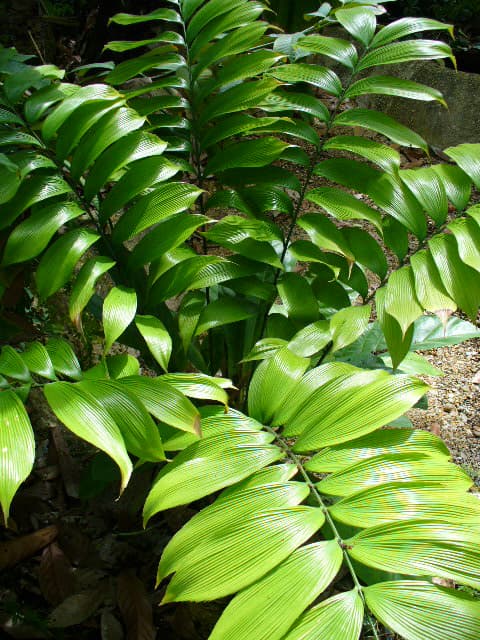
Zamia neurophyllidia
Zamia neurophyllidia is a species of cycad native to Central America, primarily found in Panama and potentially Costa Rica and Nicaragua. It is characterized by its shrub-like growth form, with stems reaching up to 2 meters in height and producing long, pinnately compound leaves. A unique botanical feature is its obligate mutualistic relationship with the beetle Pharaxonotha clarkorum, which acts as its primary pollinator.
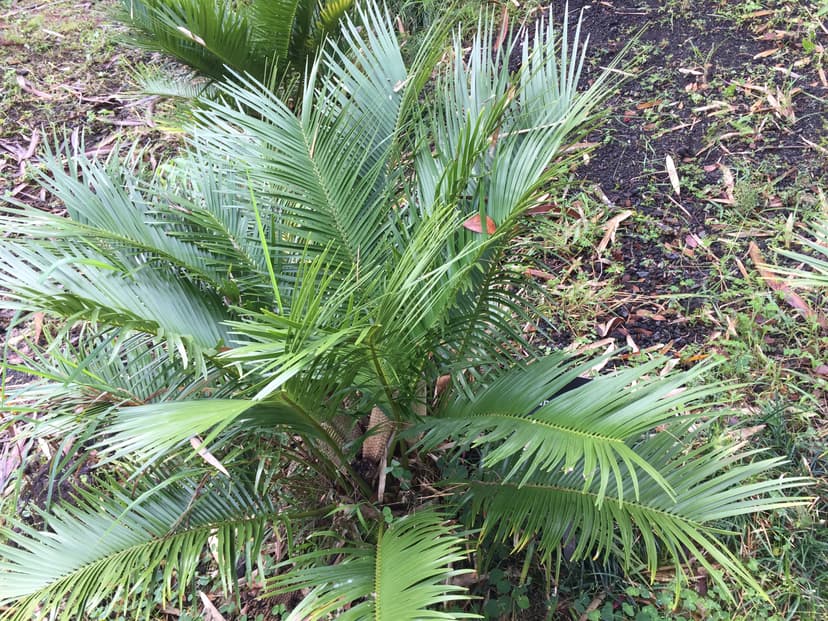
Zamia inermis
Zamia inermis is a critically endangered cycad species native to Actopan, Veracruz, Mexico. It is characterized by its shrub-like growth, with a trunk that can be branched and upright leaves composed of numerous linear-lanceolate leaflets. This species is dioecious and faces significant threats from habitat loss, wildfires, and over-harvesting.