
Zamia inermis
Deciduous tropical dry forests, primarily on steep slopes in low mountainous regions.·Shrub-like·Insect (beetles)·Critically Endangered
Zamia inermis is a critically endangered cycad species native to Actopan, Veracruz, Mexico. It is characterized by its shrub-like growth, with a trunk that can be branched and upright leaves composed of numerous linear-lanceolate leaflets. This species is dioecious and faces significant threats from habitat loss, wildfires, and over-harvesting.
Key Facts
- ›Endemic to Actopan, Veracruz state, in eastern Mexico.
- ›Classified as Critically Endangered by the IUCN.
- ›Possesses a stem that can grow up to 43 cm tall and is often branched in mature individuals.
- ›Leaves are compound, with 27-32 pairs of leaflets that are smooth-edged.
- ›Dioecious, meaning individual plants are either male or female.
- ›Threatened by habitat loss for farming, wildfires, and over-collection for ornamental purposes.
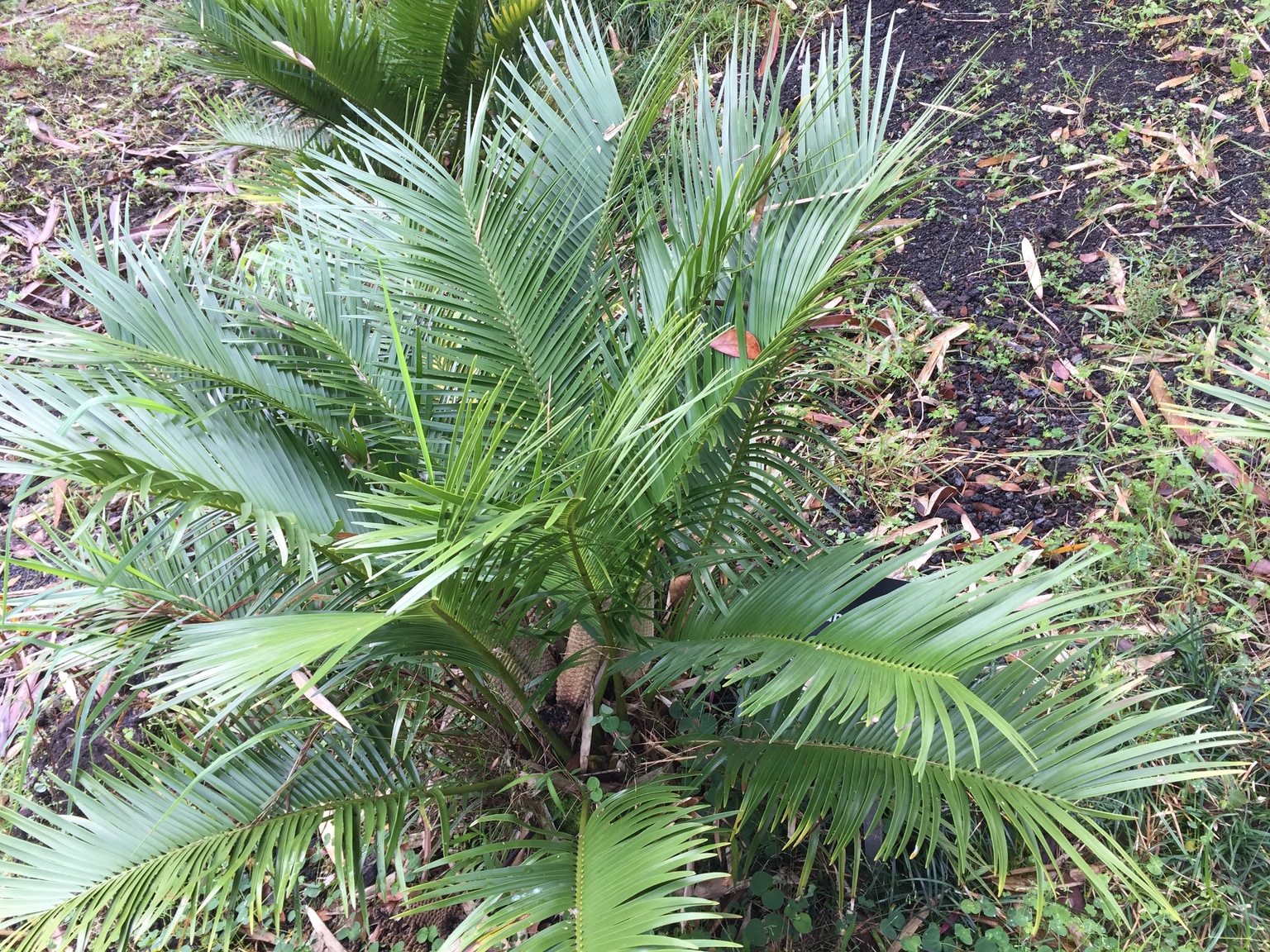
Actopan, Veracruz, Mexico
15 To 43 cm Tall, 8.6 To 26.4 cm In Diameter, Greyish In Color, Often Branched In Older Plants
- Compound leaves, 30 to 95 cm long and 43.5 to 60 cm wide
- Petiole is 18 to 41 cm long
- Leaf axis is 15 to 19 cm long
- 27 to 32 pairs of leaflets
- Leaflets are linear-lanceolate in shape with smooth edges
- Leaflets in the middle are 20 to 30.5 cm long and 0.9 to 1.2 cm wide
- Emergent leaves are light to yellowish-green
- Mature leaves are smooth, with no prickles
- Male cones: usually 1-2, sometimes up to 6 per plant; cylindrical, upright, up to 9.1 cm long, up to 2.8 cm in diameter, beige-yellowish in color; on peduncles up to 4.5 cm tall, covered with thick light-yellow hairs.
- Female cones: usually 1-2 per plant; erect, cylindrical, 13 to 23 cm tall, 8 to 9.8 cm in diameter; covered with light-brown to beige hairs; on peduncles 6 to 8 cm long, 1.2 to 1.4 cm in diameter, covered with brown hairs.
- Ovoid, 1.7 to 2.5 mm long and 1.4 to 2.1 mm in diameter
- Sarcotesta is smooth, starting pink and turning red when mature
Ornamental
Habitat loss to make way for farming, Frequent wildfires, Possible disappearance of its pollinators, Exposure to pesticides from crops, Soil erosion, Over-harvested for decorative purposes
About Zamia inermis
Zamia inermis is a species of cycad belonging to the Zamiaceae family, uniquely endemic to the Actopan region in Veracruz state, eastern Mexico. This plant is characterized by its distinctive botanical features and faces severe threats in its natural habitat, leading to its classification as Critically Endangered.
Description and Habitat
The species typically exhibits a shrub-like growth form, with stems that can reach heights of 15 to 43 centimeters and a diameter of up to 26.4 centimeters. These stems are often branched in older specimens and are greyish in color. Zamia inermis bears compound leaves, which are upright and can extend from 30 to 95 centimeters in length. Each leaf is composed of 27 to 32 pairs of linear-lanceolate leaflets, notable for their smooth edges and absence of prickles, a characteristic reflected in the species' name, 'inermis.'
This cycad originally thrived in deciduous tropical dry forests, preferring steep slopes in low mountainous areas at altitudes between 200 and 300 meters. It adapts to arid volcanic soils with limited organic content. The known natural population is fragmented, existing in small, scattered patches across three sub-populations within a confined area.
Reproduction and Conservation
Like all cycads in the genus Zamia, Zamia inermis is dioecious, meaning individual plants are either male or female. Reproduction involves the production of male and female cones, or strobili. Male cones are cylindrical and beige-yellowish, while female cones are larger, erect, and covered with hairs. The seeds are ovoid, with a smooth sarcotesta that changes color from pink to red upon maturity.
Zamia inermis is critically endangered due to a confluence of factors. Habitat degradation from agricultural expansion, frequent and intense wildfires, the potential extinction of its specific beetle pollinators, pesticide exposure from nearby crops, soil erosion, and over-collection for ornamental purposes all contribute to its precarious status. Population estimates in 2020 suggested a mere 300-350 individuals, and the species has experienced a dramatic decline, losing 75% of its population in the 50 years leading up to 2017. Efforts are underway to understand and mitigate these threats, though challenges remain, including low genetic diversity in the wild population.
Source: Wikipedia ↗
Frequently Asked Questions
What is Zamia inermis?
Zamia inermis is a species of cycad belonging to the Zamiaceae family. It is native to a specific region in eastern Mexico and is recognized for its unique botanical features and critically endangered status.
Where is Zamia inermis found naturally?
The natural habitat of Zamia inermis is limited to Actopan, in the state of Veracruz, eastern Mexico. It typically grows in deciduous tropical dry forests on steep slopes within low mountainous areas.
What are the main threats to Zamia inermis?
Zamia inermis faces numerous threats, including habitat destruction for agriculture, frequent wildfires, potential loss of its pollinators, exposure to pesticides, soil erosion, and over-harvesting for ornamental use. These factors have led to a significant decline in its population.
What do Zamia inermis plants look like?
These plants have a stem that can reach up to 43 cm in height and is often branched. They bear compound leaves, each consisting of 27 to 32 pairs of long, narrow leaflets with smooth edges. Male and female reproductive cones are produced on separate plants.
What is the conservation status of Zamia inermis?
Zamia inermis is classified as Critically Endangered. This designation reflects the severe decline in its wild population and the ongoing threats it faces in its natural habitat.
Related Cycad species

Zamia angustifolia
Zamia angustifolia is a species of cycad found in the Bahamas and Cuba. In the Bahamas, it is restricted to a few coastal dune sites and faces threats from habitat loss, while it is more abundant in Cuba's semi-deciduous dry forests. This species is characterized by its dark gray to black cones with pointed tips and is part of the broader Zamia pumila species complex.

Encephalartos dolomiticus
Encephalartos dolomiticus, commonly known as the Wolkberg cycad, is a critically endangered cycad species native to the Wolkberg region of South Africa. This tree-like cycad typically grows up to 2 meters tall and is characterized by its distinctive bluish leaves forming a crown, with lance-shaped leaflets arranged oppositely along the rachis. It is a dioecious species, producing separate male and female cones.

Encephalartos latifrons
Encephalartos latifrons, commonly known as the Albany Cycad, is a critically endangered species of cycad native to the Eastern Cape province of South Africa. This tall, tree-like plant is characterized by its upright or prostrate stem and bright green, feather-like leaves. It is notable for its rarity and the challenges it faces in natural reproduction.