
Zamia neurophyllidia
Tropical deciduous forests on steep hills.·Shrub or small tree·Insect (Pharaxonotha clarkorum beetle)
Zamia neurophyllidia is a species of cycad native to Central America, primarily found in Panama and potentially Costa Rica and Nicaragua. It is characterized by its shrub-like growth form, with stems reaching up to 2 meters in height and producing long, pinnately compound leaves. A unique botanical feature is its obligate mutualistic relationship with the beetle Pharaxonotha clarkorum, which acts as its primary pollinator.
Key Facts
- ›Native to Panama, with potential occurrences in Costa Rica and Nicaragua.
- ›Belongs to the Zamiaceae family.
- ›Characterized by a shrub or small tree growth form.
- ›Possesses an obligate mutualistic relationship with the beetle Pharaxonapha clarkorum for pollination.
- ›Female cones are distinctively covered in hairs that mature to dark brown.
- ›Seeds have a bright red sarcotesta.
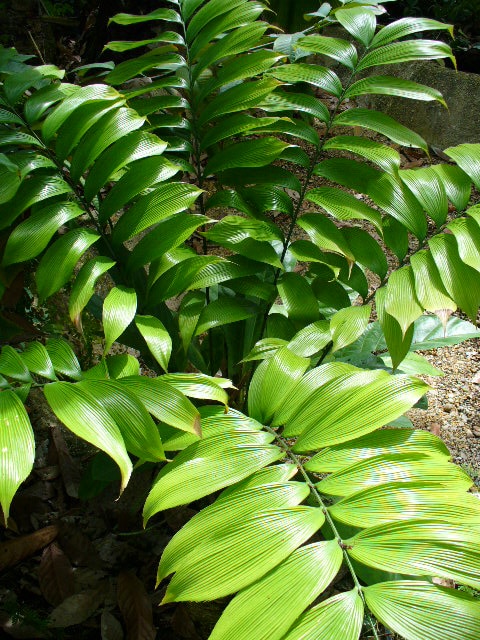
Panama, Costa Rica, Nicaragua
Up to 1.5 to 2 metres tall, 5 to 12 centimetres in diameter
- Up to 22 leaves per crown
- 61 to 180 centimetres long
- 6 to 11 pairs of leaflets per leaf
- Leaflets are elliptic to oblong-elliptic
- Leaflets are pleated between veins
- Leaflets have serrated edges
- Middle leaflets are 20 to 31.3 centimetres long and 6.1 to 10.5 centimetres wide
- Female cones are 13.2 to 20 centimetres long and 5.7 to 7.2 centimetres wide.
- Female cones emerge covered in tan matted hair which matures into dark brown hairs.
- Megasporophylls are green to yellow-green.
- 110 to 220 seeds per cone.
- Male cones were not observed in the type variety during a recharacterization study.
1.8 To 2.5 Centimetres Long, 0.9 To 1.5 Centimetres Wide, Sarcotesta Is Bright Red
About Zamia neurophyllidia
Zamia neurophyllidia is a species of cycad belonging to the Zamiaceae family, with a native range primarily encompassing Panama, and potential occurrences in Costa Rica and Nicaragua. Historically, populations of this plant were sometimes considered a dwarf variety of Zamia skinneri, but it was described as a distinct species by D. W. Stevenson in 1993. More recent taxonomic work has focused on re-characterizing Z. neurophyllidia based on populations in its type locality, acknowledging its place within the broader Zamia skinneri species complex.
Botanical Characteristics
This cycad typically grows as a shrub or small tree, with stems that can reach heights of 1.5 to 2 meters and diameters of 5 to 12 centimeters. Each crown can bear up to 22 leaves, which are long and pinnately compound, measuring between 61 to 180 centimeters in length. The leaves are composed of numerous leaflets that are elliptic to oblong-elliptic in shape, exhibiting a pleated texture between the veins and serrated edges. The leaflets found along the middle of the stem are particularly substantial, ranging from 20 to 31.3 centimeters in length and 6.1 to 10.5 centimeters in width.
Reproduction and Mutualism
Zamia neurophyllidia is dioecious, meaning that individual plants are either male or female. Reproduction relies on an obligate mutualistic relationship with the beetle Pharaxonotha clarkorum. These beetles live and breed within the male cones, consuming pollen and cone tissues. In the process, they act as vital pollinators by transferring pollen from male cones to female cones. The female cones, known as macrostrobili, are notable for their size (13.2 to 20 cm long and 5.7 to 7.2 cm wide) and their covering of tan, matted hairs that mature to a dark brown. The seeds produced are substantial (1.8 to 2.5 cm long) and are enclosed in a striking bright red seed coating, the sarcotesta.
Source: Wikipedia ↗
Frequently Asked Questions
What is Zamia neurophyllidia?
Zamia neurophyllidia is a species of plant belonging to the Zamiaceae family. It is a cycad known for its shrub-like growth and its essential relationship with a specific beetle species for reproduction.
Where is Zamia neurophyllidia found?
The species is primarily known from Panama, specifically in the Bocas del Toro Province. It may also occur in parts of Costa Rica and southern Nicaragua, though its precise distribution in these areas is still being clarified.
How does Zamia neurophyllidia reproduce?
Like other cycads in the Zamia genus, Zamia neurophyllidia is dioecious, meaning individual plants are either male or female. Reproduction relies on the beetle Pharaxonotha clarkorum, which lives in the male cones, consumes pollen, and then transfers it to the female cones, facilitating pollination.
What are the physical characteristics of Zamia neurophyllidia?
This cycad grows as a shrub or small tree, with stems reaching up to 2 meters in height and 5 to 12 cm in diameter. It produces up to 22 leaves, each between 61 and 180 cm long, with numerous leaflets that are elliptic to oblong-elliptic, pleated, and have serrated edges.
What are the cones of Zamia neurophyllidia like?
Female cones, called macrostrobili, are typically 13.2 to 20 cm long and 5.7 to 7.2 cm wide. They are initially covered in tan hairs that darken with maturity. The cones contain 110 to 220 seeds, each 1.8 to 2.5 cm long, which are enclosed in a bright red seed coating called a sarcotesta.
Related Cycad species
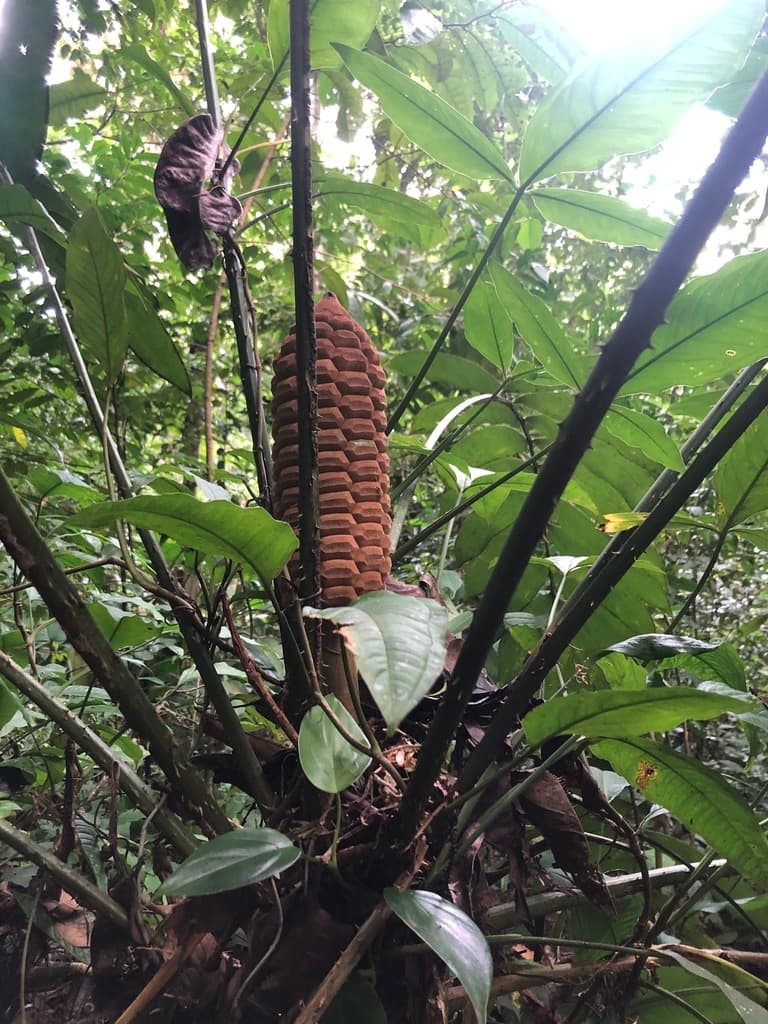
Zamia nesophila
Zamia nesophila, commonly known as "guade teet," is a species of cycad found on several islands in northwestern Panama. Primarily inhabiting sandy beaches near the sea, it can also be found inland in forests. This species is characterized by its shrub or small tree growth form and is critically endangered due to coastal development.
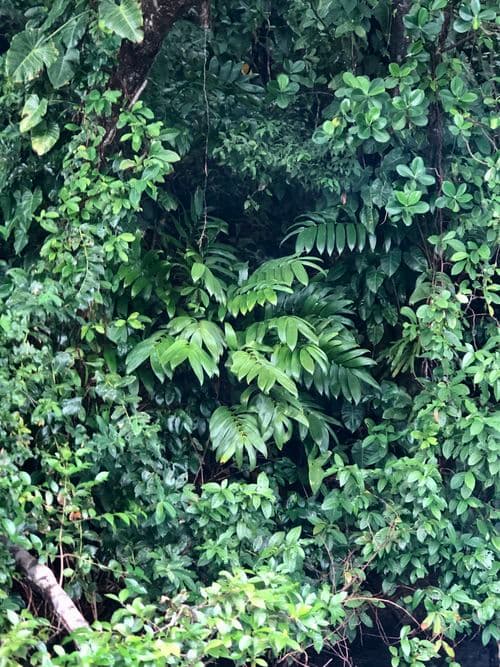
Zamia hamannii
Zamia hamannii is a species of cycad endemic to a small island off the northwestern Caribbean coast of Panama. It is characterized by its shrub or small tree form, with stems that can reach up to 2.4 meters in height and branch at the base or top. The species exhibits striking reddish-brown new leaves covered in silvery hairs, which mature to a glossy dark green, and it plays a crucial role in a mutualistic relationship with a specific beetle species for pollination.

Encephalartos horridus
Encephalartos horridus, commonly known as the Eastern Cape blue cycad, is a distinctive, low-growing cycad native to the Eastern Cape Province of South Africa. It is recognized for its striking blue-gray, spiny leaves and typically develops a subterranean stem. This species thrives in arid shrublands and rocky ridges, exhibiting a slow growth rate and requiring specific conditions for successful cultivation.