
Abrictosaurus
Herbivore or Omnivore·Early Jurassic·Southern Africa (Lesotho and South Africa)·Bipedal
Abrictosaurus is a genus of small, bipedal ornithischian dinosaur that lived during the Early Jurassic period in what is now southern Africa. Known for its distinctive heterodont dentition, including prominent tusks, it represents one of the most basal members of the Heterodontosauridae family. Fossil evidence suggests it was a herbivore or omnivore that inhabited a semiarid environment.
Key Facts
- ›Lived during the Early Jurassic period, approximately 200 to 190 million years ago.
- ›Fossils discovered in Lesotho and South Africa.
- ›Bipedal herbivore or omnivore.
- ›Characterized by heterodont dentition, including large tusks.
- ›Considered one of the most basal heterodontosaurids.
- ›Estimated to be about 1.2 meters long and weigh less than 45 kilograms.
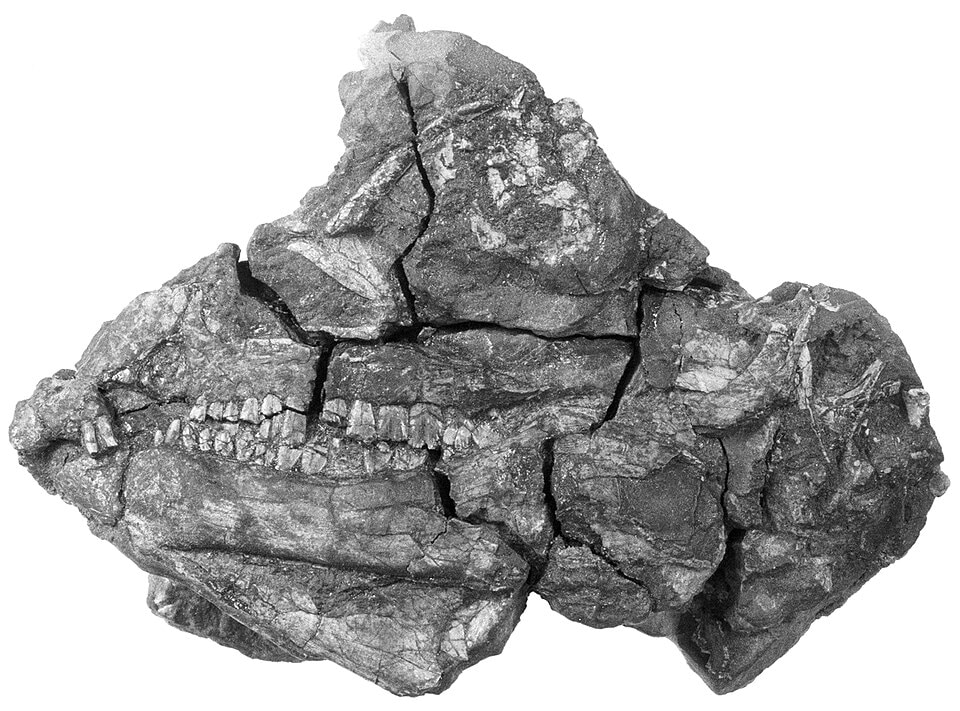
- Small, bipedal dinosaur.
- Possessed a hard beak for cropping vegetation.
- Markedly heterodont dentition with large, canine-like tusks.
- Tusks serrated only on the anterior surface.
- Lower crowns on cheek teeth compared to some relatives.
- Less powerful forelimbs and fewer phalanges than Heterodontosaurus.
Heterodontosaurus, Lycorhinus
Africa
About Abrictosaurus
Abrictosaurus is a genus of heterodontosaurid dinosaur that roamed parts of southern Africa during the Early Jurassic period. The name, derived from Greek roots meaning 'wakeful lizard,' was given by paleontologist James Hopson in 1975. This genus is considered one of the most basal members of the Heterodontosauridae family, a group of small, early ornithischians known for their distinctly varied teeth.
Description and Characteristics
Abrictosaurus was a bipedal dinosaur, estimated to be around 1.2 meters (3.9 feet) in length and weighing less than 45 kilograms (99 pounds). Its most notable feature was its heterodont dentition. Like other heterodontosaurids, it possessed a hard beak at the front of its jaws for cropping vegetation and large, canine-like tusks, known as caniniforms, in both its upper and lower jaws. These tusks were serrated only on their front surface, distinguishing them from those of closely related genera like Lycorhinus and Heterodontosaurus. Abrictosaurus also had more widely spaced cheek teeth with lower crowns compared to some of its relatives, and possessed smaller, less powerful forelimbs.
Discovery and Fossil Record
The fossil remains of Abrictosaurus are rare, with only two individuals described from the Upper Elliot Formation in Lesotho and South Africa. This formation is believed to date to the Hettangian and Sinemurian stages of the Early Jurassic, approximately 200 to 190 million years ago. The environment preserved in this formation suggests a semiarid climate with seasonal floodplains and sand dunes. The limited fossil record means that detailed descriptions of its skull and skeleton are not fully available in the scientific literature.
Diet and Habitat
Abrictosaurus is classified as a herbivore or omnivore, utilizing its beak and specialized teeth to process plant matter. The environment it inhabited was likely a semiarid landscape with periods of rainfall, characterized by seasonal floodplains. It shared its ecosystem with other dinosaurs such as the theropod Megapnosaurus and the sauropodomorph Massospondylus, as well as other heterodontosaurids like Heterodontosaurus and Lycorhinus, alongside various crocodylomorphs, cynodonts, and early mammals.
Source: Wikipedia ↗
Frequently Asked Questions
What does the name Abrictosaurus mean?
The name Abrictosaurus comes from Greek words meaning 'wakeful lizard'. It was chosen to reflect a disagreement with the idea that heterodontosaurids might have hibernated during hot or dry seasons.
Where were Abrictosaurus fossils found?
Fossils of Abrictosaurus have been discovered in the Upper Elliot Formation in parts of southern Africa, specifically in Lesotho and South Africa.
What did Abrictosaurus eat?
Abrictosaurus is classified as a herbivore or omnivore. It possessed a hard beak at the front of its jaws for cropping vegetation, and had specialized teeth for chewing.
How large was Abrictosaurus?
Abrictosaurus was a relatively small dinosaur, estimated to be approximately 1.2 meters (3.9 feet) in length and weighing less than 45 kilograms (99 pounds).
What makes Abrictosaurus unique among heterodontosaurids?
Abrictosaurus is considered one of the most basal members of its family. It had more widely separated cheek teeth with lower crowns compared to some other heterodontosaurids, and its tusks were serrated only on the anterior surface.
Is there evidence of sexual dimorphism in Abrictosaurus?
The presence or absence of tusks in Abrictosaurus specimens led to early hypotheses about sexual dimorphism. However, the discovery of tusks in one specimen and the possibility that the tuskless specimen was juvenile weaken the case for this being a clear indicator of sex.
Related Dinosaur species

Berthasaura
Berthasaura is an extinct genus of theropod dinosaur from the Early Cretaceous period of Brazil. Known from a nearly complete skeleton, Berthasaura is notable for its toothless beak, suggesting a herbivorous or omnivorous diet, and its convergent evolution with oviraptorids. It is named in honor of Bertha Maria Júlia Lutz and Empress Maria Leopoldina.

Berberosaurus
Berberosaurus is a genus of neotheropod dinosaur that lived during the Early Jurassic period in what is now Morocco. It is considered one of the oldest formally identified theropods from North Africa and may represent the earliest known ceratosaur. Berberosaurus is known from partial postcranial remains and is characterized by unique anatomical features in its vertebrae and hindlimb bones.

Cryolophosaurus
Cryolophosaurus is a genus of large theropod dinosaur from the Early Jurassic period of Antarctica. It was one of the largest theropods of its time, with estimated lengths between 6-7 meters and weights of 350-465 kilograms. A distinctive feature of Cryolophosaurus is its "pompadour" crest, a bony structure running across its head, believed to have been used for species recognition.