
Cryolophosaurus
Carnivore·Early Jurassic·Antarctica·Bipedal
Cryolophosaurus is a genus of large theropod dinosaur from the Early Jurassic period of Antarctica. It was one of the largest theropods of its time, with estimated lengths between 6-7 meters and weights of 350-465 kilograms. A distinctive feature of Cryolophosaurus is its "pompadour" crest, a bony structure running across its head, believed to have been used for species recognition.
Key Facts
- ›Cryolophosaurus lived during the Early Jurassic Period in Antarctica.
- ›It was one of the largest theropods of its time, reaching lengths of 6-7 meters.
- ›The dinosaur possessed a unique "pompadour" crest on its skull.
- ›Its classification has been debated due to a MIX of primitive and advanced features.
- ›Cryolophosaurus was the first carnivorous dinosaur discovered in Antarctica.

- Large, well-built theropod dinosaur.
- Distinctive "pompadour" crest running side-to-side across the skull.
- High, narrow skull.
- Estimated to be 6-7 meters long.
- Estimated to weigh 350-465 kg.
Dilophosaurus, Dracovenator, Sinosaurus
Antarctica
About Cryolophosaurus
Cryolophosaurus is a genus of large theropod dinosaur that roamed Antarctica during the Early Jurassic Period, approximately 196 to 188 million years ago. It is known from a single species, Cryolophosaurus ellioti, and represents one of the largest theropods of its era. The discovery of Cryolophosaurus in Antarctica was significant, marking it as the first carnivorous dinosaur found on the continent and the first non-avian dinosaur from there to be officially named.
Description and Physical Characteristics
Cryolophosaurus was a formidable predator, estimated to have reached lengths of 6 to 7 meters (20 to 23 feet) and weighed between 350 to 465 kilograms (772 to 1,025 pounds). Some researchers suggest that adults may have been even larger than the subadult holotype specimen. A defining feature of Cryolophosaurus is its striking cranial crest, often described as a "pompadour" style, which ran across the top of its skull from side to side. This crest was thin, furrowed, and made of skull bone, distinguishing it from the crests of other theropods.
Discovery and Classification
The first fossils of Cryolophosaurus were excavated in 1991 from the Hanson Formation (formerly the upper Falla Formation) on Mount Kirkpatrick in Antarctica by paleontologist Dr. William Hammer and his team. The classification of Cryolophosaurus has been a subject of ongoing debate among paleontologists due to its unique combination of primitive and advanced anatomical traits. While its femur displays characteristics of early theropods, its skull exhibits features found in later groups like the Tetanurae, leading to its placement in various groups including dilophosaurids, tetanurans, abelisaurids, and allosaurids. Current understanding places it as a derived neotheropod, close to the Averostra clade.
Paleobiology and Paleoenvironment
The function of Cryolophosaurus's distinctive crest is thought to have been primarily for intra-species recognition, possibly playing a role in social signaling or mating displays, rather than for combat. Evidence from related species and bone texture studies supports this hypothesis. While early interpretations suggested it preyed on prosauropod dinosaurs, later analysis indicated that some associated rib fragments may have belonged to Cryolophosaurus itself. The paleoclimate of Antarctica during the Early Jurassic was considerably warmer than today, with a cool temperate and humid environment, supporting lush forests and open woodlands where Cryolophosaurus likely hunted.
Source: Wikipedia ↗
Frequently Asked Questions
What does the name Cryolophosaurus mean?
The name Cryolophosaurus is derived from Greek words meaning 'cold crest lizard.' 'Kryos' means cold or frozen, referring to its Antarctic discovery. 'Lophos' means crest, and 'sauros' means lizard.
How large was Cryolophosaurus?
Estimates suggest Cryolophosaurus reached lengths of 6 to 7 meters (20 to 23 feet) and weighed between 350 to 465 kilograms (772 to 1,025 pounds). Some researchers propose larger adult sizes.
What was the most distinctive feature of Cryolophosaurus?
Cryolophosaurus is most famous for its distinctive 'pompadour' crest, a bony structure that spanned its head from side to side. This crest was thin, highly furrowed, and gave the dinosaur a unique appearance.
What did Cryolophosaurus eat?
The diet of Cryolophosaurus is not definitively known, but some fossil discoveries initially suggested it may have eaten prosauropod dinosaurs. Later analysis indicated that ribs found with the specimen likely belonged to Cryolophosaurus itself.
Where was Cryolophosaurus discovered?
Fossils of Cryolophosaurus were first discovered in Antarctica, specifically from the Hanson Formation on Mount Kirkpatrick in the Beardmore Glacier region of the Transantarctic Mountains.
Why is Cryolophosaurus's classification difficult?
Classification is challenging because Cryolophosaurus exhibits a mosaic of primitive and advanced anatomical features. Its femur shows traits of early theropods, while its skull resembles later species, leading to varied interpretations of its evolutionary relationships.
Related Dinosaur species

Berberosaurus
Berberosaurus is a genus of neotheropod dinosaur that lived during the Early Jurassic period in what is now Morocco. It is considered one of the oldest formally identified theropods from North Africa and may represent the earliest known ceratosaur. Berberosaurus is known from partial postcranial remains and is characterized by unique anatomical features in its vertebrae and hindlimb bones.
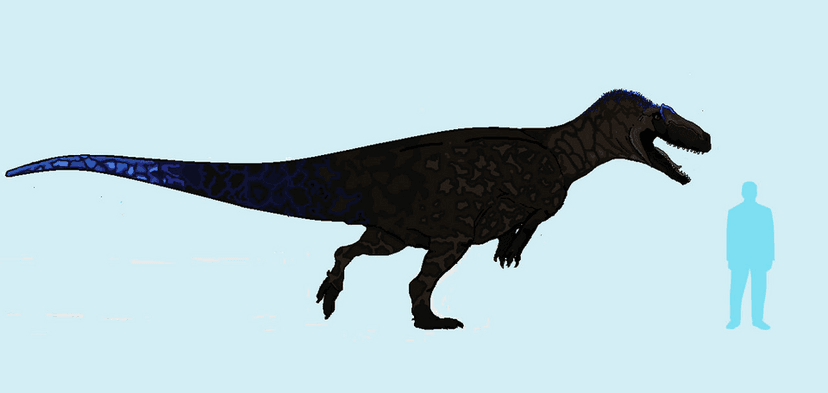
Dandakosaurus
Dandakosaurus is a dubious genus of theropod dinosaur from the Kota Formation in India, living during the Early Jurassic period. Due to limited fossil evidence, some paleontologists consider it a nomen dubium. Remains suggest it was a carnivore, but its exact classification and features remain uncertain.
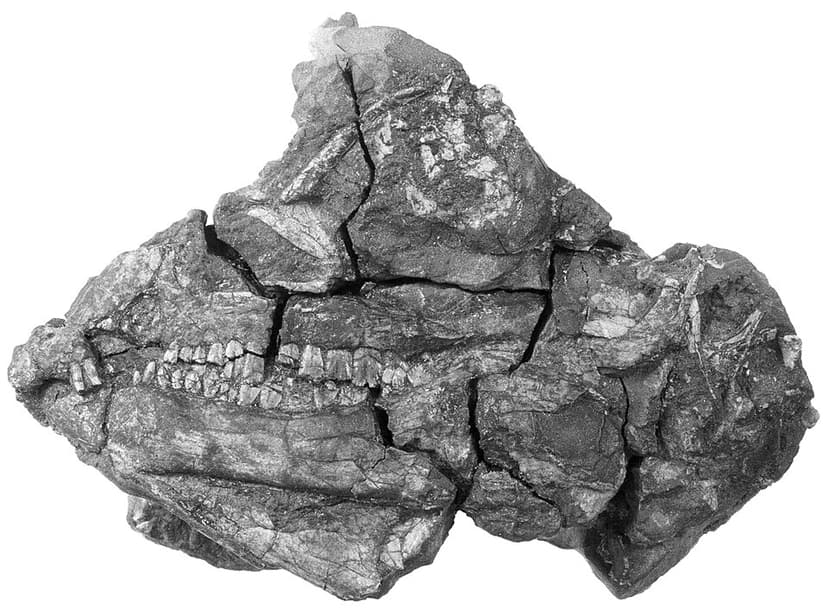
Abrictosaurus
Abrictosaurus is a genus of small, bipedal ornithischian dinosaur that lived during the Early Jurassic period in what is now southern Africa. Known for its distinctive heterodont dentition, including prominent tusks, it represents one of the most basal members of the Heterodontosauridae family. Fossil evidence suggests it was a herbivore or omnivore that inhabited a semiarid environment.