
Berthasaura
Herbivore or Omnivore·Early Cretaceous·Paraná, Brazil·Bipedal
Berthasaura is an extinct genus of theropod dinosaur from the Early Cretaceous period of Brazil. Known from a nearly complete skeleton, Berthasaura is notable for its toothless beak, suggesting a herbivorous or omnivorous diet, and its convergent evolution with oviraptorids. It is named in honor of Bertha Maria Júlia Lutz and Empress Maria Leopoldina.
Key Facts
- ›Berthasaura lived during the Early Cretaceous period in what is now Brazil.
- ›It is known from a nearly complete skeleton, making it one of the most complete dinosaur fossils from Cretaceous Brazil.
- ›The dinosaur had a toothless beak, suggesting a diet of plants or possibly omnivory.
- ›Berthasaura evolved features similar to oviraptorids, despite being a ceratosaurian theropod.
- ›Its generic name honors scientist Bertha Maria Júlia Lutz, and its specific name honors Empress Maria Leopoldina.

- Around 1 meter in length
- Toothless, short beak
- Likely lost teeth in adulthood, but had them as juveniles
- Convergent adaptations with Oviraptorids
Limusaurus, Austrocheirus, Afromimus
Brazil
About Berthasaura
Berthasaura is an extinct genus of ceratosaurian theropod dinosaur that lived during the Early Cretaceous period. Fossils of this dinosaur were discovered in the Goio-Erê Formation of Paraná, Brazil. The genus is known from a single species, Berthasaura leopoldinae, represented by a remarkably complete skeleton.
Discovery and Naming
The holotype specimen of Berthasaura was excavated between 2011 and 2015 at the Cemitério dos Pterossauros site near Cruzeiro do Oeste. This site has yielded numerous fossil finds, including pterosaurs and other small theropods. The species Berthasaura leopoldinae was formally named and described in 2021 by a team of paleontologists. The genus name, Berthasaura, honors Bertha Maria Júlia Lutz, a prominent scientist and advocate for women's rights. The specific epithet, leopoldinae, is a tribute to Maria Leopoldina, the first Empress of Brazil, and was chosen to coincide with the bicentennial of Brazil's independence.
Description and Paleobiology
The nearly complete skeleton of Berthasaura, measuring approximately 1 meter (3.3 ft) in length, likely belonged to a subadult individual. This specimen is considered one of the most complete dinosaur fossils discovered from the Cretaceous period in Brazil, providing an exceptionally well-preserved axial skeleton for a noasaurid. A key characteristic of Berthasaura is its toothless, short beak. This feature suggests that the dinosaur was herbivorous or at least omnivorous, a departure from the carnivorous diet typical of most ceratosaurs, though similar to adult Limusaurus. While juvenile Berthasaura possessed teeth, they were lost in adulthood. The dinosaur also exhibited several adaptations that were convergent with those of oviraptorids.
Paleoenvironment
Berthasaura inhabited an ancient desert environment represented by the Goio-Erê Formation. The precise geological age of this formation is still debated among researchers, with some suggesting deposition during the Aptian-Albian stages. Other fauna recovered from this formation include the pterosaurs Caiuajara, Keresdrakon, and Torukjara, as well as the lizard Gueragama.
Source: Wikipedia ↗
Frequently Asked Questions
What does the name Berthasaura mean?
The name Berthasaura means "Bertha's lizard." It honors the scientist and women's rights activist Bertha Maria Júlia Lutz. The specific name, leopoldinae, honors Maria Leopoldina, the first Empress of Brazil.
When did Berthasaura live?
Berthasaura lived during the Early Cretaceous period. The exact dating of the Goio-Erê Formation where it was found is uncertain, with estimates ranging from the Aptian to Albian stages.
What was Berthasaura's diet?
Berthasaura is believed to have been a herbivore or at least an omnivore, indicated by its toothless, short beak. While it lost teeth in adulthood, like adult Limusaurus, juveniles did possess teeth.
Where were Berthasaura fossils found?
Fossils of Berthasaura were discovered in the Goio-Erê Formation near Cruzeiro do Oeste, in Paraná, Brazil. This formation was once an ancient desert environment.
How complete is the Berthasaura fossil record?
The holotype of Berthasaura is a nearly complete disarticulated skeleton, estimated to be around 1 meter (3.3 ft) long. It is considered one of the most complete dinosaur fossils from Cretaceous Brazil and preserves the most complete axial series of any known noasaurid.
What is Berthasaura's relationship to other dinosaurs?
Berthasaura is classified as a ceratosaurian theropod. Scientists have placed it as the basalmost noasaurid, distantly related to Limusaurus. Later analyses suggest it may belong to a distinct family, Berthasauridae, nesting outside of Noasauridae.
Related Dinosaur species
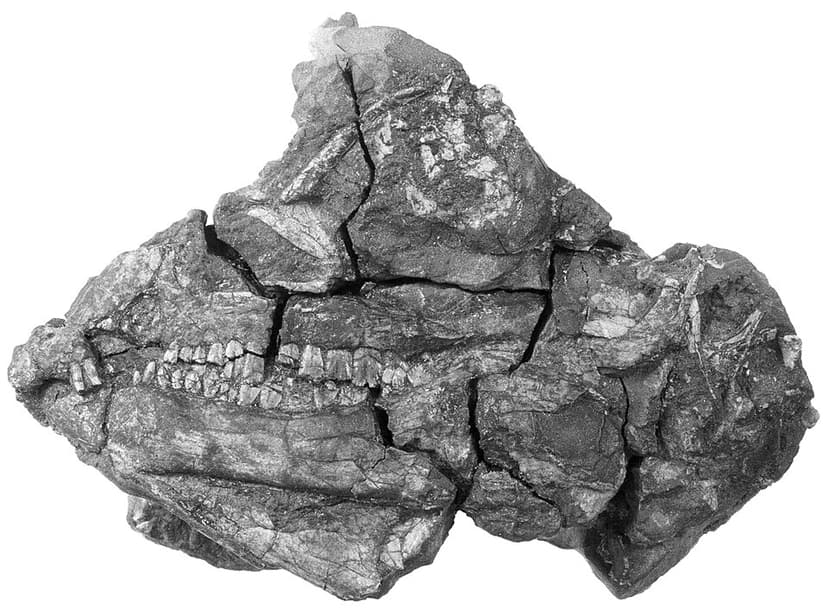
Abrictosaurus
Abrictosaurus is a genus of small, bipedal ornithischian dinosaur that lived during the Early Jurassic period in what is now southern Africa. Known for its distinctive heterodont dentition, including prominent tusks, it represents one of the most basal members of the Heterodontosauridae family. Fossil evidence suggests it was a herbivore or omnivore that inhabited a semiarid environment.

Archaeoceratops
Archaeoceratops was a small, bipedal herbivorous dinosaur from the Early Cretaceous period of north central China. Meaning "ancient horned face," it possessed a relatively large head with a small bony frill but lacked the prominent horns seen in later ceratopsians. It is considered the first basal neoceratopsian discovered in its region.
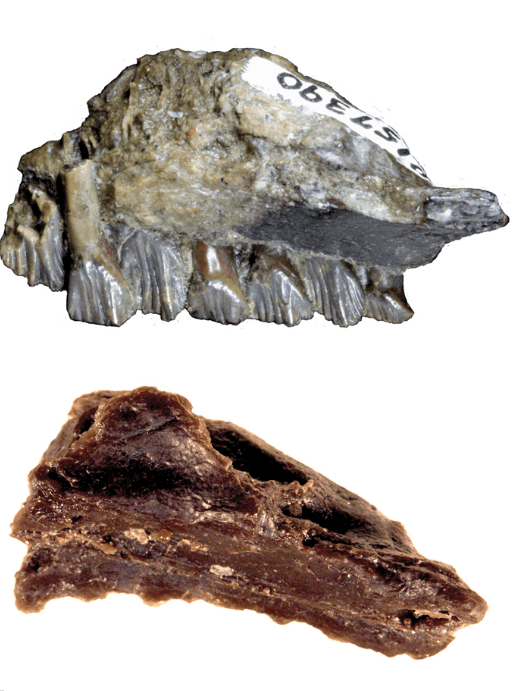
Atlascopcosaurus
Atlascopcosaurus is a genus of herbivorous dinosaur that lived during the Early Cretaceous period in what is now Australia. Based on related species, it is inferred to have been a small, bipedal herbivore.