
Aepyornithomimus
Aepyornithomimus is a genus of ornithomimid theropod dinosaur that lived during the Late Cretaceous period, approximately 75 million years ago. Its fossils were discovered in the Djadochta Formation of Mongolia, an area believed to have been a desert at the time. The genus name "Aepyornithomimus" means "Aepyornis mimic," referencing its foot structure, and the species name "tugrikinensis" refers to its discovery location.
Key Facts
- ›Aepyornithomimus lived in the Late Cretaceous, Campanian stage, around 75 million years ago.
- ›Fossils were found in the Djadochta Formation of Mongolia.
- ›It was an ornithomimid theropod dinosaur, meaning it was a "bird-MIMIC" dinosaur.
- ›The name "Aepyornithomimus" means "Aepyornis MIMIC" due to its foot structure.
- ›The type species is Aepyornithomimus tugrikinensis.
- ›It is considered a derived ornithomimosaur, closely related to genera like Struthiomimus and Ornithomimus.

- Possessed a foot structure similar to the extinct ratite Aepyornis.
- Likely had adaptations for speed, characteristic of ornithomimids.
Struthiomimus, Ornithomimus, Gallimimus, Anserimimus
Mongolia
About Aepyornithomimus
Aepyornithomimus is a genus of ornithomimid theropod dinosaur that roamed the Earth during the Late Cretaceous period, approximately 75 million years ago. Its fossils have been unearthed in the Djadochta Formation of Mongolia, a region believed to have been an arid desert environment at that time.
Discovery and Naming
The holotype specimen of Aepyornithomimus tugrikinensis, consisting of an almost complete articulated left foot, was discovered in 1994 during a joint Japanese-Mongolian paleontological expedition to the Gobi Desert. It was formally described and named in 2017 by a team of paleontologists. The genus name, Aepyornithomimus, translates to "Aepyornis mimic," highlighting the resemblance of its foot structure to that of the extinct ratite bird Aepyornis. The species name, tugrikinensis, refers to the Tögrögiin Shiree locality where the fossil was found.
Classification and Paleoecology
Phylogenetic analyses place Aepyornithomimus as a derived ornithomimosaur, closely related to other well-known genera such as Struthiomimus, Ornithomimus, Gallimimus, and Anserimimus. Its discovery in the drier, earlier deposits of the Djadokhta Formation indicates that ornithomimids were capable of inhabiting a variety of environmental conditions, even arid deserts. This contrasts with later, more humid environments where other ornithomimids are found.
Physical Characteristics
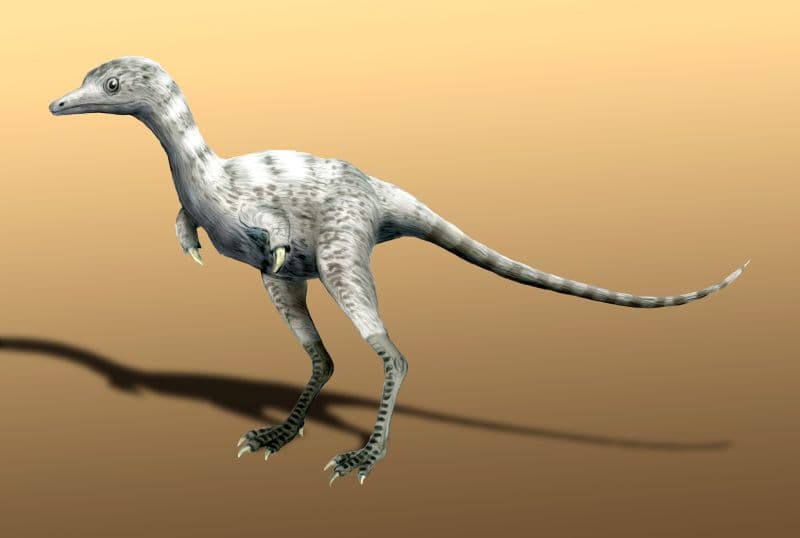
While detailed information about its overall size and weight is limited, Aepyornithomimus is primarily recognized for its distinct foot structure, which led to its "mimic" designation. As an ornithomimid, it is presumed to have been a bipedal dinosaur, likely possessing adaptations for speed and agility, similar to other members of its group, often referred to as "ostrich mimics."
Source: Wikipedia ↗
Frequently Asked Questions
What does "Aepyornithomimus" mean?
The name Aepyornithomimus means "Aepyornis mimic." This name was chosen in reference to the similar foot structure it shared with Aepyornis, a group of large, extinct ratite birds.
Where were Aepyornithomimus fossils found?
Fossils of Aepyornithomimus were discovered in the Djadochta Formation of Mongolia. This formation is characterized by semi-arid eolian (wind-deposited) sediments.
When did Aepyornithomimus live?
Aepyornithomimus lived during the Late Cretaceous period, specifically in the Campanian stage, approximately 75 million years ago.
What kind of dinosaur was Aepyornithomimus?
Aepyornithomimus was an ornithomimid theropod dinosaur. Ornithomimids are often referred to as "ostrich mimics" due to their likely adaptations for speed and their general body shape.
What were the environmental conditions during the time of Aepyornithomimus?
The Djadokhta Formation, where Aepyornithomimus fossils were found, is interpreted as an arid eolian desert, similar to the modern Gobi Desert.
What other dinosaurs are closely related to Aepyornithomimus?
Aepyornithomimus is considered a derived ornithomimosaur and is closely related to other genera such as Struthiomimus, Ornithomimus, Gallimimus, and Anserimimus.
Related Dinosaur species
Ceratonykus
Ceratonykus is a genus of alvarezsaurid dinosaur from the Late Cretaceous period of Mongolia. Known from fragmentary remains, it is characterized by its small size, estimated to be around 75 centimeters in length and weighing less than a kilogram. Its scientific name, "horned claw," refers to its presumed sharp claws, and "big-eyed" points to its large orbits.

Amtocephale
Amtocephale is a genus of pachycephalosaurid dinosaur discovered in the southern Gobi Desert of Mongolia. Known from a nearly complete frontoparietal dome, it represents a subadult individual. Amtocephale is considered a potentially very old representative of its family, dating back to the early Late Cretaceous period.

Achillobator
Achillobator was a large, heavily-built dromaeosaurid theropod dinosaur that inhabited Mongolia during the Late Cretaceous period. It is distinguished by its robust skeleton, deep maxilla, and primitive pelvis, contrasting with the generally lighter build of other dromaeosaurids. This predator likely hunted large prey using its enlarged sickle claw.