
Amtocephale
Amtocephale is a genus of pachycephalosaurid dinosaur discovered in the southern Gobi Desert of Mongolia. Known from a nearly complete frontoparietal dome, it represents a subadult individual. Amtocephale is considered a potentially very old representative of its family, dating back to the early Late Cretaceous period.
Key Facts
- ›Amtocephale is a pachycephalosaurid dinosaur from Mongolia.
- ›Fossils were found in the Baynshire Formation of the southern Gobi Desert.
- ›The genus was named in 2011 by Watabe, Tsogtbaatar, and Sullivan.
- ›The holotype is a partial frontoparietal dome of a subadult.
- ›It lived during the early Late Cretaceous period (Cenomanian-Coniacian stages).
- ›Amtocephale may be one of the oldest pachycephalosaurids known.

- Possessed a frontoparietal dome formed by fused frontals and parietals.
- The dome had a length of 53.2 mm and a maximal thickness of 19 mm.
- The parietal portion contributed a large 41% to the dome's length.
- The holotype specimen is from a subadult individual.
Mongolia
About Amtocephale
Amtocephale is a genus of dinosaur belonging to the Pachycephalosauridae family, known from fossils discovered in the southern Gobi Desert of Mongolia. This dinosaur lived during the early part of the Late Cretaceous period, specifically from the Cenomanian to Coniacian stages, approximately 95.9 to 89.6 million years ago. Its discovery in the Baynshire Formation at the Amtgai locality makes it a significant find for understanding the early evolution of dome-headed dinosaurs.
History of Naming and Discovery
The first fossils of Amtocephale were collected during paleontological expeditions in the Gobi Desert beginning in the 1990s. The holotype specimen, MPC-D 100/1203, is a nearly complete frontoparietal dome belonging to a subadult individual. This dome, formed by the fusion of the frontal and parietal bones, measures 53.2 millimeters in length and 19 millimeters in thickness, with the parietal section making up a substantial 41% of its length. The genus was formally described and named in 2011 by paleontologists Mahito Watabe, Khishigjaw Tsogtbaatar, and Robert M. Sullivan. The genus name, Amtocephale, is derived from the Amtgai locality and the Greek word 'kephale' for head, while the species name, gobiensis, denotes its origin in the Gobi Desert.
Significance and Paleontological Context
Amtocephale is noteworthy for its potential status as one of the oldest known pachycephalosaurids. The age of the Baynshire Formation, where it was found, is estimated between 95.9 ± 6.0 Ma and 89.6 ± 4.0 Ma, aligning with the Cenomanian-Coniacian stages. This geological placement suggests that Amtocephale was contemporaneous with fauna from the Milk River Formation in Alberta, Canada, and provides crucial insight into the early diversification of its family. While much about its biology and appearance remains unknown due to the limited fossil material, the preserved cranial dome indicates it possessed the characteristic thickened skull roof of pachycephalosaurs.
Source: Wikipedia ↗
Frequently Asked Questions
What kind of dinosaur was Amtocephale?
Amtocephale was a pachycephalosaurid dinosaur. This group is known for the thickened, often domed, skull roofs found in its members.
Where were Amtocephale fossils found?
Fossils of Amtocephale were discovered in the southern Gobi Desert of Mongolia, specifically from the Baynshire Formation at the Amtgai locality.
When did Amtocephale live?
Amtocephale lived during the early Late Cretaceous period, specifically within the Cenomanian to Coniacian stages. This places it in time roughly between 95.9 and 89.6 million years ago.
What does the name Amtocephale mean?
The genus name, Amtocephale, is a combination of the Amtgai locality where it was found and the Greek word 'kephale' meaning 'head'. The species name, gobiensis, refers to the Gobi Desert.
How old is Amtocephale compared to other pachycephalosaurids?
Based on its geological age, Amtocephale is considered potentially the oldest pachycephalosaurid dinosaur known. Its fossils date to the early part of the Late Cretaceous, making it very ancient for its family.
What part of the Amtocephale skeleton has been found?
The known fossil remains of Amtocephale consist primarily of a nearly complete frontoparietal dome. This part of the skull is formed by the fusion of the frontal and parietal bones.
Related Dinosaur species

Beg
Beg tse is an extinct species of neoceratopsian dinosaur that lived in Mongolia during the Early Cretaceous period. Known from a partial skull and fragmentary postcrania, it represents the most basal neoceratopsian discovered to date. Its scientific name honors the Himalayan war deity Beg-tse, reflecting the rugose appearance of its preserved skull.
Choyrodon
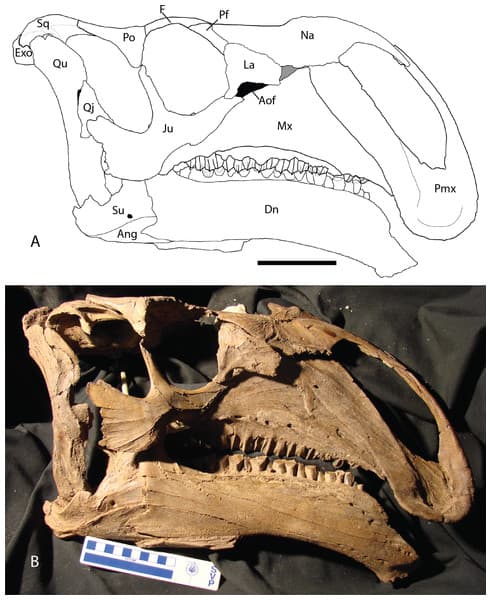
Choyrodon is a genus of hadrosauroid dinosaur that lived during the Early Cretaceous period in what is now Mongolia. The only known species, Choyrodon barsboldi, is distinguished by its unique dental features and is considered a close relative of Eolambia. Its fossils were discovered in the Khuren Dukh Formation.

Aepyornithomimus
Aepyornithomimus is a genus of ornithomimid theropod dinosaur that lived during the Late Cretaceous period, approximately 75 million years ago. Its fossils were discovered in the Djadochta Formation of Mongolia, an area believed to have been a desert at the time. The genus name "Aepyornithomimus" means "Aepyornis mimic," referencing its foot structure, and the species name "tugrikinensis" refers to its discovery location.