
Alamosaurus
Alamosaurus sanjuanensis was a gigantic titanosaurian sauropod that lived in southwestern North America during the Late Cretaceous period. It is notable as one of the few sauropods to inhabit North America after a significant absence in the fossil record and likely immigrated from South America or Asia. Alamosaurus was a quadrupedal herbivore characterized by a long neck, long tail, and bony armor, reaching impressive sizes comparable to some of the largest known dinosaurs.
Key Facts
- ›Alamosaurus was a titanosaurian sauropod from the Late Cretaceous of North America.
- ›It was a large quadrupedal herbivore with a long neck and tail.
- ›Adults measured approximately 26 meters (85 ft) long and weighed up to 35 tonnes (39 short tons).
- ›It is one of the few sauropods known to have lived in North America after a long period of absence.
- ›Fossils have been found in the southwestern United States, primarily in New Mexico, Texas, and Utah.
- ›Alamosaurus likely possessed bony armor, though no skull has ever been discovered.
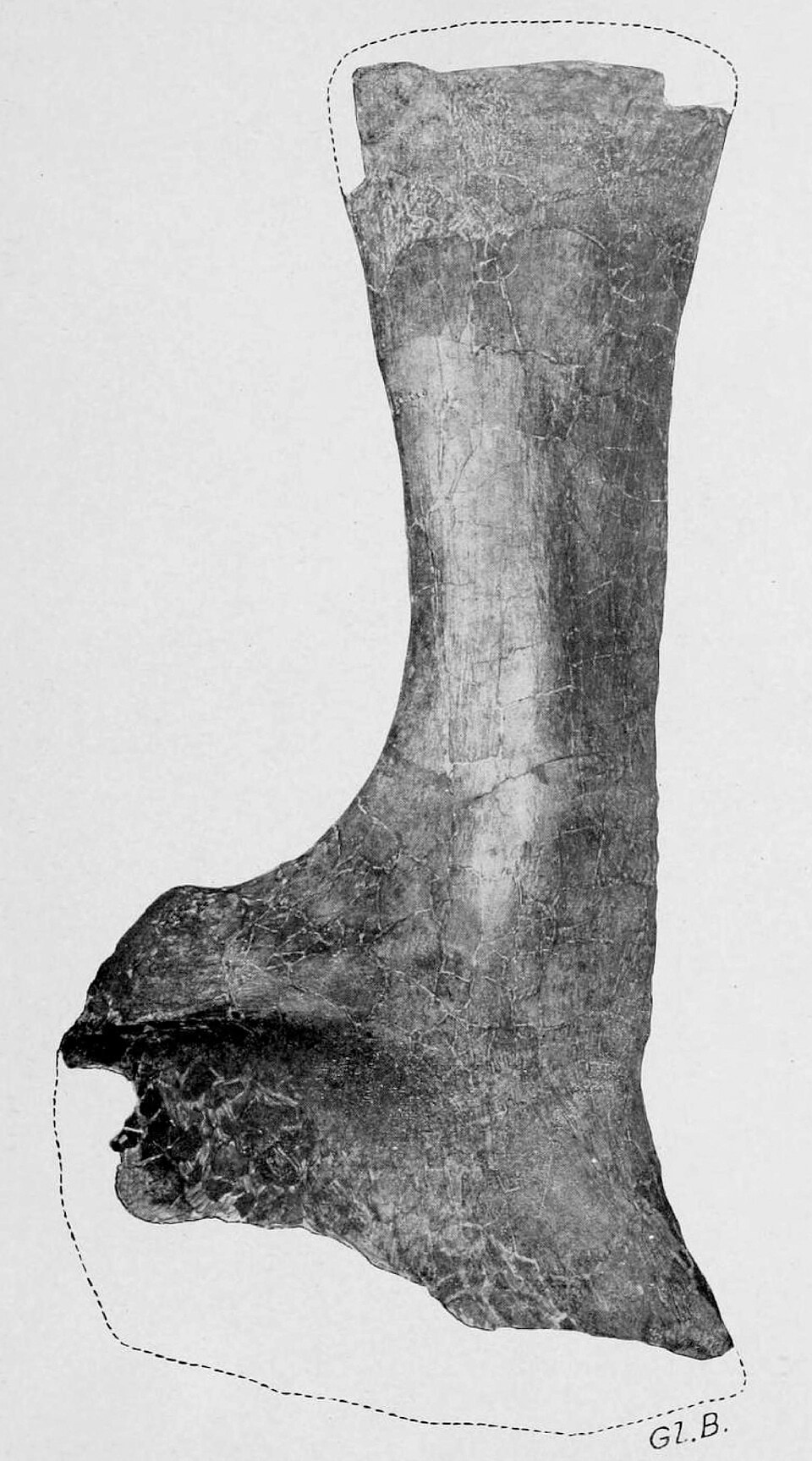
- Gigantic quadrupedal herbivore
- Long neck and long tail
- Relatively long limbs
- Body partly covered with bony armor
- Estimated length: 26 meters
- Estimated shoulder height: 5 meters
- Estimated weight: 30-35 tonnes, with potential for larger sizes
Argentinosaurus, Puertasaurus, Opisthocoelicaudia, Pellegrinisaurus, Neuquensaurus, Trigonosaurus, Futalognkosaurus, Mendozasaurus, Lognkosauria, Saltasauridae, Baurutitan
United States, Mexico
About Alamosaurus
Alamosaurus: The Late Cretaceous Giant of North America
Alamosaurus, scientifically known as Alamosaurus sanjuanensis, was a colossal titanosaurian sauropod that roamed southwestern North America during the very end of the Late Cretaceous period. Its existence is significant as it represents one of the few known sauropods to inhabit the continent after a nearly 30-million-year gap in the fossil record, suggesting it likely migrated from South America or Asia. Alamosaurus was a herbivore, characterized by its immense size, long neck and tail, and a body that was partially covered in bony armor.
Physical Characteristics and Size
Adult Alamosaurus are estimated to have reached lengths of approximately 26 meters (85 feet) and stood about 5 meters (16 feet) tall at the shoulder, with weights up to 30-35 tonnes (33-39 short tons). Some fossil evidence indicates that individuals could have grown even larger, potentially rivaling the sizes of the absolute largest known dinosaurs like Argentinosaurus. Its anatomy included a long neck for browsing vegetation, a lengthy tail for balance, and robust limbs for supporting its massive frame. Rod-shaped teeth have been found associated with Alamosaurus remains, although no skull has ever been discovered, leaving some details of its feeding apparatus unknown.
Discovery and Paleogeography
The first fossils of Alamosaurus were discovered in New Mexico in 1921 and formally described in 1922 by Charles Whitney Gilmore. The genus name derives from the Ojo Alamo Formation, where the holotype was found, and the species name honors San Juan County, New Mexico. While often mistakenly associated with the Battle of the Alamo in Texas, its name originates from the geological formation and the Spanish word for poplar tree. Remains have since been found across the southwestern United States, making Alamosaurus one of the most common large dinosaur fossils from this region and time. Its presence in North America after the 'sauropod hiatus' has led to considerable debate about its origins, with a South American immigration scenario being the most favored hypothesis among researchers.
Paleoenvironment and Lifestyle
Alamosaurus lived during the Maastrichtian age, a period characterized by semi-arid inland plains in what is now the southern United States. It was the dominant large herbivore in southern Laramidia during this time. Evidence from trackways suggests that Alamosaurus moved at slow speeds, between 3.2 to 4 kilometers per hour (2.0 to 2.5 mph), without dragging its tail. It shared its environment with other dinosaurs, including large pterosaurs like Quetzalcoatlus and potentially tyrannosaurs, as well as various smaller reptiles, amphibians, and mammals.
Source: Wikipedia ↗
Frequently Asked Questions
What does the name Alamosaurus mean?
The name Alamosaurus means 'Ojo Alamo lizard.' It is derived from Ojo Alamo, the geological formation where the holotype specimen was discovered, and the Greek word 'sauros' meaning lizard.
Where were Alamosaurus fossils found?
Fossils of Alamosaurus have been recovered from various rock formations in the southwestern United States, including New Mexico, Texas, and Utah. There is also evidence of related titanosaur fossils from Mexico.
How big was Alamosaurus?
Adult Alamosaurus are estimated to have been around 26 meters (85 ft) long and 5 meters (16 ft) tall at the shoulder, weighing up to 30-35 tonnes (33-39 short tons). Some specimens suggest even larger sizes, potentially comparable to Argentinosaurus.
What did Alamosaurus eat?
Alamosaurus was a herbivore. Its diet consisted of plants, and it is described as a quadrupedal herbivore with a long neck adapted for reaching vegetation.
When did Alamosaurus live?
Alamosaurus lived during the Maastrichtian age of the Late Cretaceous period, approximately 70 to 66 million years ago. Its fossils are among the geologically youngest dinosaur specimens found in North America.
Is Alamosaurus related to other titanosaurs?
Yes, Alamosaurus is classified as an advanced titanosaurian. Its exact relationships within the group are debated, but it is considered closely related to South American titanosaurs like Pellegrinisaurus and potentially Asian titanosaurs like Opisthocoelicaudia.
Related Dinosaur species

Bisticeratops
Bisticeratops is a genus of chasmosaurine ceratopsian dinosaur that lived during the late Campanian age of the Late Cretaceous period. Its fossils have been discovered in the Kirtland Formation of northwestern New Mexico, United States. The genus is known from a nearly complete skull, which displays evidence of healed tyrannosaurid bite marks.

Ahshislesaurus
Ahshislesaurus is an extinct genus of saurolophine hadrosaurid dinosaur that lived during the Late Cretaceous period in what is now New Mexico, United States. Known from a partial skull and neck vertebrae, it is distinguished by a uniquely deep mandible and a small bump over its snout, lacking the elaborate crests of some relatives. The genus and species, Ahshislesaurus wimani, were formally described in 2025.

Abditosaurus
Abditosaurus is an extinct genus of titanosaurian sauropod dinosaur that lived during the Late Cretaceous period in what is now Catalonia, Spain. It is known from the most complete titanosaur skeleton ever discovered in Europe, representing a large species that inhabited the Ibero-Armorican Island. Phylogenetic analyses suggest it was related to South American and African saltasaurines, distinguishing it from other European dwarf sauropods.