
Ahshislesaurus
Ahshislesaurus is an extinct genus of saurolophine hadrosaurid dinosaur that lived during the Late Cretaceous period in what is now New Mexico, United States. Known from a partial skull and neck vertebrae, it is distinguished by a uniquely deep mandible and a small bump over its snout, lacking the elaborate crests of some relatives. The genus and species, Ahshislesaurus wimani, were formally described in 2025.
Key Facts
- ›Ahshislesaurus lived during the Campanian age of the Late Cretaceous period.
- ›Its fossils were discovered in the Kirtland Formation of New Mexico, USA.
- ›It was a herbivorous hadrosaurid, characterized by a broad beak and complex dental batteries.
- ›A distinctive feature is its deep mandible at the front, unlike most hadrosaurids.
- ›Estimated to reach lengths of up to 11 meters (36 feet).
- ›Belongs to the saurolophine subfamily, specifically within the Kritosaurini tribe.

- Herbivorous hadrosaurid with a broad, toothless 'beak'.
- Complex, tightly packed dental batteries for constant tooth replacement.
- Estimated length up to 11 meters.
- Distinctive deep mandible at the anterior end.
- Small bump over the snout, lacking a decorative tube-like crest.
Naashoibitosaurus, Kritosaurus Navajovius
North America
About Ahshislesaurus
Ahshislesaurus is an extinct genus of saurolophine hadrosaurid dinosaur that roamed the Earth during the Late Cretaceous period. Its fossils have been discovered in what is now New Mexico, United States, specifically within the Hunter Wash Member of the Kirtland Formation, dating back to the Campanian age (around 75 million years ago).
Physical Description and Diet
As a hadrosaurid, or 'duckbilled' dinosaur, Ahshislesaurus was a herbivore characterized by a broad, toothless beak and complex dental batteries. These intricate arrangements of teeth allowed for continuous replacement, essential for grinding tough plant matter. The genus is estimated to have reached lengths of up to 11 meters (36 feet). A particularly distinctive anatomical feature setting Ahshislesaurus apart from other hadrosaurids is the notable depth of its mandible at the front, in contrast to the more slender jaws of many relatives. Unlike some hadrosaurids that possessed elaborate cranial crests, Ahshislesaurus likely had a less prominent, small bump over its snout.
Discovery and Naming
The fossil material that would eventually be identified as Ahshislesaurus was first discovered in 1916 and described in 1935 by Charles W. Gilmore. Initially, researchers debated whether the partial skull and neck vertebrae belonged to the related species Kritosaurus navajovius or represented a distinct animal. Over subsequent years, various paleontologists studied the specimen, with some suggesting it was an indeterminate hadrosaurine and others proposing it was indeed a specimen of Kritosaurus. In 2025, a comprehensive revision of the fossil material led to the formal description of Ahshislesaurus wimani as a new genus and species. The generic name, Ahshislesaurus, is derived from the Ah-shi-sle-pah Wilderness in New Mexico and the Greek word for 'lizard'. The specific epithet, wimani, honors the Swedish paleontologist Carl Wiman.
Paleontology and Classification
Phylogenetic analyses place Ahshislesaurus within the Saurolophinae subfamily, and more specifically, within the Kritosaurini tribe. This classification indicates it was more closely related to genera like Saurolophus than to Lambeosaurus. Studies suggest Ahshislesaurus occupied an early-diverging position within the Kritosaurini, often appearing as the sister taxon to Naashoibitosaurus. The discovery of Ahshislesaurus highlights the significant diversity of saurolophines that inhabited the Laramidia landmass during the Cretaceous period. The Kirtland Formation, where its fossils were found, has also yielded remains of other dinosaur groups, including tyrannosauroids, ankylosaurids, and ceratopsians.
Source: Wikipedia ↗
Frequently Asked Questions
What kind of dinosaur was Ahshislesaurus?
Ahshislesaurus was a hadrosaurid, commonly known as a 'duckbilled' dinosaur. It was a herbivorous animal with a broad, toothless beak and complex teeth adapted for grinding plants.
When did Ahshislesaurus live?
Ahshislesaurus lived during the Campanian age of the Late Cretaceous period, approximately 75 million years ago. Its fossils are found in the lower Kirtland Formation.
Where were Ahshislesaurus fossils found?
Fossils of Ahshislesaurus were discovered in New Mexico, United States, specifically in outcrops of the lower Kirtland Formation (Hunter Wash Member) in the area of San Juan County.
What are the distinctive physical characteristics of Ahshislesaurus?
Ahshislesaurus is notable for its uniquely deep mandible at the front, contrasting with the thinner jaws of many other hadrosaurids. It also had a small bump over its snout rather than a prominent crest.
What does the name Ahshislesaurus mean?
The genus name, Ahshislesaurus, references the Ah-shi-sle-pah Wilderness where its fossils were found, with 'Ah-shi-sle-pah' being a Navajo term meaning 'salt, it is gray'. The specific name, wimani, honors paleontologist Carl Wiman.
What was Ahshislesaurus's diet?
Ahshislesaurus was a herbivore, indicated by its 'duckbilled' snout and complex dental batteries designed for processing plant material.
Related Dinosaur species
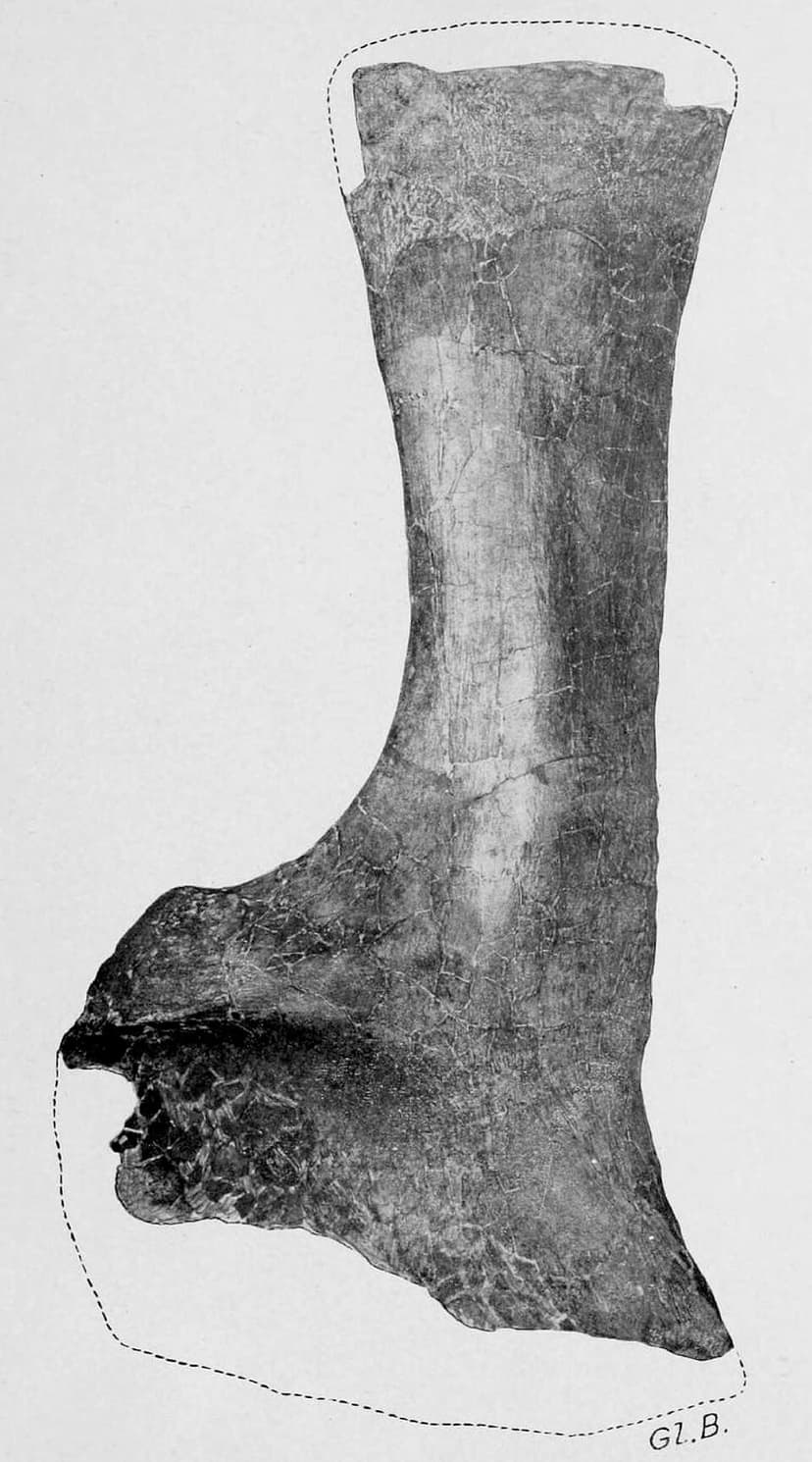
Alamosaurus
Alamosaurus sanjuanensis was a gigantic titanosaurian sauropod that lived in southwestern North America during the Late Cretaceous period. It is notable as one of the few sauropods to inhabit North America after a significant absence in the fossil record and likely immigrated from South America or Asia. Alamosaurus was a quadrupedal herbivore characterized by a long neck, long tail, and bony armor, reaching impressive sizes comparable to some of the largest known dinosaurs.

Bisticeratops
Bisticeratops is a genus of chasmosaurine ceratopsian dinosaur that lived during the late Campanian age of the Late Cretaceous period. Its fossils have been discovered in the Kirtland Formation of northwestern New Mexico, United States. The genus is known from a nearly complete skull, which displays evidence of healed tyrannosaurid bite marks.
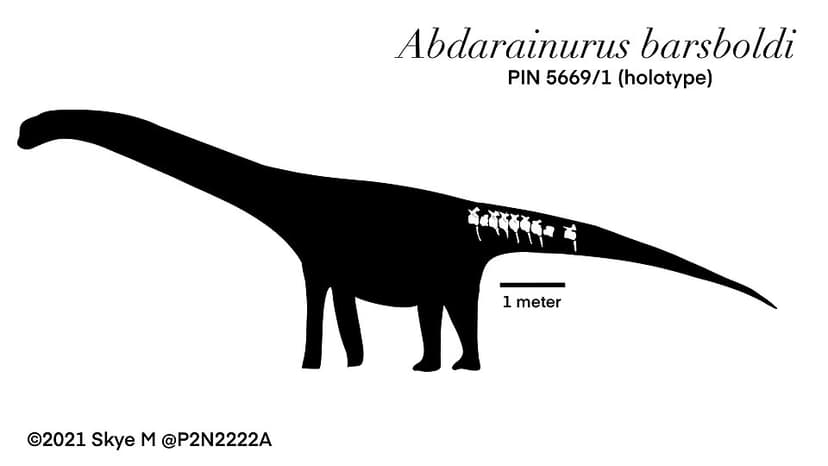
Abdarainurus
Abdarainurus is a genus of titanosaur dinosaur known from the Alagteeg Formation in Mongolia. The only known species, A. barsboldi, is currently considered an indeterminate titanosaur and might represent a previously undocumented lineage of Asian macronarians. Its existence is primarily evidenced by a limited number of tail vertebrae.