
Bisticeratops
Bisticeratops is a genus of chasmosaurine ceratopsian dinosaur that lived during the late Campanian age of the Late Cretaceous period. Its fossils have been discovered in the Kirtland Formation of northwestern New Mexico, United States. The genus is known from a nearly complete skull, which displays evidence of healed tyrannosaurid bite marks.
Key Facts
- ›Bisticeratops lived during the late Campanian age of the Late Cretaceous period.
- ›Fossils were found in the Kirtland Formation in northwestern New Mexico, USA.
- ›The genus is named for the Bisti/De-Na-Zin Wilderness area.
- ›It is a chasmosaurine ceratopsian, related to other horned dinosaurs.
- ›The holotype skull shows healed bite marks from tyrannosaurids.
- ›The specific name honors Edgar and Jerome Froese for their musical inspiration.

- Possessed A Frill and Horns Characteristic of Ceratopsians
- Known From A Nearly Complete Skull
- Holotype Specimen Shows Healed Tyrannosaurid Bite Marks
Sierraceratops, Pentaceratops
North America
About Bisticeratops
Bisticeratops is a genus of chasmosaurine ceratopsian, a group of horned dinosaurs, that roamed the Earth during the late Campanian age of the Late Cretaceous period. The genus is named for the Bisti/De-Na-Zin Wilderness in northwestern New Mexico, United States, where its fossils were discovered. The type and only known species, Bisticeratops froeseorum, is recognized from a remarkably well-preserved, nearly complete skull.
Discovery and Naming
The holotype specimen of Bisticeratops froeseorum, designated NMMNH P-50000, was unearthed in 1975 from the Kirtland Formation (Farmington Member) in the Bisti/De-Na-Zin Wilderness. This geological formation dates to the late Campanian epoch. While initially thought to potentially belong to Pentaceratops, its distinct age and morphology led to its eventual classification as a new genus. The generic name, "Bisticeratops," translates to "Bisti horned face," referencing both its discovery locality and its characteristic cranial features. The species name, "froeseorum," honors Edgar Froese, founder of the band Tangerine Dream, and his son Jerome, for their inspirational music.
Paleobiology and Paleoenvironment
The skull of Bisticeratops froeseorum exhibits bite marks from tyrannosaurids, some of which show signs of healing, indicating that these large predators preyed upon or scavenged this dinosaur. The paleoenvironment where Bisticeratops lived was a coastal plain characterized by alluvial muds and overbank sand deposits, fed by numerous channels draining into the inland sea of North America. While other dinosaur groups like hadrosaurs, ankylosaurids, and various theropods are known from the broader Kirtland Formation, Bisticeratops is the only described dinosaur from the specific Farmington Member where its type specimen was found.
Source: Wikipedia ↗
Frequently Asked Questions
What does the name Bisticeratops mean?
The name Bisticeratops combines 'Bisti', referring to the discovery location in the Bisti/De-Na-Zin Wilderness, with the Greek words 'keras' (horn) and 'ops' (face). Therefore, it translates to 'Bisti horned face'.
Where were Bisticeratops fossils found?
Fossils of Bisticeratops have been discovered in outcrops of the Kirtland Formation, specifically the Farmington Member, located in the Bisti/De-Na-Zin Wilderness in northwestern New Mexico, United States.
When did Bisticeratops live?
Bisticeratops lived during the late Campanian age, which is part of the Late Cretaceous period. This places its existence approximately two million years after other specimens of similar ceratopsian genera.
What is known about Bisticeratops' physical characteristics?
The genus is primarily known from a nearly complete skull. This skull indicates it was a chasmosaurine ceratopsian, a group characterized by elaborate frills and horns. Evidence of tyrannosaurid bite marks on the skull suggests interactions with large predators.
What was the environment like where Bisticeratops lived?
Bisticeratops inhabited an environment represented by alluvial muds and overbank sand deposits. This area was part of the coastal plain draining into the inland seashore of North America during the late Cretaceous period.
Related Dinosaur species
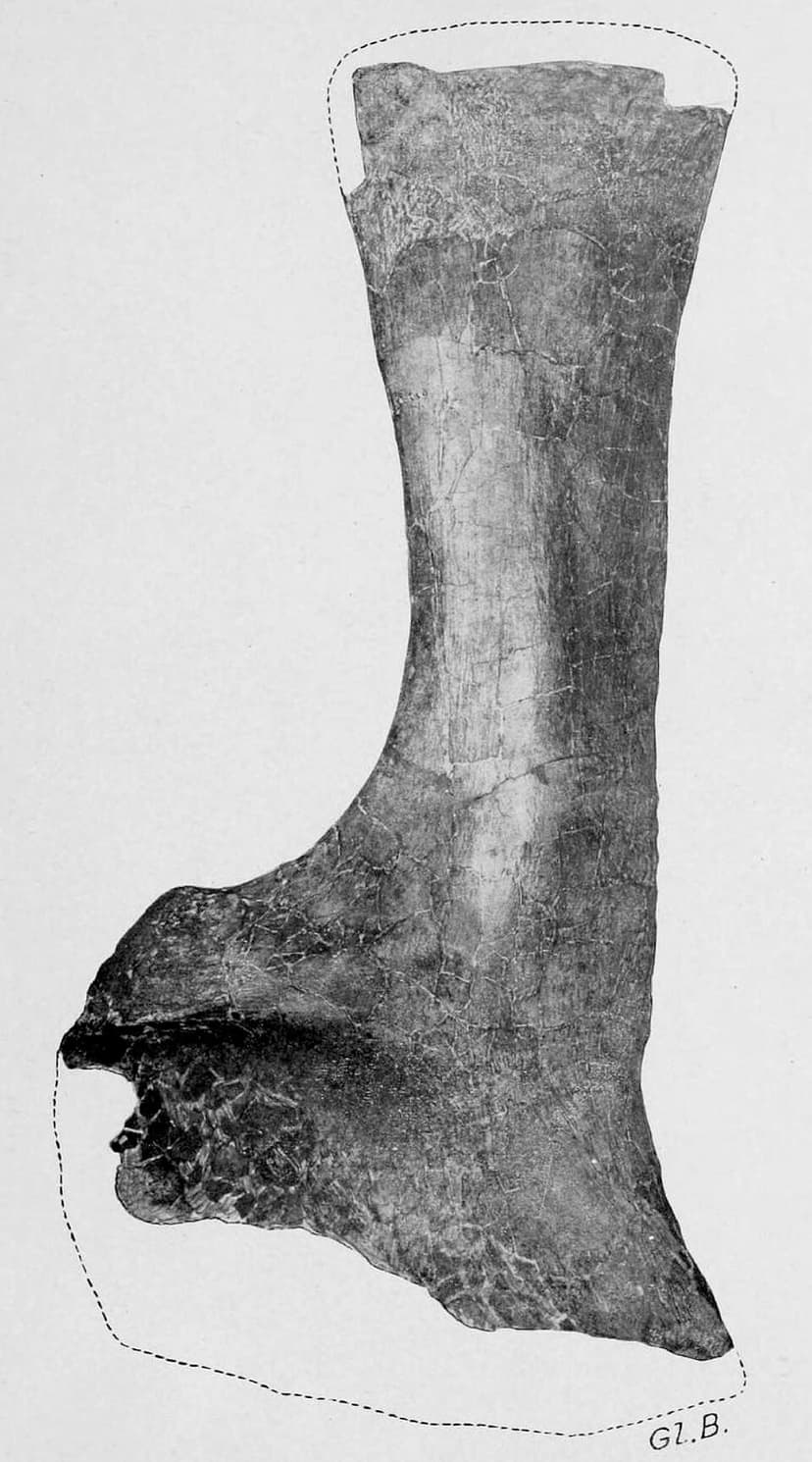
Alamosaurus
Alamosaurus sanjuanensis was a gigantic titanosaurian sauropod that lived in southwestern North America during the Late Cretaceous period. It is notable as one of the few sauropods to inhabit North America after a significant absence in the fossil record and likely immigrated from South America or Asia. Alamosaurus was a quadrupedal herbivore characterized by a long neck, long tail, and bony armor, reaching impressive sizes comparable to some of the largest known dinosaurs.

Ahshislesaurus
Ahshislesaurus is an extinct genus of saurolophine hadrosaurid dinosaur that lived during the Late Cretaceous period in what is now New Mexico, United States. Known from a partial skull and neck vertebrae, it is distinguished by a uniquely deep mandible and a small bump over its snout, lacking the elaborate crests of some relatives. The genus and species, Ahshislesaurus wimani, were formally described in 2025.
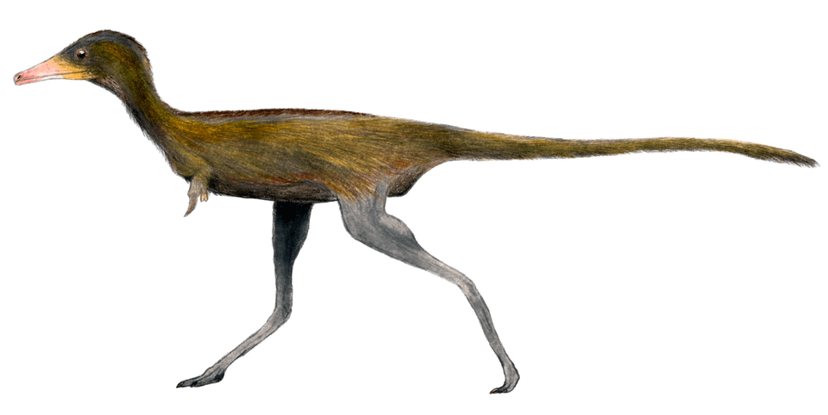
Albinykus
Albinykus is a genus of small alvarezsaurid dinosaur discovered in Mongolia's Gobi Desert. Living during the Late Cretaceous period, it was notable for its extremely small size, weighing under 1 kilogram, and a unique fusion of tarsal bones in its legs, a feature not observed in other alvarezsaurids. Its fossil remains suggest a posture similar to that of modern birds, hinting at the close evolutionary link between non-avian dinosaurs and birds.