
Alaskacephale
Herbivore·Late Cretaceous·Alaska, North America·Bipedal
Alaskacephale is an extinct genus of pachycephalosaurid dinosaur that lived in what is now northern Alaska during the Late Cretaceous period. Known from a single fossilized squamosal bone, it is distinguished by two rows of bony nodules along this skull element. Phylogenetic analyses suggest it was closely related to Pachycephalosaurus and was one of the few known Arctic dinosaurs.
Key Facts
- ›Lived during the Maastrichtian stage of the Late Cretaceous period.
- ›Fossils were discovered in the Prince Creek Formation of northern Alaska.
- ›Distinguished by two divergent rows of bony nodules on its squamosal bone.
- ›Estimated to be one of the smaller pachycephalosaurs, similar in size to Sphaerotholus.
- ›A close relative of Pachycephalosaurus.
- ›One of the few known Arctic dinosaurs.
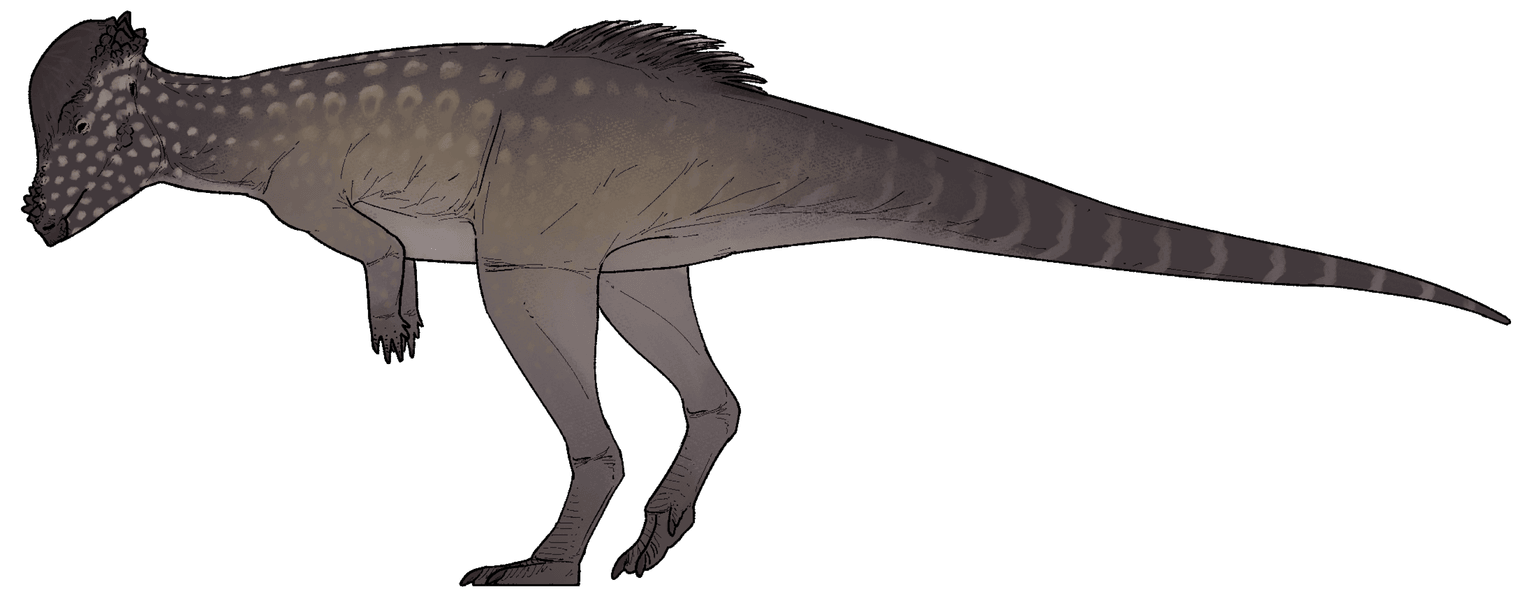
- Dome-headed skull with two divergent rows of bony nodules on the squamosal.
- Nodules have polygonal bases with distinct grooves.
- Estimated length of approximately 1.5 meters.
- Estimated weight of approximately 10 kilograms.
- Likely possessed a short neck, tiny forelimbs, long hindlimbs, and a tail for balance.
Pachycephalosaurus, Prenocephale, Sphaerotholus, Foraminacephale, Stegoceras, Homalocephale, Goyocephale
North America
About Alaskacephale
Alaskacephale is an extinct genus of pachycephalosaurid dinosaur, a group characterized by their thickened, dome-like skulls. This dinosaur lived during the Maastrichtian stage of the Late Cretaceous period in what is now northern Alaska. It represents one of the few known dinosaur species to have inhabited Arctic regions during this era.
Discovery and Fossils
The fossil record for Alaskacephale is sparse, with the only known specimen being an isolated squamosal bone. This bone, part of the skull, was unearthed in 1999 from the Prince Creek Formation along the Colville River in Alaska. The discovery was significant as it provided evidence of pachycephalosaur presence in high-latitude environments.
Description and Characteristics
Alaskacephale is distinguished from other pachycephalosaurs by the presence of two divergent rows of bony nodules adorning its squamosal bone. These nodules have polygonal bases and are separated by distinct grooves. Based on comparisons with related species, Alaskacephale is estimated to have been one of the smaller pachycephalosaurs, measuring approximately 1.5 meters (4.9 feet) in length and weighing around 10 kilograms (22 lbs). Like other pachycephalosaurs, it is believed to have been bipedal with a herbivorous diet.
Classification and Relatives
Alaskacephale belongs to the Pachycephalosauria, a clade within the Ornithischian dinosaurs. Phylogenetic analyses suggest it was a close relative of the more famous Pachycephalosaurus. It is thought to have been part of the Pachycephalosaurini tribe, a group of derived North American pachycephalosaurs.
Paleoenvironment
Alaskacephale inhabited a unique paleoenvironment in what is now northern Alaska, at estimated paleolatitudes of 80°–85°N. This region experienced climatic extremes, including periods of continuous low-light conditions during winter and temperatures ranging from around 10-12°C in warmer months to about -2°C in colder months. It shared its habitat with other dinosaurs such as Pachyrhinosaurus, Edmontosaurus, and Nanuqsaurus, as well as various mammals. The prevalence of endothermic animals in this cooler climate suggests that the fauna of the Prince Creek Formation was adapted to such conditions.
Source: Wikipedia ↗
Frequently Asked Questions
What is Alaskacephale?
Alaskacephale is an extinct genus of pachycephalosaurid dinosaur. These dinosaurs were characterized by their dome-headed skulls and herbivorous diet.
When did Alaskacephale live?
Alaskacephale lived during the Maastrichtian stage of the Late Cretaceous period. This was the final stage of the Cretaceous period, concluding approximately 66 million years ago.
Where were Alaskacephale fossils found?
The fossils of Alaskacephale were discovered in the Prince Creek Formation, located in what is now northern Alaska. This region was part of the Arctic during the Late Cretaceous.
What is unique about Alaskacephale's skull?
Alaskacephale is distinguished by the presence of two divergent rows of bony nodules along its squamosal bone. These nodules have polygonal bases and are separated by distinct grooves, differing from the rounded nodules found in Pachycephalosaurus.
How large was Alaskacephale?
Based on the holotype specimen, Alaskacephale was likely about half the size of Pachycephalosaurus wyomingensis. It was estimated to be around 1.5 meters (4.9 ft) long and weigh about 10 kilograms (22 lb), making it one of the smaller pachycephalosaurs.
What was Alaskacephale's diet?
Alaskacephale was a herbivorous dinosaur, belonging to the pachycephalosaurid group, which are known for their plant-based diets.
What other dinosaurs lived with Alaskacephale?
Alaskacephale coexisted with other dinosaurs such as the ceratopsian Pachyrhinosaurus, the ornithopod Edmontosaurus, and the tyrannosaurid Nanuqsaurus. It also lived alongside various mammals.
Related Dinosaur species
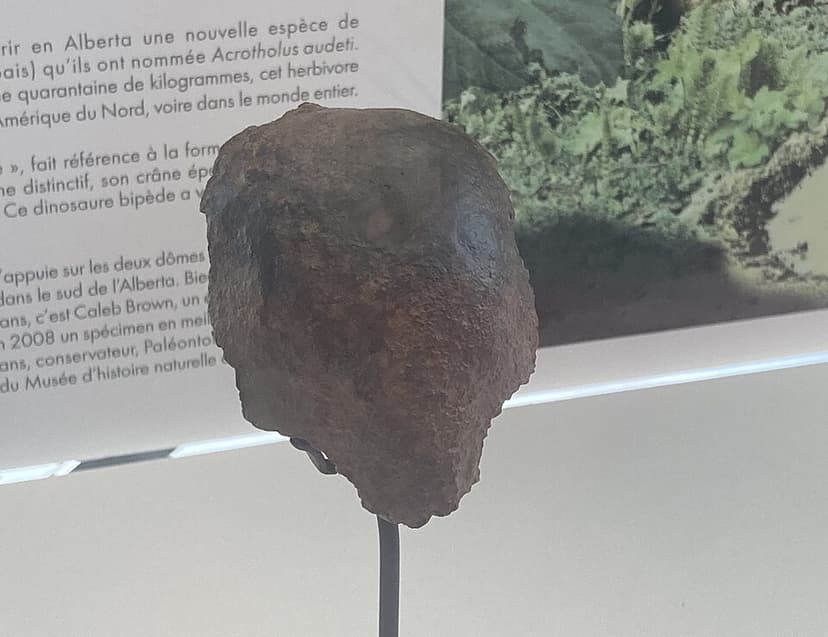
Acrotholus
Acrotholus is an extinct genus of pachycephalosaurian dinosaur that lived during the Santonian stage of the Late Cretaceous period in what is now Canada. It is notable for being one of the earliest known members of the pachycephalosaur family with a well-developed, dome-shaped skull. Acrotholus was a bipedal herbivore whose cranial dome has been theorized to have been used for intraspecies combat or display.

Adelolophus
Adelolophus is a genus of lambeosaurine dinosaur, a type of "duck-bill" known for its cranial crests, that lived during the Late Cretaceous period in what is now Utah, USA. The only known species, *Adelolophus hutchisoni*, is represented by a partial maxilla (upper jaw bone). It is significant as the oldest known lambeosaur remains from North America and a member of the Parasaurolophini tribe, indicating a close relationship with dinosaurs like Parasaurolophus.

Ajnabia
Ajnabia is a genus of small hadrosaurid dinosaur that lived in Morocco during the Late Cretaceous period. Its discovery was significant as it represented the first definitive hadrosaur from Africa, a continent previously thought to be isolated from hadrosaur populations by oceans. Ajnabia is believed to have reached Africa through oceanic dispersal, likely related to European hadrosaurs.