
Alcovasaurus
Alcovasaurus is an extinct genus of herbivorous stegosaurian dinosaur that lived during the Late Jurassic period. Originally described as Stegosaurus longispinus, it was later reclassified into its own genus due to unique characteristics, particularly its exceptionally long tail spines. Its exact taxonomic placement has been debated, with some researchers considering it a distinct genus and others suggesting it might be a species of Miragaia.
Key Facts
- ›Lived during the Late Jurassic period.
- ›Discovered in the Morrison Formation of Wyoming, USA.
- ›Characterized by very long, slender tail spines.
- ›Estimated to be a large stegosaur, reaching up to 6.5 meters in length.
- ›Its taxonomic classification has been subject to revision, with proposed links to genera like Kentrosaurus, Miragaia, and Dacentrurus.

- Large stegosaurian
- Estimated length: 6.5 meters
- Estimated body mass: 3.5 metric tons, up to 5 metric tons for large individuals
- Possessed very long, slender dermal tail spines
- Distal caudal vertebrae were short and taller than long.
- Tail vertebrae had side processes and mushroom-shaped dorsal extensions.
- Thighbone length: 108.2 cm
Stegosaurus, Kentrosaurus, Miragaia, Dacentrurus
North America
About Alcovasaurus
Alcovasaurus is an extinct genus of herbivorous stegosaurian dinosaur that lived during the Late Jurassic period. Fossils attributed to this dinosaur were discovered in the Morrison Formation of Wyoming, United States. The genus is currently represented by a single species, Alcovasaurus longispinus, which was initially described by Charles Whitney Gilmore in 1914 as Stegosaurus longispinus.
Discovery and Naming
The discovery of the type specimen occurred in 1908 by Professors William Harlow Reed and A.C. Dart in Natrona County, Wyoming. Gilmore named the species Stegosaurus longispinus based on a partial postcranial skeleton, notable for its very long dermal tail spines. The specific name longispinus directly translates from Latin as 'long spine.' Over time, the distinctiveness of these long tail spines led to the species being considered valid, though its placement within Stegosaurus was debated. Some researchers proposed it might be a North American relative of the African Kentrosaurus.
Tragically, the type specimen was damaged in the late 1920s due to a museum burst water pipe, leading to its mistaken belief as lost, though parts, including a femur, still exist. Plaster casts of the tail spikes and photographic evidence of the excavation and skeletal mount remain.
In an attempt to classify S. longispinus due to its unique tail spines, amateur paleontologist Roman Ulansky proposed a new genus, "Natronasaurus." However, this name was published in an invalid self-published electronic format. In 2016, Peter Malcolm Galton and Kenneth Carpenter formally established the new genus Alcovasaurus, referencing its discovery locality in Wyoming. They also assigned a large spike base to the species.
Later, in 2019, Francisco Costa and Octávio Mateus suggested that Alcovasaurus was not sufficiently distinct from the European genus Miragaia and proposed the new combination Miragaia longispinus. This reinterpretation was based on comparisons with new Miragaia specimens. However, subsequent research by Sánchez-Fenollosa et al. in 2024 supported Alcovasaurus as a separate genus, while Costa et al. in 2025 argued for its inclusion as a second species within Miragaia.
Description
Alcovasaurus was a large stegosaurian, estimated to reach approximately 6.5 meters (21 feet) in length and weigh around 3.5 metric tons (3.9 short tons), with larger individuals potentially reaching up to 5 metric tons (5.5 short tons). Its most striking characteristic was the presence of very long dermal tail spines, with the longest recorded spike measuring 86 cm (34 inches). Other diagnostic features identified by researchers include rounded distal caudal vertebral centra, vestigial transverse processes on these vertebrae, and centra with mushroom-shaped dorsal extensions. Unique derived traits, or autapomorphies, proposed by Galton and Carpenter include slender and elongated tail spikes that were about 90% of the thighbone length, and specific features of the thighbone's lower joint surface.
Further distinguishing features proposed include a sacrum connected by six pairs of sacral ribs, more than the typical four or five seen in other stegosaurians. The arrangement and size of the tail spikes also presented potential differences from other known stegosaurians. The function of the long spikes and the tail anatomy has been interpreted differently, with some suggesting they were primarily weapons and others proposing a more flexible, whip-like tail propelled by a heavily muscled base, consistent with its potential classification within the Dacentrurinae clade.
Classification
The exact phylogenetic placement of Alcovasaurus has been a subject of ongoing scientific debate. While initially placed within Stegosauridae and considered not more closely related to Kentrosaurus than to Stegosaurus, later analyses suggested it might not have been a typical stegosaur. However, a significant reinterpretation in 2019 by Costa and Mateus placed Alcovasaurus as a close relative of Miragaia within the stegosaurid clade Dacentrurinae. This view suggested Alcovasaurus might be synonymous with Miragaia. Conversely, more recent studies, such as that by Sánchez-Fenollosa & Cobos in 2024, have supported its recognition as a distinct dacentrurine genus, representing an early divergence within the group.
Source: Wikipedia ↗
Frequently Asked Questions
What does the name Alcovasaurus mean?
The genus name Alcovasaurus is a reference to Alcova, Wyoming, where its fossils were discovered. The species name, longispinus, is derived from Latin, meaning 'long spine,' referring to the dinosaur's distinctive tail spikes.
When did Alcovasaurus live?
Alcovasaurus lived during the Late Jurassic epoch. This places it among dinosaurs that roamed the Earth during a significant period of reptilian evolution.
What did Alcovasaurus eat?
Alcovasaurus was a herbivore, meaning it primarily consumed plants. As a stegosaurian, its diet would have consisted of vegetation available during the Late Jurassic.
What are the most distinctive features of Alcovasaurus?
The most striking feature of Alcovasaurus is its exceptionally long and slender tail spines. Other diagnostic traits include specific characteristics of its tail vertebrae and thighbone.
Where were the fossils of Alcovasaurus found?
The fossils of Alcovasaurus were discovered in the Morrison Formation of Wyoming, United States. This geological formation is renowned for yielding a rich array of Late Jurassic dinosaur remains.
What is the estimated size of Alcovasaurus?
Alcovasaurus was a large stegosaur, estimated to reach lengths of up to 6.5 meters (21 feet). Its body mass is estimated to have been around 3.5 metric tons, with some larger individuals potentially reaching 5 metric tons.
Related Dinosaur species

Brontosaurus
Brontosaurus was a genus of large, herbivorous sauropod dinosaurs that lived during the Late Jurassic period in what is now the United States. Known for its long neck, quadrupedal stance, and whip-like tail, it was a prominent figure in popular culture as the archetypal "long-necked" dinosaur. While historically considered a synonym of Apatosaurus, recent studies have re-established Brontosaurus as a distinct genus.

Amphicoelias
Amphicoelias was a genus of herbivorous sauropod dinosaur that roamed the Earth approximately 150 million years ago during the Late Jurassic period. Known from fossils found in Colorado, United States, it was moderately sized, with estimated lengths of around 18 meters and a body mass of 15 metric tons. Its anatomy, particularly its vertebrae and limb bones, shares similarities with its close relative, Diplodocus.
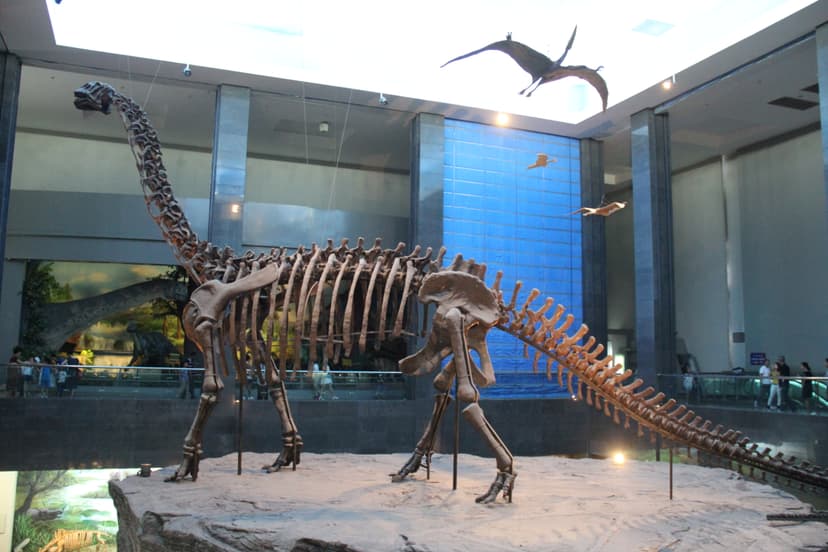
Angustungui
"Angustungui" is an informal genus of stegosaur that lived during the Late Jurassic period in what is now China. The name and its intended type species, "A. qiketaiensis," were announced in a biorxiv pre-print article in October 2024. The fossils, discovered in 2016, include axial, pectoral girdle, pelvic girdle, limb, and armor elements.