
Alocodon
Alocodon is a genus of ornithischian dinosaur known from fossilized teeth discovered in Portugal and England. A single species, *A. kuehnei*, is recognized, though its exact classification has been debated due to the limited fossil evidence. It likely lived during the Middle to Late Jurassic period.
Key Facts
- ›Known primarily from isolated teeth found in Portugal and England.
- ›The single species is named *Alocodon kuehnei*.
- ›Its classification has been debated, with suggestions including Ornithopoda, Thyreophora, and Ankylosauria.
- ›Fossils date to the Middle or Late Jurassic period.
- ›The type specimen was an individual estimated to be under 2 meters in length.
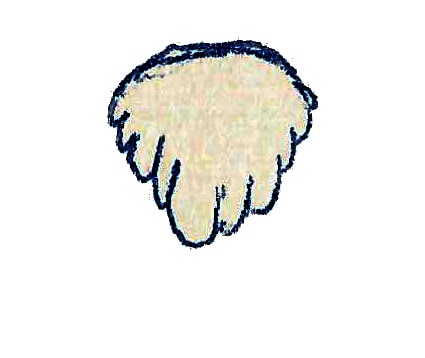
- Estimated to be under 2 meters in length.
- Teeth characterized by an enlarged central denticle and a denticulate cingulum.
Fabrosaurus, Echinodon, Trimucrodon, Nanosaurus, Othnielia
Portugal, England
About Alocodon
Alocodon is a genus of ornithischian dinosaur known from fossilized teeth discovered in both Portugal and England. The sole recognized species, Alocodon kuehnei, is known from the Middle or Late Jurassic Cabaços Formation of Portugal and also from the Forest Marble and Chipping Norton Formations of England. Due to its representation primarily by isolated teeth, its exact classification has been a subject of considerable debate among paleontologists, leading some to classify it as a nomen dubium (a doubtful name).
Discovery and Naming
The taxon was first described in 1973 by Richard A. Thulborn, who identified an assemblage of teeth from the Pedrógão locality in Portugal. The genus name, Alocodon, is derived from the Greek words 'alox' and 'odon', meaning 'furrow tooth', a reference to the enlarged central denticle found on its teeth. The type specimen, a single tooth, indicates an individual estimated to be under 2 meters in length. While initially thought to be from an unnamed deposit of upper Callovian age, it was later identified as originating from the lower Oxfordian Cabaços Formation. In addition to the numerous teeth found in Portugal, some isolated teeth from England have been tentatively assigned to Alocodon.
Classification Debates
Alocodon's classification has undergone several revisions. Initially placed within the ornithopod family Fabrosauridae by Thulborn, it was later suggested by Peter M. Galton to be related to Othnielia within the Hypsilophodontidae family. However, its status as a nomen dubium was proposed by David B. Weishampel and Lawrence M. Witmer due to the limited fossil evidence. Subsequent research proposed a placement within Thyreophora, and later within Ankylosauria, based on features of the teeth such as an asymmetrical crown and a denticulate cingulum. More recently, Alocodon has been considered to exhibit traits representative of Parapredentata, though its precise position within the ornithischian family tree remains uncertain. Its incomplete nature has led to its exclusion from many phylogenetic analyses.
Source: Wikipedia ↗
Frequently Asked Questions
What does the name Alocodon mean?
The name Alocodon is derived from Greek words 'alox' and 'odon', meaning 'furrow tooth'. This naming refers to a distinctive enlarged central denticle on its teeth.
Where were Alocodon fossils found?
Fossils of Alocodon have been discovered in the Cabaços Formation of Portugal, specifically from the Praia de Pedrógão locality. Isolated teeth assigned to Alocodon have also been found in the Forest Marble and Chipping Norton Formations of England.
What geological period did Alocodon live in?
Alocodon lived during the Middle or Late Jurassic period. The Portuguese fossils are identified as coming from the lower Oxfordian stage, while English fossils are from the Bathonian stage.
What was Alocodon's diet?
While Alocodon's exact diet is not definitively known, its classification as an ornithischian dinosaur generally suggests it was a herbivore. The teeth provide the primary evidence for its diet.
Why is Alocodon's classification uncertain?
Alocodon is classified as a nomen dubium (doubtful name) by some paleontologists because it is primarily known from isolated teeth. This limited fossil material makes it difficult to determine its precise anatomical features and evolutionary relationships.
What other animals lived alongside Alocodon?
The Praia de Pedrógão locality, where Alocodon teeth were found, also yielded remains of the pterosaur Rhamphorhynchus, turtles, crocodilians like Goniopholis, lizards, salamanders, and various fish and sharks. Evidence of a large theropod dinosaur was also present.
Related Dinosaur species

Aviatyrannis
Aviatyrannis is a small theropod dinosaur from the Late Jurassic period, discovered in Portugal. It is considered either an early tyrannosauroid or an ornithomimosaurian, making it potentially one of the oldest members of these groups. Its fossils, though fragmentary, provide insights into the diversity of theropods during the Jurassic.

Cariocecus
Cariocecus bocagei was an extinct species of hadrosauroid ornithopod dinosaur that lived during the Early Cretaceous period in what is now Portugal. It is known from a partial skull, notable for a large bony brow over the eye and fused jaw bones, suggesting adaptations for processing tougher food materials. This discovery marked the first iguanodontian skull found in Portugal.

Ambopteryx
Ambopteryx was a genus of scansoriopterygid dinosaur that lived in China during the Late Jurassic period. It is notable for being one of the few dinosaurs discovered with both feather coverings and bat-like membranous wings, a feature it shared with its close relative, Yi. Ambopteryx possessed a short head, a hyper-elongate third finger likely used for wing support, and a short tail ending in a pygostyle.