
Cariocecus
Cariocecus bocagei was an extinct species of hadrosauroid ornithopod dinosaur that lived during the Early Cretaceous period in what is now Portugal. It is known from a partial skull, notable for a large bony brow over the eye and fused jaw bones, suggesting adaptations for processing tougher food materials. This discovery marked the first iguanodontian skull found in Portugal.
Key Facts
- ›Cariocecus bocagei is the only known species in the genus Cariocecus.
- ›Its fossils were discovered in the Papo Seco Formation in Portugal, dating to the Early Cretaceous (Barremian age).
- ›The skull features a prominent bony brow over the eye, potentially for protection.
- ›A unique characteristic is the strong fusion of the maxilla and jugal bones in the upper jaw.
- ›It is considered a close relative of the English hadrosauroids Brighstoneus and Comptonatus.
- ›The discovery represents the first iguanodontian skull found in Portugal.

- Medium-sized Iguanodontia.
- Low skull profile with a flattened cranial vault.
- Prominent, ventrally-placed bony brow over the eye.
- Strongly fused maxilla and jugal bones in the upper jaw.
- Orbit size suggests it reached adult proportions even in immature individuals.
Brighstoneus, Comptonatus, Ouranosaurus, Mantellisaurus, Amurosaurus, Hypacrosaurus
Europe
About Cariocecus
Cariocecus bocagei
Cariocecus bocagei is an extinct species of hadrosauroid ornithopod dinosaur that roamed the Earth during the Early Cretaceous period. Its fossils have been discovered in what is now Portugal, specifically within the Papo Seco Formation, which dates to the Barremian age. This species is significant as it represents the first iguanodontian skull to be unearthed in Portugal, providing valuable insights into the diversity of these dinosaurs in the region.
Discovery and Naming
A partial, articulated ornithopod skull was discovered in 2016 by Pedro Marrecas in a limestone outcrop of the Papo Seco Formation. The specimen was meticulously prepared and studied using advanced techniques like μCT scanning. In 2025, Filippo Bertozzo and his colleagues formally described Cariocecus bocagei as a new genus and species. The genus name, Cariocecus, is derived from an ancient Iberian war deity, with the species name bocagei honoring the Portuguese naturalist José Vicente Barbosa du Bocage.
Physical Characteristics and Adaptations
The skull of Cariocecus possesses several distinctive features. A notable characteristic is a large, bony brow situated low over the eye socket, which may have offered protection from physical harm and glare from the sun. This feature contributed to an 'eagle-eyed' appearance. Uniquely among ornithopods, the maxilla and jugal bones of the upper jaw were strongly fused, forming a single unit. Researchers hypothesize that this fusion could have enabled Cariocecus to process tougher plant materials than its relatives. Based on reconstructions, the skull was estimated to be around 42.3 centimeters long at the base, though the individual represented by the holotype had not yet reached full skeletal maturity.
Classification and Paleoecology
Phylogenetic analyses consistently place Cariocecus as a close relative to the English hadrosauroids Brighstoneus and Comptonatus, near the base of the Hadrosauroidea clade. The Papo Seco Formation, where Cariocecus was found, indicates a depositional environment that shifted from shallow marine to continental settings, including estuarine areas. This formation has yielded a variety of other fossils, including other dinosaurs like the spinosaurid Iberospinus, as well as pterosaurs, turtles, crocodyliforms, fish, and invertebrates, painting a picture of a diverse ecosystem during the Early Cretaceous.
Source: Wikipedia ↗
Frequently Asked Questions
What kind of dinosaur was Cariocecus bocagei?
Cariocecus bocagei was a hadrosauroid ornithopod dinosaur. These dinosaurs are often referred to as duck-billed dinosaurs, though Cariocecus itself did not possess a broad, flat bill.
When did Cariocecus bocagei live?
Cariocecus bocagei lived during the Early Cretaceous period, specifically during the Barremian age. This places its existence approximately 125 to 130 million years ago.
Where were the fossils of Cariocecus bocagei found?
Fossils of Cariocecus bocagei were discovered in the Papo Seco Formation on the Setúbal Peninsula in Sesimbra Municipality, Portugal.
What is unique about the skull of Cariocecus bocagei?
The skull of Cariocecus bocagei has several unusual features. It possesses a large bony brow over the eye and, notably, the maxilla and jugal bones of the upper jaw are strongly fused, which is unlike other ornithopods.
What might the fused jaw bones of Cariocecus bocagei indicate?
The fusion of the maxilla and jugal bones is thought to be an adaptation that may have allowed Cariocecus to chew tougher plant materials compared to its relatives.
What is the meaning of the scientific name Cariocecus bocagei?
The genus name, Cariocecus, refers to an Iberian war deity. The species name, bocagei, honors the Portuguese naturalist José Vicente Barbosa du Bocage.
What does the 'eagle-eyed' appearance refer to in Cariocecus?
The 'eagle-eyed' appearance is due to the prominent bony brow situated very low on the eye socket. This feature may have served to protect the eye from damage and sun glare.
Related Dinosaur species
Alocodon
Alocodon is a genus of ornithischian dinosaur known from fossilized teeth discovered in Portugal and England. A single species, *A. kuehnei*, is recognized, though its exact classification has been debated due to the limited fossil evidence. It likely lived during the Middle to Late Jurassic period.

Aviatyrannis
Aviatyrannis is a small theropod dinosaur from the Late Jurassic period, discovered in Portugal. It is considered either an early tyrannosauroid or an ornithomimosaurian, making it potentially one of the oldest members of these groups. Its fossils, though fragmentary, provide insights into the diversity of theropods during the Jurassic.
Abdarainurus
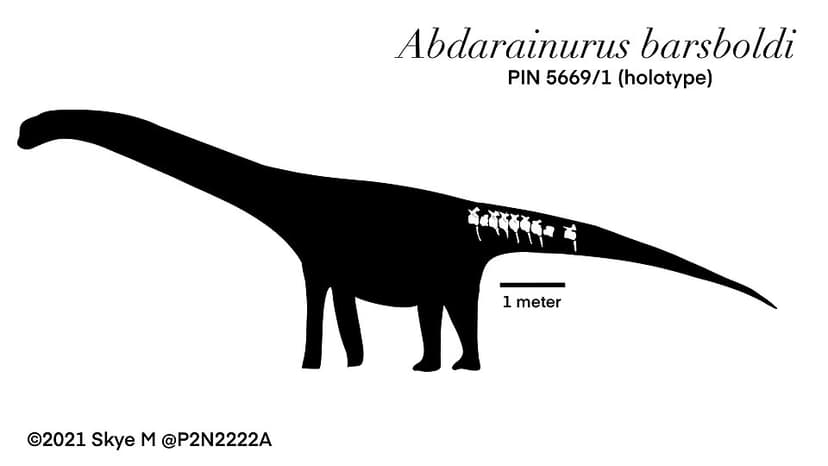
Abdarainurus is a genus of titanosaur dinosaur known from the Alagteeg Formation in Mongolia. The only known species, A. barsboldi, is currently considered an indeterminate titanosaur and might represent a previously undocumented lineage of Asian macronarians. Its existence is primarily evidenced by a limited number of tail vertebrae.