
Anasazisaurus
Herbivore·Late Cretaceous·San Juan Basin, New Mexico, United States·Bipedal/Quadrupedal
Anasazisaurus was a genus of saurolophine hadrosaurid dinosaur that roamed the Earth approximately 74 million years ago during the Late Cretaceous Period. Its fossils were discovered in the San Juan Basin of New Mexico, USA. Known from a partial skull, Anasazisaurus is distinguished by a unique, short nasal crest situated above and between its eyes.
Key Facts
- ›Lived around 74 million years ago in the Late Cretaceous Period.
- ›Discovered in the San Juan Basin of New Mexico, USA.
- ›Known from a partial skull with a distinctive short nasal crest.
- ›Was a herbivore with a sophisticated dental battery for grinding plants.
- ›Estimated to be about 7.5 meters long and weigh up to 2500 kg.

- Short nasal crest located above and between the eyes
- Skull length up to approximately 90 centimeters
- Estimated length of 7.5 meters
- Estimated weight up to 2500 kg
- Lacked a hollow crest
Kritosaurus, Gryposaurus
North America
About Anasazisaurus
Anasazisaurus is a genus of saurolophine hadrosaurid dinosaur that lived approximately 74 million years ago during the Late Cretaceous Period. Fossils of this dinosaur have been discovered in the Farmington Member of the Kirtland Formation, located within the San Juan Basin of New Mexico, United States. The genus is known primarily from a partial skull, which was first described and later named Anasazisaurus horneri by paleontologists Adrian Hunt and Spencer G. Lucas in 1993. The name itself references the Ancestral Pueblo Native American people, for whom the term 'Anasazi' was historically used, and the Greek word 'sauros,' meaning lizard.
Description and Paleobiology
The anatomy of Anasazisaurus is not extensively known due to the limited fossil material. The skull, while preserving a unique feature, is somewhat poorly preserved, lacking the lower jaw, beak, and quadrate. A distinctive characteristic is a "tab or flange of bone" from the nasals that rises between and above the eyes, folding back under itself. This crest is a key feature that helps distinguish it from similar hadrosaurs like Gryposaurus. The skull's maximum preserved length is around 90 centimeters. Estimates suggest Anasazisaurus reached about 7.5 meters in length and could weigh up to 2500 kg. As a hadrosaurid, Anasazisaurus was a herbivore. Its diet consisted of plants, which it would have cropped with its beak and processed using a sophisticated dental battery of continuously replacing teeth, allowing for a grinding motion akin to chewing. Feeding likely occurred from ground level up to approximately 4 meters high.
Taxonomy and Discovery
The holotype specimen of Anasazisaurus, a partial skull housed at Brigham Young University, was initially assigned to the genus Kritosaurus by Jack Horner. Later, Hunt and Lucas argued that the Kritosaurus holotype was undiagnostic and proposed Anasazisaurus horneri as a new genus and species. This classification has been followed by some researchers, while others, such as Thomas Williamson, have argued for its distinctiveness as a species of Kritosaurus, creating Kritosaurus horneri. More recent studies suggest Anasazisaurus is a member of the Saurolophini tribe within the Hadrosaurinae subfamily. The Farmington Member of the Kirtland Formation, where Anasazisaurus was found, also yielded fossils of other dinosaurs, including Bistahieversor, Kritosaurus, and Pentaceratops.
Source: Wikipedia ↗
Frequently Asked Questions
What does the name Anasazisaurus mean?
The name Anasazisaurus means "Anasazi lizard." It is derived from the outdated term "Anasazi" for the Ancestral Pueblo Native American people and the Greek word "sauros" meaning lizard. The 'horneri' species name honors paleontologist Jack Horner.
When and where did Anasazisaurus live?
Anasazisaurus lived about 74 million years ago, during the Late Cretaceous Period. Its fossils were found in the Farmington Member of the Kirtland Formation in the San Juan Basin of New Mexico, United States.
What are the key physical characteristics of Anasazisaurus?
Anasazisaurus is primarily known from a partial skull, which measures about 90 centimeters in length. A notable feature is its short nasal crest, a tab of bone rising between and above the eyes. It is estimated to have been about 7.5 meters long and weighed up to 2500 kg.
What did Anasazisaurus eat?
As a hadrosaurid, Anasazisaurus was a herbivore. It possessed a sophisticated skull with a beak for cropping plants and dental batteries containing hundreds of continuously replacing teeth, enabling a grinding motion similar to chewing.
How complete is the fossil record of Anasazisaurus?
The fossil record for Anasazisaurus is considered fragmentary, as only a partial skull has been discovered to date. This specimen lacks the lower jaw, beak, and quadrate bone, and its preparation was only recently completed.
Is Anasazisaurus related to Kritosaurus?
Anasazisaurus has a complex taxonomic history intertwined with Kritosaurus. It was initially described as a specimen of Kritosaurus. While some paleontologists consider it a distinct species of Kritosaurus (K. horneri), others maintain it as a separate genus, Anasazisaurus.
Related Dinosaur species

Angulomastacator
Angulomastacator was a duck-billed dinosaur that lived during the Campanian stage of the Late Cretaceous period. Its fossils were discovered in Big Bend National Park, Texas, within the Aguja Formation. This dinosaur is distinguished by a uniquely curved upper jaw bone, suggesting it may have been an endemic form to the region.

Arstanosaurus
Arstanosaurus is a genus of hadrosauroid dinosaur known from the Late Cretaceous Bostobe Formation of Kazakhstan. Its fossil record is sparse, consisting primarily of a partial left maxilla and a possibly associated femur, leading to a history of taxonomic confusion. It was once considered a hadrosaurid, then a ceratopsid, and is now regarded as an indeterminate hadrosauroid.
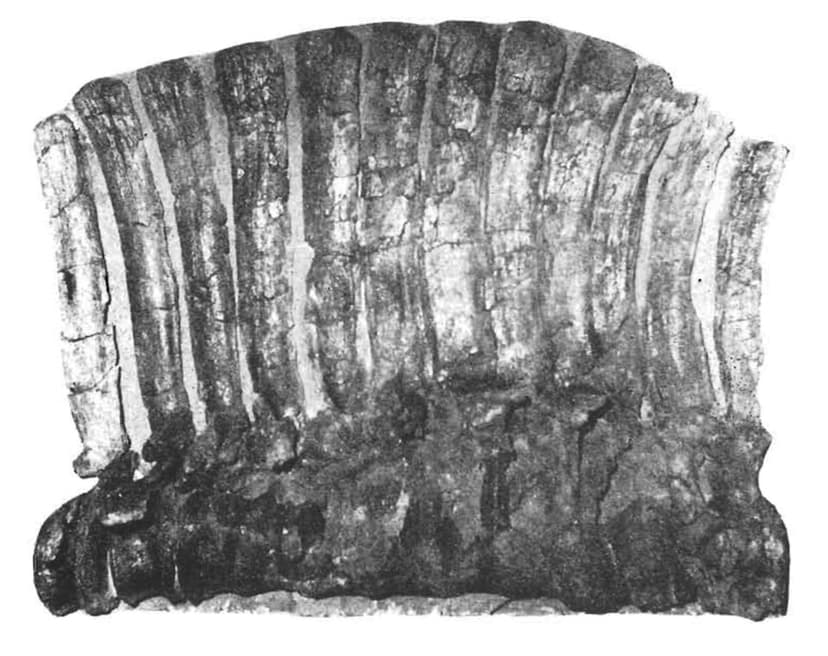
Barsboldia
Barsboldia was a large hadrosaurid dinosaur that lived during the Maastrichtian stage of the Late Cretaceous period in what is now Mongolia. It is known from a partial skeleton including vertebrae, pelvis, and ribs, and is distinguished by its very tall neural spines, particularly over the hips. While initially classified as a lambeosaurine, later studies suggest it may have been a saurolophine.