
Arstanosaurus
Arstanosaurus is a genus of hadrosauroid dinosaur known from the Late Cretaceous Bostobe Formation of Kazakhstan. Its fossil record is sparse, consisting primarily of a partial left maxilla and a possibly associated femur, leading to a history of taxonomic confusion. It was once considered a hadrosaurid, then a ceratopsid, and is now regarded as an indeterminate hadrosauroid.
Key Facts
- ›Arstanosaurus lived during the Late Cretaceous period, specifically the Santonian-Campanian stages.
- ›Fossils were discovered in the Bostobe Formation of Kazakhstan.
- ›The genus is based on limited fossil material, including a partial left maxilla.
- ›It was initially described in 1982 as a hadrosaurid.
- ›The dinosaur's taxonomic classification has been debated, with periods of being considered a ceratopsid.
- ›Current understanding classifies Arstanosaurus as an indeterminate hadrosauroid.

- Possessed a partial left maxilla.
- Possibly had a lower end of a left femur associated with it.
Bactrosaurus, Batyrosaurus
Kazakhstan
About Arstanosaurus
Arstanosaurus is a genus of hadrosauroid dinosaur that lived during the Late Cretaceous period. Its fossils have been found in the Bostobe Formation of Kazakhstan, dating to the Santonian-Campanian stages.
History and Taxonomy
The genus Arstanosaurus was named and described in 1982 based on limited fossil material, primarily a partial left maxilla (upper jaw bone) and a possibly associated left femur. This scant evidence led to a complex taxonomic history. Initially considered a hadrosaurid, a later hypothesis suggested it might be a ceratopsid (horned dinosaur), or even a chimeric specimen representing both groups. However, subsequent revisions indicated that the unusual characteristics were based on perspective, and the maxilla was likely from an indeterminate animal similar to Bactrosaurus. More recently, Arstanosaurus has been regarded as an indeterminate hadrosauroid.
Paleobiology
As a hadrosauroid, Arstanosaurus is believed to have been a herbivore. It likely moved both bipedally and quadrupedally, feeding on plants with specialized teeth that were continuously replaced. The exact size and specific physical traits of Arstanosaurus remain largely unknown due to the fragmentary nature of its fossil remains.
Source: Wikipedia ↗
Frequently Asked Questions
What does the name Arstanosaurus mean?
The name Arstanosaurus means "Arstan lizard." It is named after the Arstan well, near where its fossils were discovered.
When did Arstanosaurus live?
Arstanosaurus lived during the Late Cretaceous epoch, specifically in the Santonian and Campanian stages of this period.
Where were the fossils of Arstanosaurus found?
Fossils of Arstanosaurus were discovered in Kazakhstan, within the Bostobe Formation near Akkurgan-Boltyk, close to Qyzylorda.
What kind of dinosaur was Arstanosaurus?
Arstanosaurus is classified as a hadrosauroid, a group of ornithischian dinosaurs. It is considered an indeterminate member of this group.
What did Arstanosaurus eat?
As a hadrosauroid, Arstanosaurus was a herbivore. It would have eaten plants using rows of continuously replaced teeth.
What is known about the physical characteristics of Arstanosaurus?
Very little is known about the specific physical characteristics of Arstanosaurus due to the limited fossil material. The primary fossil is a partial left maxilla.
Related Dinosaur species
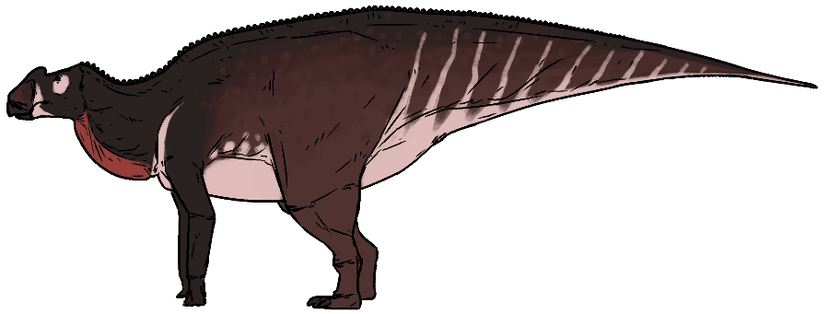
Aralosaurus
Aralosaurus is a genus of hadrosaurid dinosaur that lived during the Late Cretaceous period in what is now Kazakhstan. Known from a partial skull and post-cranial bones, it is classified as a primitive member of the Lambeosaurinae subfamily. The genus name means "Aral Sea lizard," referencing its discovery location, and the species name tuberiferus refers to a unique outgrowth on its nasal bone.
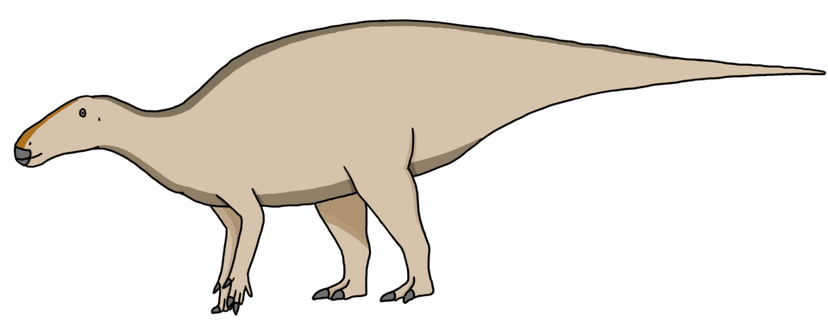
Batyrosaurus
Batyrosaurus is an extinct genus of herbivorous dinosaur from the Late Cretaceous period of Kazakhstan. Its single species, Batyrosaurus rozhdestvenskyi, was a medium-sized hadrosauroid, potentially representing the same taxon as the doubtful Arstanosaurus akkurganensis. The genus name honors Kazakh warrior heroes, reflecting its basal position in the evolutionary tree of duck-billed dinosaurs.

Anasazisaurus
Anasazisaurus was a genus of saurolophine hadrosaurid dinosaur that roamed the Earth approximately 74 million years ago during the Late Cretaceous Period. Its fossils were discovered in the San Juan Basin of New Mexico, USA. Known from a partial skull, Anasazisaurus is distinguished by a unique, short nasal crest situated above and between its eyes.