
Arizonasaurus
Unknown·Middle Triassic·Arizona, North America·Unknown
Arizonasaurus was a genus of archosaur that lived during the Middle Triassic period, approximately 243 million years ago. It is distinguished by a prominent sail on its back, formed by elongated neural spines of its vertebrae. The only known species, Arizonasaurus babbitti, was discovered in the Moenkopi Formation of Arizona.
Key Facts
- ›Lived during the Middle Triassic period.
- ›Characterized by a large sail on its back.
- ›Fossils found in the Moenkopi Formation of Arizona.
- ›Belongs to the ctenosauriscid family.
- ›Related to other basal archosaurs like Ctenosauriscus.

- Possessed a large back sail formed by elongated neural spines of its vertebrae.
- Braincase specimens show ancestral features of crurotarsans.
- Distinguished by a deep fossa on the maxilla and a tongue-groove attachment between the pubis and ilium.
Ctenosauriscus, Bromsgroveia, Hypselorhachis, Lotosaurus, Poposaurus, Sillosuchus, Shuvosaurus
North America
About Arizonasaurus
Arizonasaurus: The Sail-Backed Reptile of the Triassic
Arizonasaurus is a genus of archosaur that roamed the Earth during the Middle Triassic period, approximately 243 million years ago. Its name, meaning "Arizona reptile," directly refers to the region where its fossilized remains were unearthed. The most striking characteristic of Arizonasaurus was the prominent sail adorning its back, a feature created by exceptionally long neural spines extending from its vertebrae. This distinctive sail is shared with other basal archosaurs within the ctenosauriscid family.
Discovery and Classification
The type and only known species, Arizonasaurus babbitti, was formally described by Samuel Paul Welles in 1947. Initial discoveries were based on limited fossil material, including teeth and a maxilla. However, a more complete skeleton was later discovered in 2002, providing a better understanding of its anatomy. Arizonasaurus is classified within the Ctenosauriscidae family, a group closely related to poposaurids. Shared anatomical features, particularly in the pelvic girdle, link Arizonasaurus with other genera such as Ctenosauriscus, Lotosaurus, Bromsgroveia, and Hypselorhachis. These pseudosuchian characteristics suggest that ctenosauriscids and certain poposauroids formed a monophyletic group.
Paleogeography and Significance
Fossils of Arizonasaurus have been recovered from the Moenkopi Formation in northern Arizona. The presence of a poposauroid in the early Middle Triassic Moenkopi Formation provides insights into the evolutionary timeline of major archosaur lineages, suggesting that the divergence between bird and crocodile ancestors may have occurred earlier than previously estimated. The distribution of ctenosauriscids across North America, Europe, and Asia during the Triassic indicates a widespread faunal exchange and a more interconnected global ecosystem than previously understood. The Moenkopi Formation itself represents a transitional faunal stage, bridging older and younger Triassic ecosystems.
Source: Wikipedia ↗
Frequently Asked Questions
What does Arizonasaurus mean?
The name Arizonasaurus translates to 'Arizona reptile', referencing the location where its fossils were discovered.
When did Arizonasaurus live?
Arizonasaurus lived during the Middle Triassic period, approximately 243 million years ago.
What is the most distinctive feature of Arizonasaurus?
The most distinctive feature of Arizonasaurus was its large back sail, which was formed by greatly elongated neural spines of its vertebrae.
Where were Arizonasaurus fossils found?
Fossils of Arizonasaurus have been found in the Moenkopi Formation, located in what is now Arizona, North America.
What group of dinosaurs did Arizonasaurus belong to?
Arizonasaurus belonged to the ctenosauriscid family, a group of basal archosaurs closely related to poposaurids.
Related Dinosaur species

Asilisaurus
Asilisaurus is an extinct genus of silesaurid archosaur from the Middle Triassic period, known from fossils found in Tanzania. It is considered one of the oldest known members of the Avemetatarsalia, the group of animals that includes dinosaurs and pterosaurs. Its discovery has provided valuable insights into the early evolution of dinosaurs and the diversification of archosaurs.
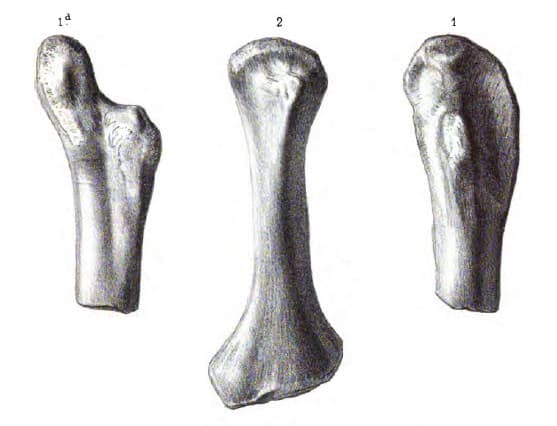
Actiosaurus
Actiosaurus is an extinct genus of reptile first described in 1883. Initially classified as a dinosaur, it was later reinterpreted as an ichthyosaur and may represent the remains of a choristodere. Due to limited fossil evidence, Actiosaurus is considered a nomen dubium and a species inquirenda.

Adratiklit
Adratiklit is an extinct genus of stegosaurian dinosaur that lived in Gondwana during the Middle Jurassic period. Its remains were discovered in Morocco, making it the first described eurypodan taxon from North Africa. Adratiklit is considered one of the oldest known stegosaurs, with an estimated body length of up to 7 meters.