
Asilisaurus
Asilisaurus is an extinct genus of silesaurid archosaur from the Middle Triassic period, known from fossils found in Tanzania. It is considered one of the oldest known members of the Avemetatarsalia, the group of animals that includes dinosaurs and pterosaurs. Its discovery has provided valuable insights into the early evolution of dinosaurs and the diversification of archosaurs.
Key Facts
- ›Asilisaurus lived during the Middle Triassic period, likely the Anisian stage.
- ›Fossils were discovered in the Manda Beds of Tanzania.
- ›It possessed a beak-like snout and peg-like teeth, suggesting an omnivorous or herbivorous diet.
- ›Asilisaurus had a relatively long neck and slender limbs, likely moving on all fours.
- ›It retained some primitive features not found in later dinosaurs, as well as some dinosaur-like traits.
- ›The genus name combines Swahili for 'ancestor' and Greek for 'lizard'.

- Lightly built animal
- Fairly long neck
- Short snout tipped with a beak
- Slender limbs
- Skull was rather small with a small nasal opening and large, round orbit
- Premaxilla nearly toothless with a pointed front tip
- Lower jaw toothless at the tip and downturned
- Possessed a supratemporal fossa
- Two sacral vertebrae
- Non-vestigial fifth toe
Silesaurus, Sacisaurus, Lewisuchus, Teleocrater, Saturnalia, Lagerpeton
Africa
About Asilisaurus
Asilisaurus: An Early Archosaur Ancestor
Asilisaurus is an extinct genus of silesaurid archosaur that lived during the Middle Triassic period, approximately 245 million years ago. Its fossils, primarily discovered in the Manda Beds of Tanzania, represent one of the earliest known members of the Avemetatarsalia, the evolutionary branch that includes dinosaurs, pterosaurs, and their close relatives. The genus name, derived from Swahili and Greek, translates to "ancestor lizard," reflecting its significance in understanding the origins of dinosaurs.
Discovery and Significance
First described in 2010, Asilisaurus was unearthed from a fossil-rich bonebed in Tanzania, with at least 14 individuals identified at the initial discovery site. Its relatively abundant fossil remains have made it a crucial subject for studying the diversification of archosaurs during the Middle Triassic, a period of significant evolutionary change. Asilisaurus was the first non-dinosaur dinosauromorph discovered on the African continent, providing vital evidence for the early distribution and evolution of this group.
Physical Characteristics and Lifestyle
Asilisaurus was a lightly built animal, estimated to be between 1 to 3 meters (3 to 10 ft) in length and weighing 10 to 30 kilograms (20 to 70 lb). It possessed a distinctive beak-like snout at the front of its mouth, with small, peg-like teeth located further back. This dentition, along with its overall build, suggests an omnivorous or herbivorous diet, possibly incorporating fish. It had a relatively long neck and slender limbs, indicating it likely moved on all fours. While retaining some primitive features not seen in later dinosaurs, Asilisaurus also exhibited certain dinosaur-like traits, such as a supratemporal fossa and specific vertebral structures, placing it as a basal member of the silesaurid family.
Source: Wikipedia ↗
Frequently Asked Questions
When did Asilisaurus live?
Asilisaurus lived during the Middle Triassic period, likely the Anisian stage. This places it among the earliest known avemetatarsalians, the lineage leading to dinosaurs and pterosaurs.
Where were Asilisaurus fossils found?
Fossils of Asilisaurus were discovered in the Manda Beds of Tanzania, specifically in a bonebed near the town of Litumba Ndyosi. This region preserves a Middle Triassic lake ecosystem.
What did Asilisaurus eat?
The presence of a beak at the tip of its snout and peg-like teeth suggest that Asilisaurus was likely an omnivore or herbivore. Its diet may have also included fish, given some similarities to piscivorous reptiles.
How large was Asilisaurus?
Estimates suggest Asilisaurus ranged from 1 to 3 meters (3 to 10 ft) in length and stood 0.5 to 1 meter (2 to 3 ft) high at the hip. It likely weighed between 10 to 30 kilograms (20 to 70 lb).
Is Asilisaurus considered a dinosaur?
Asilisaurus is not classified as a dinosaur but is a close relative and an early member of the avemetatarsalian group, which includes dinosaurs. It possesses a mix of primitive and dinosaur-like features, offering insights into dinosaur origins.
Related Dinosaur species

Australodocus
Australodocus was a genus of sauropod dinosaur that roamed the Earth during the Late Jurassic period, approximately 150 million years ago. Its fossils were discovered in what is now Tanzania. While initially classified as a diplodocid, more recent analyses suggest it might belong to the titanosauriform clade.
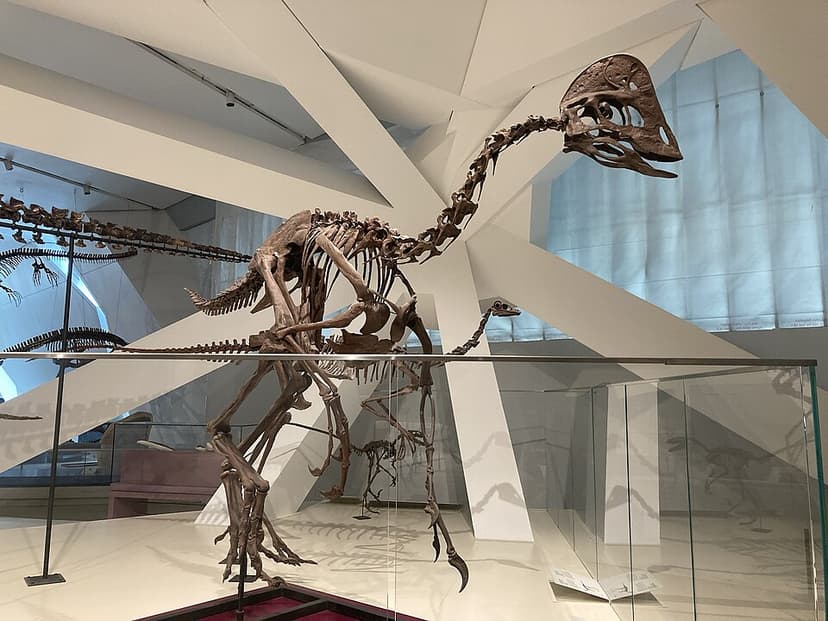
Anzu
Anzu is a genus of caenagnathid dinosaur that lived in North America during the Late Cretaceous period. Known for its distinctive skull crest, toothless beak, and bird-like skeleton, Anzu was a remarkable discovery, providing the first well-preserved example of a North American oviraptorosaur.

Arizonasaurus
Arizonasaurus was a genus of archosaur that lived during the Middle Triassic period, approximately 243 million years ago. It is distinguished by a prominent sail on its back, formed by elongated neural spines of its vertebrae. The only known species, Arizonasaurus babbitti, was discovered in the Moenkopi Formation of Arizona.