
Azendohsaurus
Azendohsaurus is an extinct genus of herbivorous archosauromorph reptile that lived during the late Middle to early Late Triassic Period. Initially believed to be a dinosaur due to its jaw and tooth structure, further skeletal discoveries revealed it to be a more primitive archosauromorph that convergently evolved sauropod-like features. This discovery expanded our understanding of herbivorous archosauromorph diversity outside of dinosaurs.
Key Facts
- ›Azendohsaurus was a quadrupedal herbivore, not a dinosaur, but a more primitive archosauromorph.
- ›It convergently evolved jaw and skeletal features similar to later sauropod dinosaurs.
- ›Its anatomy suggests it filled an ecological niche as a high-browsing herbivore.
- ›Azendohsaurus may be one of the earliest known endothermic archosauromorphs.
- ›Fossils have been found in Morocco and Madagascar.
- ›Its scientific name means 'Azendoh lizard', referring to its discovery location.

- Estimated length of 2-3 meters
- Stocky, mid-sized reptile
- Long neck
- Proportionately small head with sauropod-like jaws and teeth
- Bulky quadrupedal build
- Relatively short tail
- Robust limbs
- Semi-sprawled posture with sprawling hind limbs and raised forelimbs
- Large, curved claws on all four feet
- Barrel-shaped chest
Shringasaurus
Morocco, Madagascar
About Azendohsaurus
Azendohsaurus is an extinct genus of herbivorous archosauromorph reptile that inhabited the Earth during the late Middle to early Late Triassic Period. This creature, whose name translates to "Azendoh lizard" after a village near its discovery site in Morocco, was initially misidentified as a dinosaur. Its unique anatomical features, particularly its jaws and teeth, led paleontologists to classify it first as an ornithischian and later as a "prosauropod" sauropodomorph.
Discovery and Classification
The first fossils of Azendohsaurus laaroussii were unearthed in Morocco's Argana Basin and described by Jean-Michel Dutuit in 1972. These early finds consisted mainly of jaw fragments and teeth. However, the discovery of nearly complete skeletons of Azendohsaurus madagaskarensis in Madagascar in 2010 provided crucial insights. These more comprehensive remains revealed that Azendohsaurus was not a dinosaur at all, but a more primitive archosauromorph. It belonged to the newly recognized group Allokotosauria and is the namesake of its own family, Azendohsauridae.
Physical Characteristics and Lifestyle
Azendohsaurus was a quadrupedal reptile estimated to be around 2 to 3 meters (6.6 to 9.8 feet) long. It possessed a stocky build with a long neck supporting a small, box-shaped head. Its limbs were robust, with hind limbs that were semi-sprawled and forelimbs slightly elevated, leading to a posture that was neither fully sprawling nor fully erect. Notably, it had a relatively short tail compared to other archosauromorphs.
The most striking feature of Azendohsaurus was its convergent evolution of sauropod-like characteristics. Its jaws featured down-turned tips, and its teeth, while leaf-shaped, were distinct between the upper and lower jaws, with the latter more closely resembling those of sauropodomorphs. The presence of numerous palatal teeth was also a significant feature. These adaptations suggest that Azendohsaurus occupied an ecological niche as a high-browsing herbivore, predating the large sauropodomorphs that would later dominate this role.
Evolutionary Significance
Azendohsaurus plays a vital role in understanding the diversification of herbivory within archosauromorphs during the Triassic. Its existence demonstrates that dinosaur-like herbivorous adaptations, such as long necks and specialized jaws, evolved independently in non-dinosaurian lineages. Furthermore, Azendohsaurus is considered one of the earliest potential examples of endothermy in archosauromorphs, suggesting that a warm-blooded metabolism may have been an ancestral trait for later archosaurs, including dinosaurs.
Source: Wikipedia ↗
Frequently Asked Questions
Was Azendohsaurus a dinosaur?
No, Azendohsaurus was initially misclassified as a dinosaur, specifically an ornithischian and later a prosauropod. However, detailed skeletal analysis revealed it to be a more primitive archosauromorph reptile, not a true dinosaur.
What did Azendohsaurus eat?
Azendohsaurus was a herbivore. Its jaws and teeth, described as sauropod-like, were adapted for processing plant material. It is believed to have browsed on vegetation at higher levels.
Where were Azendohsaurus fossils found?
Fossils of Azendohsaurus have been discovered in both Morocco and Madagascar. The type species, Azendohsaurus laaroussii, comes from Morocco, while a more complete specimen of Azendohsaurus madagaskarensis was found in Madagascar.
What is unique about Azendohsaurus's appearance?
Azendohsaurus had a long neck and a proportionately small head with jaws and teeth that strongly resembled those of later sauropod dinosaurs. It was a bulky quadruped with a relatively short tail and robust limbs, featuring a mix of sprawled hind limbs and raised forelimbs.
What is the significance of Azendohsaurus in evolutionary history?
Azendohsaurus is significant because it demonstrates convergent evolution of herbivorous, high-browsing traits in archosauromorphs outside of dinosaurs. It may also be one of the earliest archosauromorphs to exhibit endothermy, suggesting warm-bloodedness was ancestral to later archosaurs.
How large was Azendohsaurus?
Azendohsaurus was a mid-sized reptile, estimated to be roughly 2 to 3 meters (6.6 to 9.8 feet) in length. It had a stocky build with a broad body and barrel-shaped chest.
Related Dinosaur species
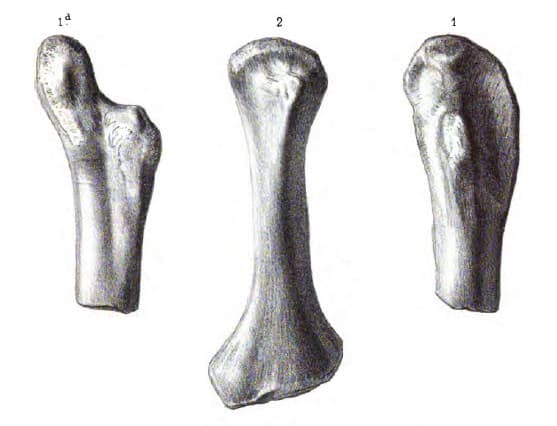
Actiosaurus
Actiosaurus is an extinct genus of reptile first described in 1883. Initially classified as a dinosaur, it was later reinterpreted as an ichthyosaur and may represent the remains of a choristodere. Due to limited fossil evidence, Actiosaurus is considered a nomen dubium and a species inquirenda.

Arctosaurus
Arctosaurus is an extinct genus of archosauromorph reptile that lived during the Late Triassic period. Originally classified as a sauropodomorph dinosaur, and sometimes as a theropod, recent reviews suggest it is best classified within Archosauriformes due to shared reptilian traits. Its name, meaning "arctic lizard," reflects its discovery location.
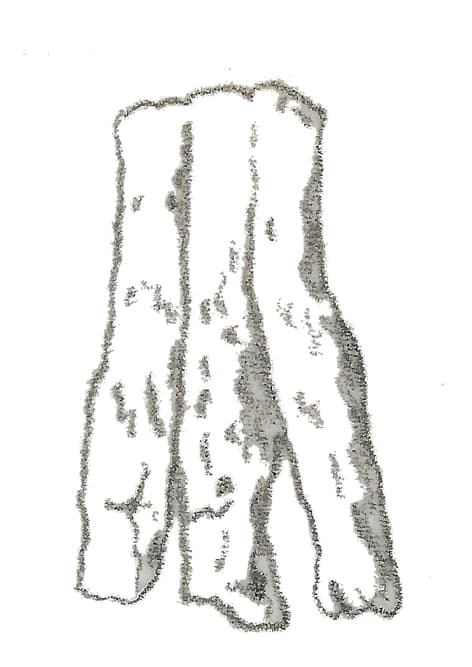
Avipes
Avipes is a genus of extinct archosaurs known from a single species, Avipes dillstedtianus. This dinosaur lived during the middle Triassic period and its name translates to "bird foot." The limited fossil evidence makes its precise classification challenging.