
Bagaceratops
Bagaceratops was a small, herbivorous ceratopsian dinosaur that lived in Asia during the Late Cretaceous period, approximately 72 to 71 million years ago. Despite its relatively primitive anatomy compared to later ceratopsids, Bagaceratops possessed a unique skull structure, lacking premaxillary teeth and featuring fused nasal bones. Its fossils have been found in formations across Mongolia and China.
Key Facts
- ›Lived in Asia during the Late Cretaceous period.
- ›Was among the smallest ceratopsians, measuring 1-1.5 meters in length.
- ›Had a herbivorous diet, characterized by a parrot-like beak.
- ›Lacked premaxillary teeth, a primitive feature for ceratopsians.
- ›Its fossils are primarily found in the Barun Goyot Formation and Bayan Mandahu Formation.
- ›Was described and named by paleontologists Teresa Maryańska and Halszka Osmólska in 1975.

- Small body size for a ceratopsian
- Estimated length of 1–1.5 meters
- Estimated weight of 22.7–45 kg
- Smaller frill compared to some other ceratopsians
- More triangular skull shape
- Lacked premaxillary teeth
- Had paired nasal bones
- Developed an oval-shaped fenestra in the maxilla
Protoceratops, Breviceratops, Gobiceratops, Lamaceratops, Magnirostris, Platyceratops
Asia, Mongolia, China
About Bagaceratops
Bagaceratops was a small genus of protoceratopsid dinosaurs that inhabited Asia during the Late Cretaceous period, roughly 72 to 71 million years ago. Its name, meaning "small-horned face," reflects its modest size and characteristic ceratopsian features. Despite its relatively primitive anatomy compared to more advanced ceratopsids, Bagaceratops possessed unique cranial characteristics, including fused nasal bones and the absence of premaxillary teeth.
History of Discovery
Numerous protoceratopsid specimens were unearthed during the Polish-Mongolian Paleontological Expeditions in the 1970s from the Hermiin Tsav locality of the Barun Goyot Formation in the Gobi Desert. In 1975, paleontologists Teresa Maryańska and Halszka Osmólska described this material, naming the new genus and species Bagaceratops rozhdestvenskyi. The holotype consists of a medium-sized skull, and many of the expedition's collected specimens, including juvenile and sub-adult skulls, were assigned to this genus. Subsequent expeditions, including the Japan-Mongolia Joint Paleontological Expedition in 1993, continued to find significant remains, such as an articulated skeleton. Later research has consolidated several previously named genera, including Gobiceratops, Lamaceratops, Magnirostris, and Platyceratops, as junior synonyms of Bagaceratops, indicating a broad intraspecific variation within the genus.
Description and Classification
Bagaceratops was a small dinosaur, with estimated adult lengths of 1 to 1.5 meters (3.3 to 4.9 ft) and a body mass of 22.7 to 45 kg (50 to 99 lb). It featured a smaller frill, about ten grinding teeth per jaw, and a more triangular skull than its close relative, Protoceratops. Key anatomical distinctions include the lack of premaxillary teeth, paired fused nasal bones, and an oval-shaped fenestra in the maxilla, also known as an accessory antorbital fenestra. Bagaceratops belonged to the Ceratopsia, a group of herbivorous dinosaurs known for their parrot-like beaks.
Paleoenvironment
The primary fossil-bearing strata for Bagaceratops are the Barun Goyot Formation and the Bayan Mandahu Formation, both dating to the Late Cretaceous (Campanian stage). The Barun Goyot Formation is characterized by red beds and light-colored sands, deposited in alluvial plain, lacustrine, and aeolian environments under semi-arid to arid climates. This formation hosted a diverse fauna, including ankylosaurs, alvarezsaurids, birds, and other protoceratopsids. The Bayan Mandahu Formation, also Late Cretaceous in age, consists mainly of reddish-brown sandstone and deposited in similar semi-arid alluvial and aeolian settings, yielding dinosaurs like Protoceratops and Velociraptor.
Source: Wikipedia ↗
Frequently Asked Questions
What does the name Bagaceratops mean?
The name Bagaceratops means "small-horned face." It is derived from the Mongolian word "baga," meaning small, and the Greek word "keratops," meaning horn face.
When did Bagaceratops live?
Bagaceratops lived during the Late Cretaceous period, approximately 72 to 71 million years ago.
Where were Bagaceratops fossils found?
Fossils of Bagaceratops have been discovered in Asia, primarily in Mongolia within the Barun Goyot Formation and Bayan Mandahu Formation. There is also a possibility of its presence in the Djadochta Formation.
What was the size of Bagaceratops?
Bagaceratops was a small dinosaur, reaching estimated adult lengths of 1 to 1.5 meters (3.3 to 4.9 feet) and weighing between 22.7 to 45 kilograms (50 to 99 pounds).
What did Bagaceratops eat?
As a ceratopsian, Bagaceratops was a herbivore. It possessed a parrot-like beak, which would have been used for cropping vegetation.
What are some key physical characteristics of Bagaceratops?
Bagaceratops had a relatively small body size for a ceratopsian, a smaller frill, and a more triangular skull than its relative Protoceratops. It notably lacked premaxillary teeth and had fused nasal bones.
Which other dinosaurs lived alongside Bagaceratops?
Bagaceratops shared its environment with a variety of other dinosaurs, including ankylosaurids like Saichania and Tarchia, alvarezsaurids, birds, dromaeosaurids, oviraptorids, and troodontids.
Related Dinosaur species

Breviceratops
Breviceratops was a genus of protoceratopsid dinosaur that lived during the Late Cretaceous period in what is now Mongolia. Its name, meaning "short horned face," reflects its characteristic skull features. Initially described as a species of Protoceratops, it was later reclassified as its own genus.
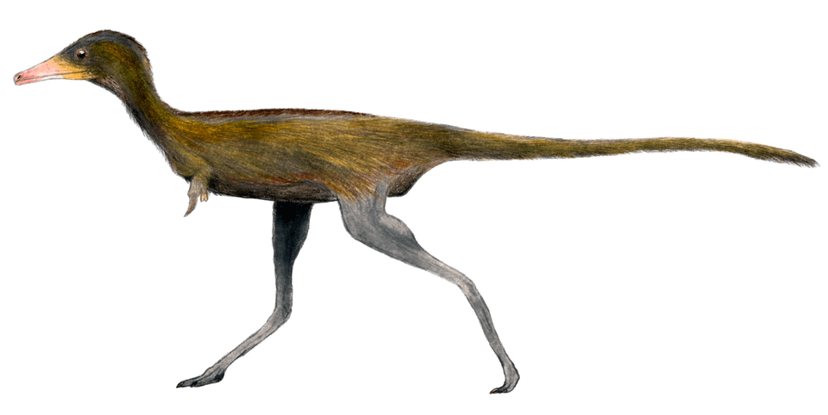
Albinykus
Albinykus is a genus of small alvarezsaurid dinosaur discovered in Mongolia's Gobi Desert. Living during the Late Cretaceous period, it was notable for its extremely small size, weighing under 1 kilogram, and a unique fusion of tarsal bones in its legs, a feature not observed in other alvarezsaurids. Its fossil remains suggest a posture similar to that of modern birds, hinting at the close evolutionary link between non-avian dinosaurs and birds.

Abditosaurus
Abditosaurus is an extinct genus of titanosaurian sauropod dinosaur that lived during the Late Cretaceous period in what is now Catalonia, Spain. It is known from the most complete titanosaur skeleton ever discovered in Europe, representing a large species that inhabited the Ibero-Armorican Island. Phylogenetic analyses suggest it was related to South American and African saltasaurines, distinguishing it from other European dwarf sauropods.