
Breviceratops
Breviceratops was a genus of protoceratopsid dinosaur that lived during the Late Cretaceous period in what is now Mongolia. Its name, meaning "short horned face," reflects its characteristic skull features. Initially described as a species of Protoceratops, it was later reclassified as its own genus.
Key Facts
- ›Lived during the Late Cretaceous period.
- ›Fossils discovered in the Barun Goyot Formation, Mongolia.
- ›Possessed a skull with both primitive and derived traits.
- ›Belonged to the Ceratopsia, a group of herbivorous dinosaurs.
- ›Distinguished by a narrow to straight-shaped antorbital fenestra.
- ›Named by Sergei Mikhailovich Kurzanov in 1990.

- Skull combining primitive and derived traits
- Premaxillary teeth
- Antorbital fenestra
- Moderately pronounced neck frill formed by parietal and squamosal bones
Protoceratops, Bagaceratops
Asia
About Breviceratops
Breviceratops is a genus of protoceratopsid dinosaur that inhabited the Earth during the Late Cretaceous period. Its fossils have been discovered in what is now the Barun Goyot Formation in Mongolia. The dinosaur's name, "short horned face," aptly describes some of its key anatomical features.
Discovery and Naming
The initial fossil discoveries of Breviceratops occurred in the 1960s during a Polish expedition to the Nemegt Basin of the Gobi Desert. These specimens were first described in 1975 by Teresa Maryańska and Halszka Osmólska, who initially classified them as a second species of Protoceratops, naming it Protoceratops kozlowskii in honor of Roman Kozłowski. The holotype specimen, ZPAL MgD-I/117, was unearthed from the Khulsan locality and consists of a partial juvenile skeleton with a skull. Other referred specimens were found at the Hermiin Tsav and Khulsan localities.
In 1990, Sergei Mikhailovich Kurzanov reclassified these fossils, establishing Breviceratops as a distinct genus. He combined the Latin word "brevis" (short) with a reference to the Ceratopsia group. Kurzanov also referred additional fossils from Hermiin Tsav, the type locality of Bagaceratops, a contemporary protoceratopsid. However, the close resemblance of these referred fossils to Bagaceratops led to suggestions that Breviceratops might represent a juvenile stage or synonym of Bagaceratops. Nevertheless, the holotype from Khulsan exhibits primitive premaxillary teeth, a characteristic inconsistent with the derived morphology of Bagaceratops. Consequently, most of the previously referred specimens have been re-identified as belonging to Bagaceratops, with Breviceratops now primarily recognized through its holotype and one other specimen (ZPAL MgD-I/116).
Description and Classification
Breviceratops possessed a skull that exhibited a mix of primitive and derived traits. Notable features included premaxillary teeth, a characteristic also found in Protoceratops andrewsi, and an antorbital fenestra – an opening in the maxilla located in front of the eye socket. This fenestra in Breviceratops was distinct from that of Bagaceratops, being narrow to straight-shaped. The skull concluded with a moderately pronounced neck frill, formed by the parietal and squamosal bones, a common feature among protoceratopsids and ceratopsians in general.
Breviceratops has been classified within the Ceratopsia, a diverse group of herbivorous dinosaurs known for their parrot-like beaks that flourished across North America and Asia during the Cretaceous period. In 2019, Łukasz Czepiński assigned Breviceratops to the family Protoceratopsidae, placing it as a close relative to genera like Bagaceratops and Protoceratops.
Source: Wikipedia ↗
Frequently Asked Questions
What does the name Breviceratops mean?
The name Breviceratops means "short horned face." It is derived from the Latin word "brevis," meaning short, combined with a reference to the Ceratopsia group of dinosaurs.
When did Breviceratops live?
Breviceratops lived during the Late Cretaceous period. Specifically, the holotype specimen was found in the Barun Goyot Formation, which dates from the Late Campanian stage.
Where were the fossils of Breviceratops found?
The first fossils of Breviceratops were discovered in the Nemegt Basin of the Gobi Desert in Mongolia. Later specimens were referred from the Hermiin Tsav and Khulsan localities within the Barun Goyot Formation.
What type of dinosaur was Breviceratops?
Breviceratops was a protoceratopsid dinosaur. This means it belonged to the Ceratopsia, a group characterized by herbivorous diets and parrot-like beaks.
What are some notable physical characteristics of Breviceratops?
Breviceratops had a skull that combined primitive and derived features, including premaxillary teeth and an antorbital fenestra. This fenestra, an opening in the maxilla in front of the eye socket, was narrow to straight-shaped.
Who named Breviceratops?
Breviceratops was renamed as a separate genus by Sergei Mikhailovich Kurzanov in 1990. Previously, it had been described as a species of Protoceratops by Teresa Maryańska and Halszka Osmólska in 1975.
Related Dinosaur species

Bagaceratops
Bagaceratops was a small, herbivorous ceratopsian dinosaur that lived in Asia during the Late Cretaceous period, approximately 72 to 71 million years ago. Despite its relatively primitive anatomy compared to later ceratopsids, Bagaceratops possessed a unique skull structure, lacking premaxillary teeth and featuring fused nasal bones. Its fossils have been found in formations across Mongolia and China.
Albinykus
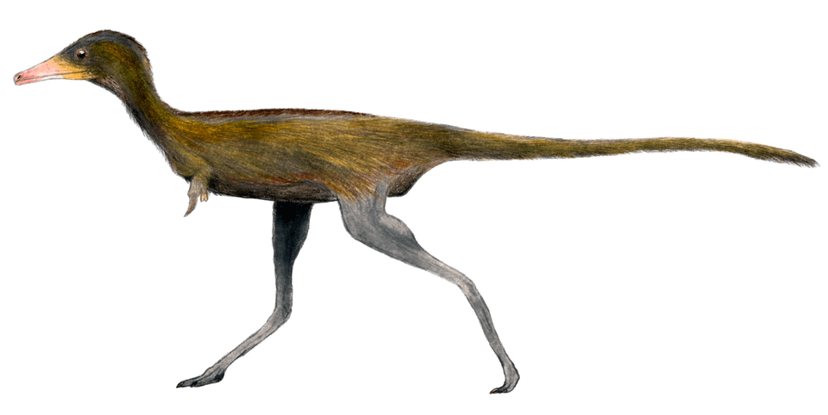
Albinykus is a genus of small alvarezsaurid dinosaur discovered in Mongolia's Gobi Desert. Living during the Late Cretaceous period, it was notable for its extremely small size, weighing under 1 kilogram, and a unique fusion of tarsal bones in its legs, a feature not observed in other alvarezsaurids. Its fossil remains suggest a posture similar to that of modern birds, hinting at the close evolutionary link between non-avian dinosaurs and birds.

Abditosaurus
Abditosaurus is an extinct genus of titanosaurian sauropod dinosaur that lived during the Late Cretaceous period in what is now Catalonia, Spain. It is known from the most complete titanosaur skeleton ever discovered in Europe, representing a large species that inhabited the Ibero-Armorican Island. Phylogenetic analyses suggest it was related to South American and African saltasaurines, distinguishing it from other European dwarf sauropods.