
Albinykus
Albinykus is a genus of small alvarezsaurid dinosaur discovered in Mongolia's Gobi Desert. Living during the Late Cretaceous period, it was notable for its extremely small size, weighing under 1 kilogram, and a unique fusion of tarsal bones in its legs, a feature not observed in other alvarezsaurids. Its fossil remains suggest a posture similar to that of modern birds, hinting at the close evolutionary link between non-avian dinosaurs and birds.
Key Facts
- ›Albinykus fossils have been found in the Javkhlant Formation of Mongolia.
- ›It lived during the Late Cretaceous period, specifically the Santonian stage.
- ›Estimated to weigh under 1 kilogram, it was one of the smallest alvarezsaurids and non-avian dinosaurs.
- ›A distinguishing feature is the complete fusion of tarsal bones to the tibia and metatarsals.
- ›The holotype skeleton was found in a sitting posture with feet tucked underneath, similar to birds.
- ›Its posture suggests a close evolutionary relationship between non-avian maniraptoran dinosaurs and birds.
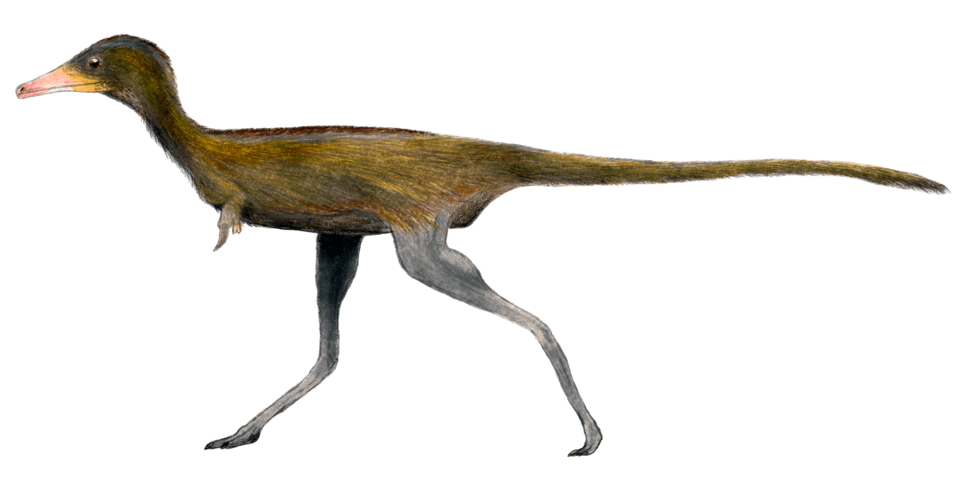
- Estimated to weigh under 1 kilogram.
- Possessed a unique complete fusion of tarsals to other bones of the leg.
- Holotype skeleton found in a sitting posture with feet tucked underneath.
Alvarezsaurids
Mongolia
About Albinykus
Albinykus is a genus of alvarezsaurid dinosaur that roamed the Earth during the Late Cretaceous period. Its fossils were unearthed in the Javkhlant Formation of Mongolia, situated within the vast Gobi Desert. The genus is represented by the type species, Albinykus baatar, formally described in 2011.
Physical Characteristics and Size
Albinykus is notable for its exceptionally small size, with estimates placing its weight at under 1 kilogram (2.2 lb). This diminutive stature makes it one of the smallest alvarezsaurids and among the smallest non-avian dinosaurs discovered to date. A particularly distinguishing anatomical feature of Albinykus, not observed in other alvarezsaurids, is the complete fusion of the tarsal bones to other components of the leg. Specifically, the proximal tarsals are fused to the tibia in the lower leg, and the distal tarsals are fused to the metatarsal bones of the foot.
Posture and Evolutionary Significance
The holotype skeleton of Albinykus, consisting of the pelvis and hindlimbs, was discovered in a posture where the animal appears to be sitting with its feet tucked beneath its body. This pose is remarkably similar to the resting posture of modern birds. Scientists interpret this similarity as evidence of the close evolutionary relationship between non-avian maniraptoran dinosaurs, a group that includes alvarezsaurids, and avian dinosaurs (birds). While other theropod groups like oviraptorids and troodontids are also known to have adopted similar postures, the Albinykus holotype represents the first documented instance of a crouching alvarezsaurid.
Fossil Preservation and Paleopathology
The precise circumstances of Albinykus's death and preservation in this distinctive posture remain a subject of scientific inquiry. One hypothesis suggests that the dinosaur may have been rapidly buried by sand, leading to its unusual resting pose. The fossil record for Albinykus primarily consists of the holotype specimen, offering a glimpse into the anatomy and potential behaviors of this small, ancient creature.
Source: Wikipedia ↗
Frequently Asked Questions
What does the name Albinykus mean?
The name Albinykus means "Albin claw." This name is derived from a Mongolian shamanistic term used to describe light phenomena observed in the Gobi Desert.
When did Albinykus live?
Albinykus lived during the Late Cretaceous period. More specifically, its fossils have been dated to the Santonian stage of this period.
Where were the fossils of Albinykus found?
Fossils of Albinykus have been discovered in the Javkhlant Formation, located in the Gobi Desert region of Mongolia.
How large was Albinykus?
Albinykus was exceptionally small, estimated to weigh less than 1 kilogram (2.2 lb). This made it one of the smallest known alvarezsaurids and among the smallest non-avian dinosaurs.
What is unique about Albinykus's legs?
A distinctive characteristic of Albinykus, not seen in other alvarezsaurids, is the complete fusion of its tarsal bones to other leg bones. The proximal tarsals are fused to the tibia, and the distal tarsals are fused to the metatarsals.
What does the posture of the Albinykus holotype suggest?
The holotype skeleton of Albinykus was found in a sitting position with its feet tucked underneath its body, a posture similar to that of modern birds. This similarity is seen as an indication of the close evolutionary relationship between non-avian maniraptoran dinosaurs and birds.
Related Dinosaur species

Bagaceratops
Bagaceratops was a small, herbivorous ceratopsian dinosaur that lived in Asia during the Late Cretaceous period, approximately 72 to 71 million years ago. Despite its relatively primitive anatomy compared to later ceratopsids, Bagaceratops possessed a unique skull structure, lacking premaxillary teeth and featuring fused nasal bones. Its fossils have been found in formations across Mongolia and China.

Breviceratops
Breviceratops was a genus of protoceratopsid dinosaur that lived during the Late Cretaceous period in what is now Mongolia. Its name, meaning "short horned face," reflects its characteristic skull features. Initially described as a species of Protoceratops, it was later reclassified as its own genus.

Amtocephale
Amtocephale is a genus of pachycephalosaurid dinosaur discovered in the southern Gobi Desert of Mongolia. Known from a nearly complete frontoparietal dome, it represents a subadult individual. Amtocephale is considered a potentially very old representative of its family, dating back to the early Late Cretaceous period.